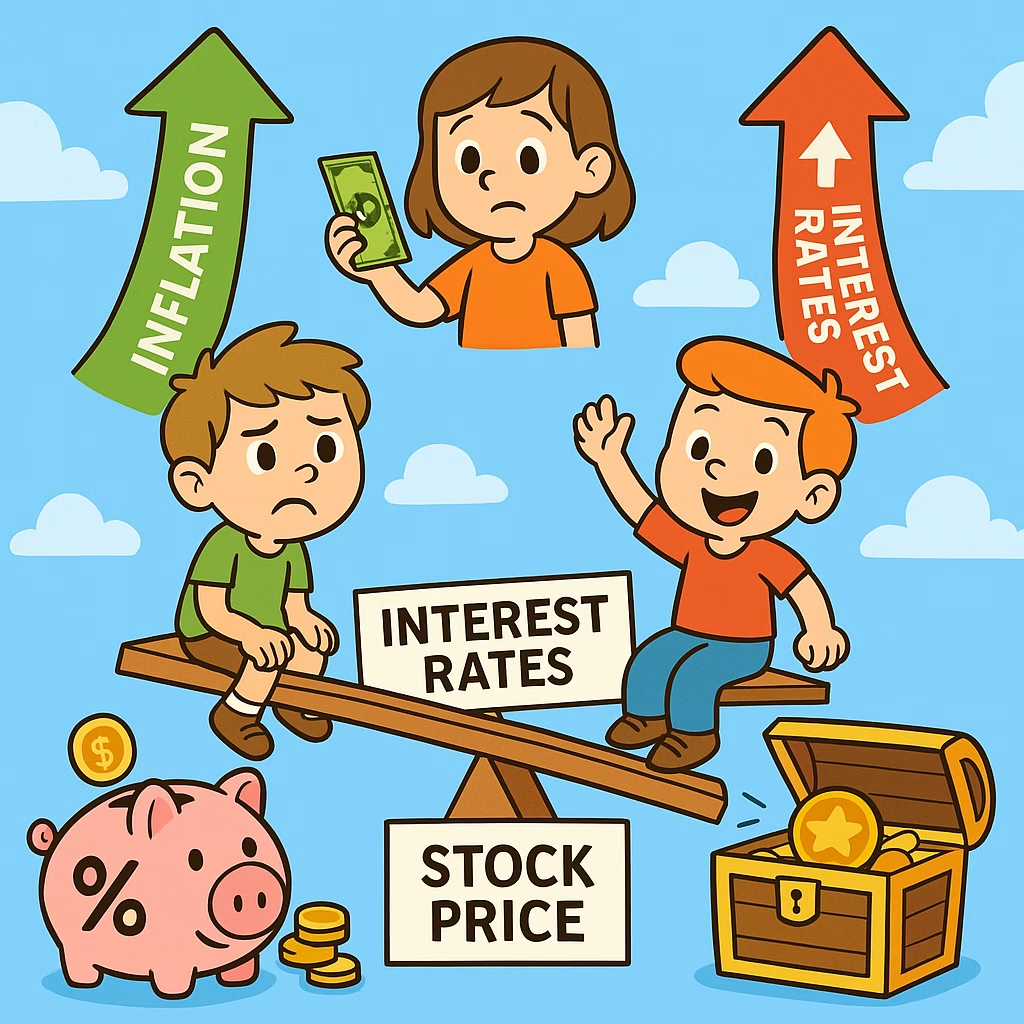
Inflation, interest rates, and stock prices might sound like big words, but they affect things in our everyday lives – even a lemonade stand! Inflation means prices are rising. If you could buy 5 lollipops for $1 last year, high inflation might mean that same $1 buys only 3 lollipops today. In other words, your money does not stretch as far when things cost more. Interest rates are like thank-you gifts from the bank: if you save money in a bank, the bank might give you extra money (interest). But if you borrow money, the bank might ask you to pay extra (also interest).
Finally, stock prices are the cost of owning a tiny piece (one share) of a company. When lots of people want to buy that tiny piece, the stock price goes up; if few people want it, the price goes down. Understanding How Inflation and Interest Rates Affect Stock Prices is crucial for any investor.
The Lemonade Stand and Inflation
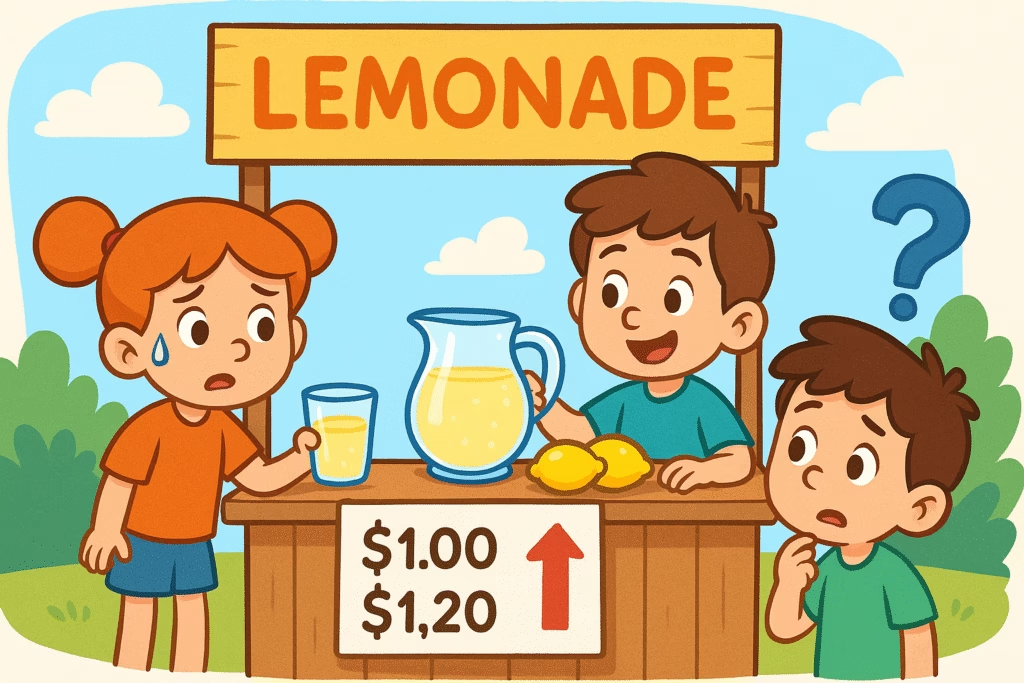
Imagine you run a lemonade stand. One summer, you charge $1 per cup of lemonade. Next year, you notice that other stands are charging $1.20 for the same cup. Your costs might have gone up: maybe lemons got more expensive or rent for your stand increased. So you raise your price to $1.20 too. This is inflation in action – prices are rising over time. Inflation means your dollar can buy a bit less than before. It’s like if your piggy bank had the same number of coins, but those coins don’t stretch as far to buy treats.
When everything gets more expensive, grown-ups sometimes get worried. For example, if lemonade prices go up a lot and a kid needs more allowance to buy the same treats, mom or dad might feel stressed. In the real world, when inflation is high, banks often raise interest rates to try to slow things down. Higher interest rates make loans (like for big companies) more expensive and can slow down business. When that happens, stock prices often fall.
One financial site explains it simply: higher inflation usually means higher interest is coming, and that tends to make stock prices go down bankrate.com. In our lemonade analogy, it would be as if higher costs (inflation) eventually make lemonade sellers nervous, so they sell fewer cups or run out of lemonade, making the entire stand seem less valuable.
Saving Money at the Bank
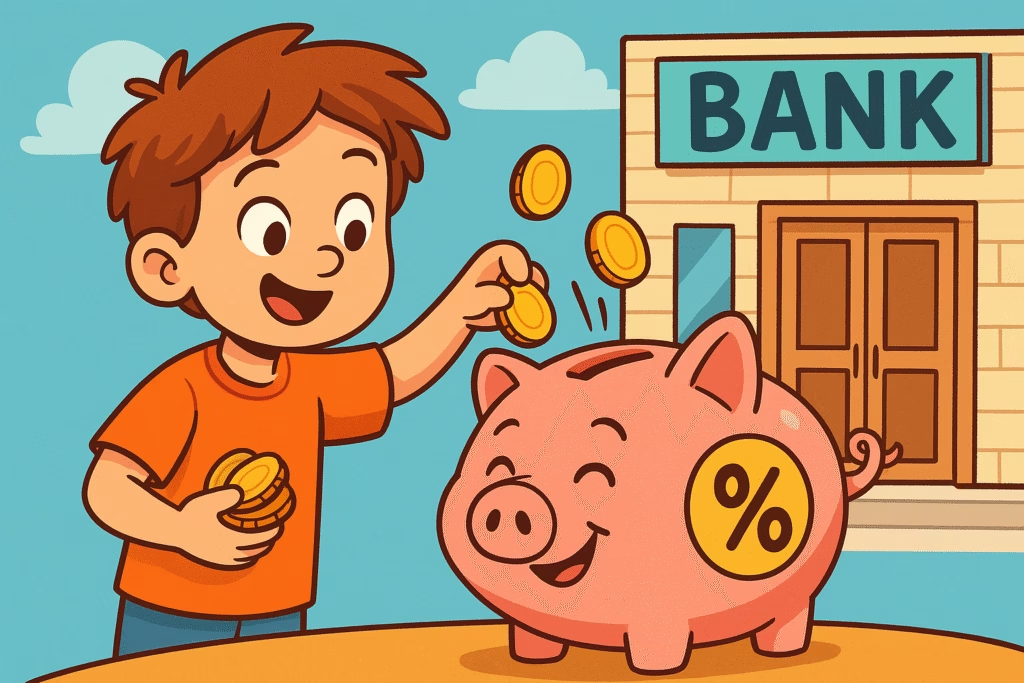
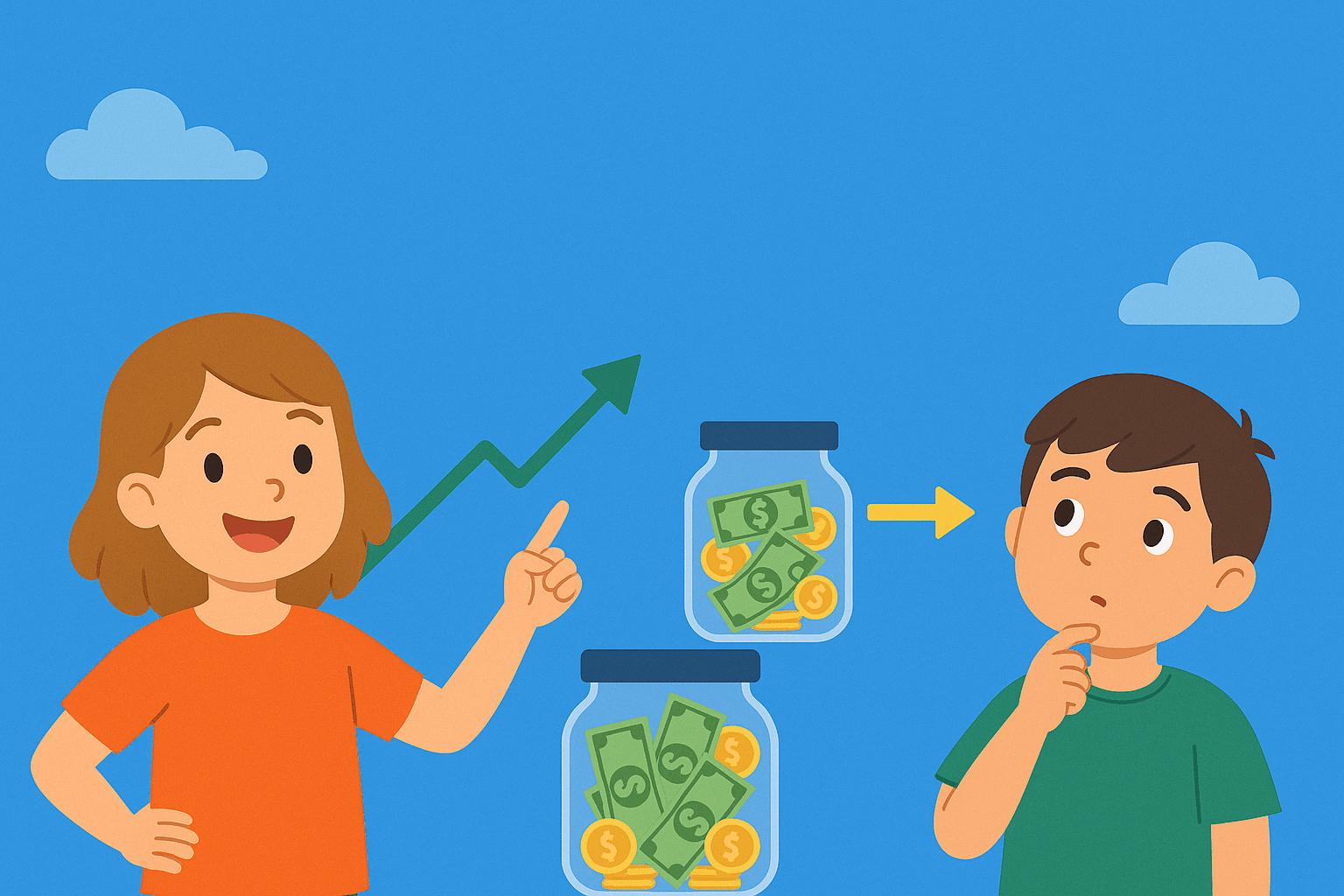
Now imagine you have some saved allowance. You can either keep your coins in a piggy bank under your bed, or put them in the bank. If you keep money in a bank, the bank might give you a little extra – this extra is interest. Think of interest as the bank’s “thank you” for letting them borrow your money. The interest rate is the percentage they pay. A higher interest rate means more “thank you” money added each year; a low rate means only a tiny thank you.
Here’s a playful example: a piggy bank might have a little percentage sign on it that tells you the interest rate (like 1% or 5%). If the bank offers 5% interest, it’s like getting 5 more coins for every 100 coins you save in one year. If the rate is only 1%, you only get 1 coin extra per 100. The cartoon piggy bank in our image has coins going into it, smiling because the bank is giving it interest!
Interest rates also affect the stock market. When interest rates are high, saving money in the bank is more attractive than taking risks in the stock market. In a way, the stock market and interest rates act like a seesaw: when one goes up, the other often goes down.
For example, if the bank pays more interest on savings, fewer people might want to buy stocks, so stock prices may fall. Conversely, if the bank’s interest rate is very low, people might rush to buy stocks to try to grow their money, pushing stock prices upinvestopedia.com. (Investopedia explains that when the Fed cuts rates, stocks generally go up, and when rates rise, stocks generally go down investopedia.com.)
What Are Stock Prices?
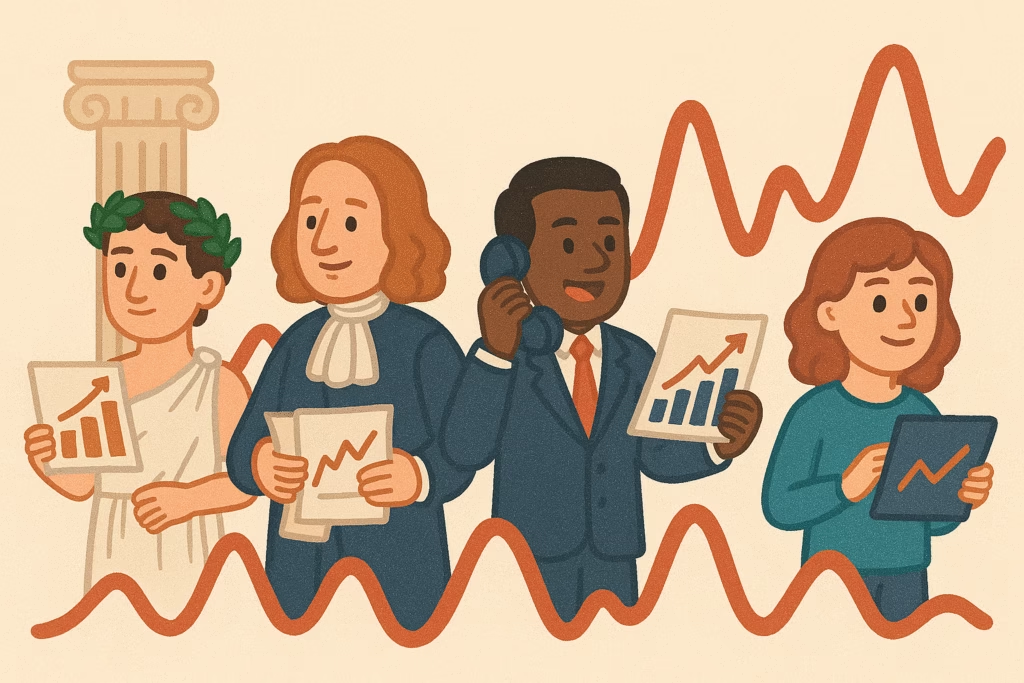
A stock price is the price of one share of a company investopedia.com. If you own a share of a toy company, the stock price is how much someone would pay you to buy that share. Stock prices change based on supply and demand: if many people want to buy the stock (lots of demand) and not many want to sell, the price rises. If lots of people want to sell but few want to buy, the price falls.
Think of a stock market like a treasure chest full of different companies. Each piece of paper or digital ticket (share) in the chest has a price. When good news comes out – say a new toy is selling like crazy – more people want to buy the stock of that toy company, so the price goes up (the treasure piece shines brighter). If bad news comes – maybe a lemonade drought makes fruit expensive – fewer people want the stock and the price goes down (the treasure piece looks dull).
The Seesaw of Interest and Stocks
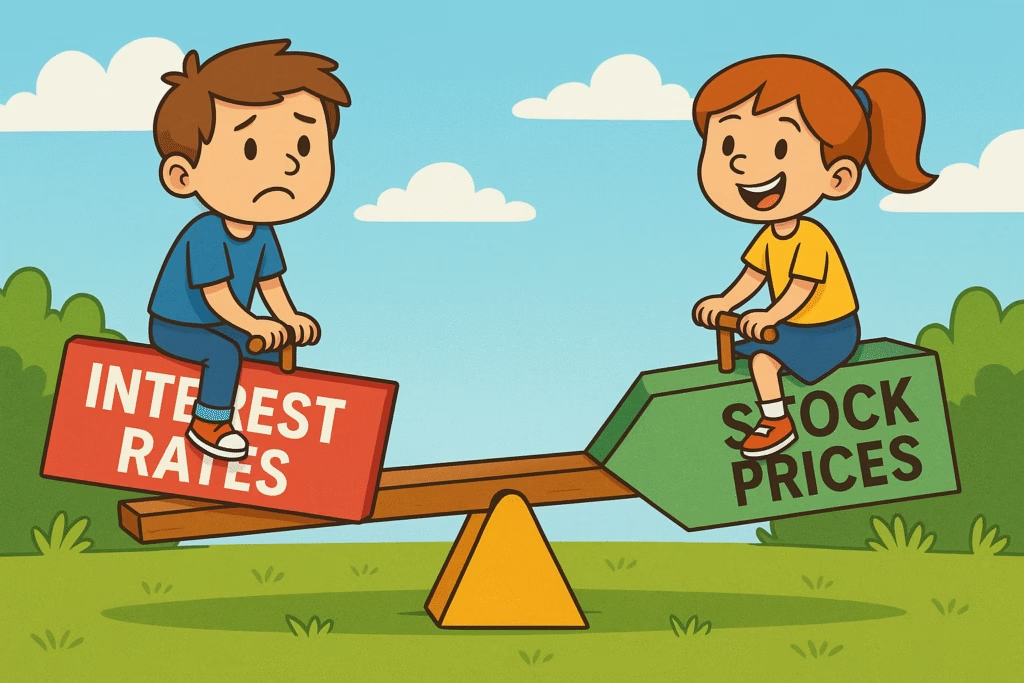
To see how interest rates and stock prices can move opposite each other, imagine a seesaw on the playground. One side is labeled “Interest Rates” and the other side “Stock Prices.” When interest rates go down (that side of the seesaw goes down), stock prices side goes up, and vice versa. This playful seesaw diagram shows that when borrowing money is cheap (low rates), companies and buyers are happy, so stocks often climb. When borrowing money is expensive (high rates), companies slow down, and stock prices can slip.
Even though it sounds strange, this opposite movement happens because money has many homes. If a bank suddenly pays a lot of interest for savings, many people might keep money in banks instead of using it to buy stocks. With less money chasing stocks, their prices may fall. When bank interest is low, investing in stocks looks more tempting, pushing prices up.
Piggy Bank vs. Stock Market
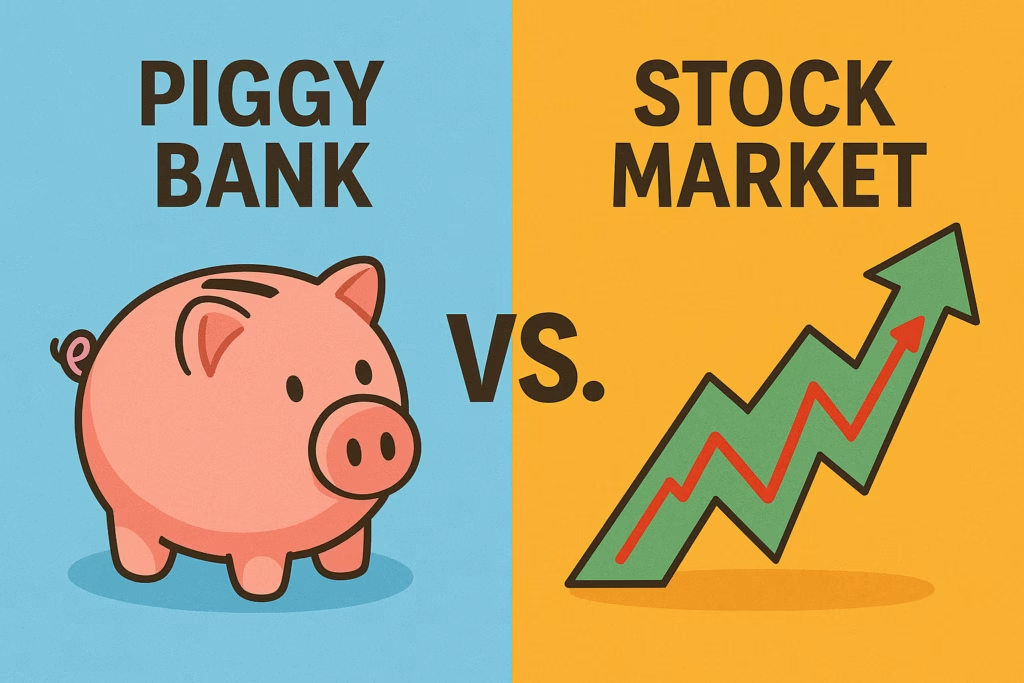
Kids often save coins in piggy banks because it feels safe and easy. Adults can save money safely too – in the bank or in government bonds. But they can also try to make more money by buying stocks. Choosing between saving (piggy bank) and investing (stocks) is a bit like deciding whether to ride a tricycle on a smooth path or go on a roller coaster. The tricycle (saving) is safe and steady, but it doesn’t go very fast. The roller coaster (stocks) can be exciting and go higher, but it can also drop suddenly.
In our cartoon, the thinking piggy bank wonders which to pick: a safe home in the piggy bank or a wild ride in the stock world? If interest rates are high and safe banks are paying well, many people feel happy keeping money in the bank. If interest rates are low, people might feel adventurous and choose stocks. As one expert explains, higher interest rates tend to make stock prices go down, so an investor might stick with the piggy bank instead.
Happy and Worried Markets
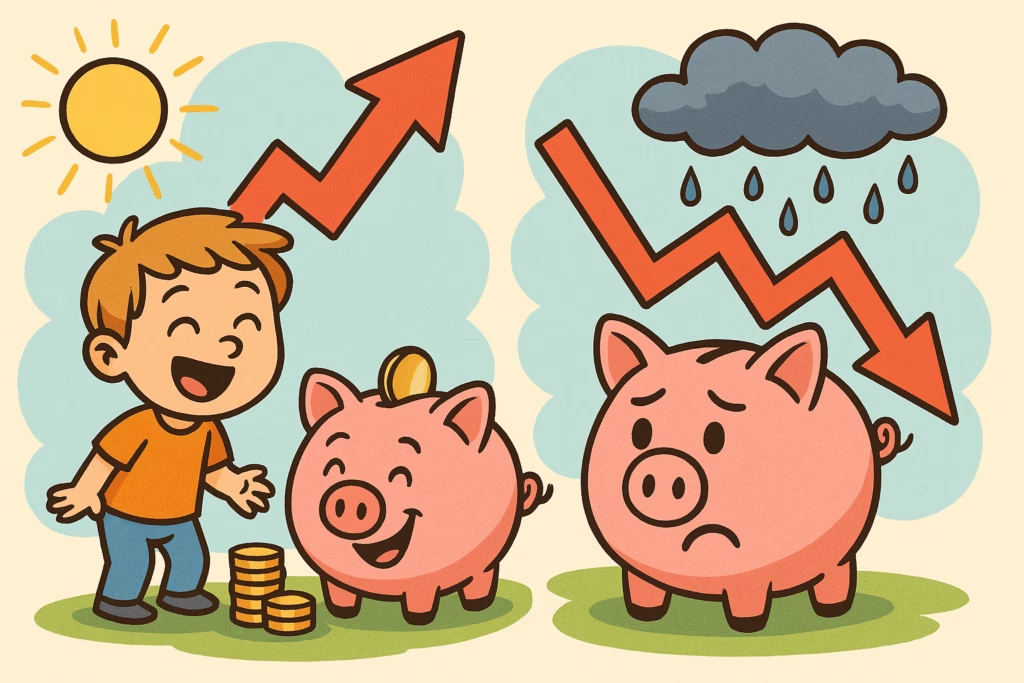
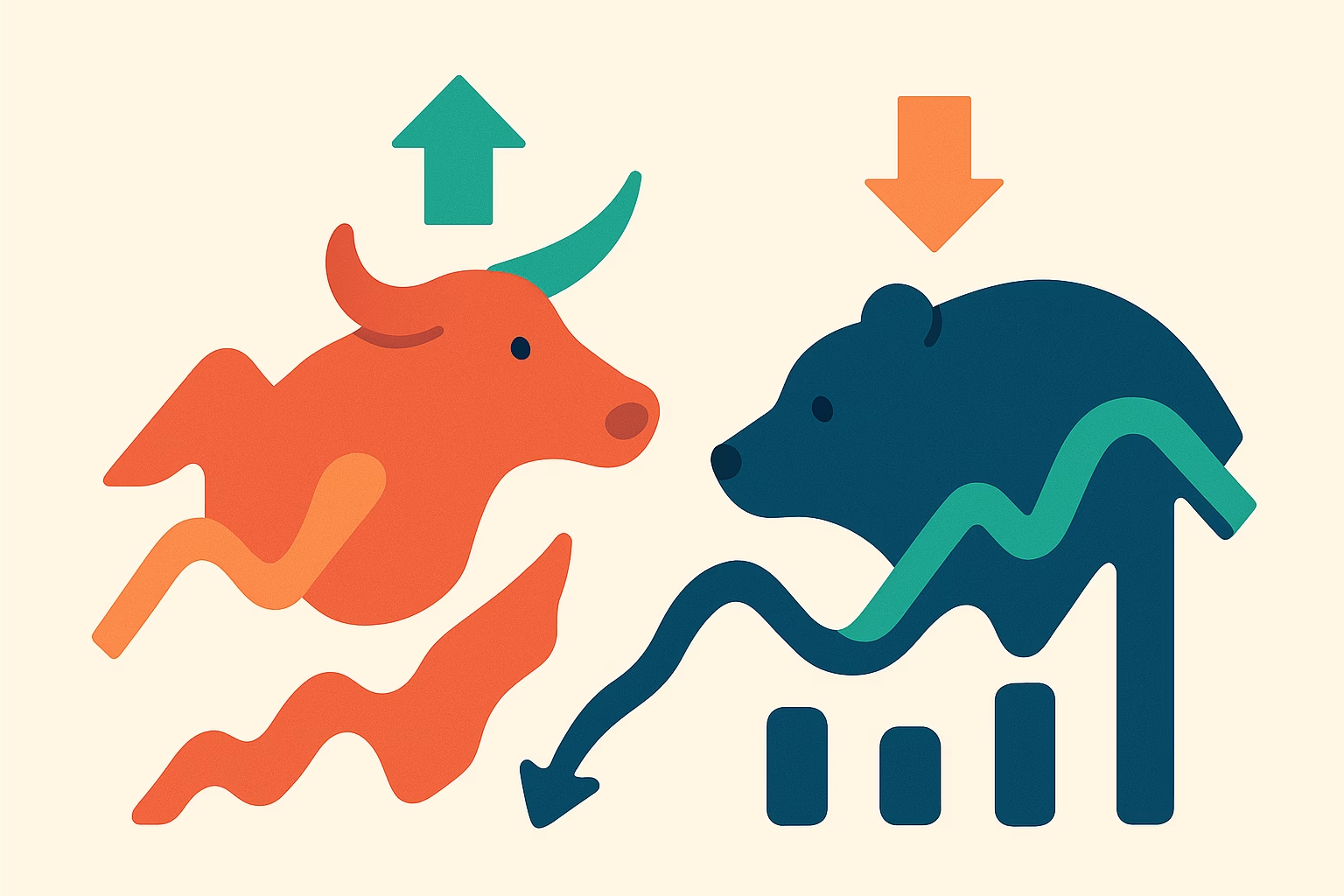
Sometimes the stock market is very happy, and prices zoom up (everyone smiles). Sometimes it’s worried, and prices fall (frowns appear). What makes these moods change? Big news about inflation or interest can sway the market’s mood. For instance, if a report says prices are getting out of hand (high inflation), investors might worry and sell stocks, making prices drop. On the other hand, news of low inflation or lower interest rates can make the market cheer and prices rise.
Think of it like weather for money: sunshine when the economy looks good, storm clouds when it looks bad. Our example cartoons (a happy saver with their piggy bank, and a thinking piggy bank) show these moods. The happy pig means everything is calm and good – maybe low inflation and low interest, so stocks can do well. The worried pig means caution – maybe high inflation or high interest – so people might hold onto money instead of investing.
Key Ideas to Remember
- Inflation = prices going up. You buy less with the same money.
- Interest rates = cost of borrowing (or reward for saving). High rates make loans expensive and saving attractive.
- Stock price = cost of one share in a company. It moves up and down based on how many want to buy or sell.
- When inflation is high, banks usually raise interest rates. That often pushes stock prices down.
- When interest rates go up, people often save more and buy fewer stocks. When rates go down, people may buy more stocks.
Even though these money ideas sound big, the important part is: When things change in the economy, it affects everybody’s money game. Just like in our lemonade stand, when prices or costs change, you have to adjust. When banks change interest, savers and investors react. And all those reactions make stock prices bob up and down, like kids on a seesaw.
In summary, the relationship between inflation, interest rates, and stock prices is vital for comprehending market dynamics. Thus, knowing How Inflation and Interest Rates Affect Stock Prices can help you make informed investment decisions.
Understanding inflation and interest rates helps us see why a big company’s stock price might drop or rise. It’s like watching a cartoon of a seesaw or a piggy bank – it makes the math of the money world feel fun and a bit easier to follow!
If You Liked This Article, Then You Might Also Like This One
Long‑Term vs Short‑Term Investing: Which Is Better for You?