Table of Contents
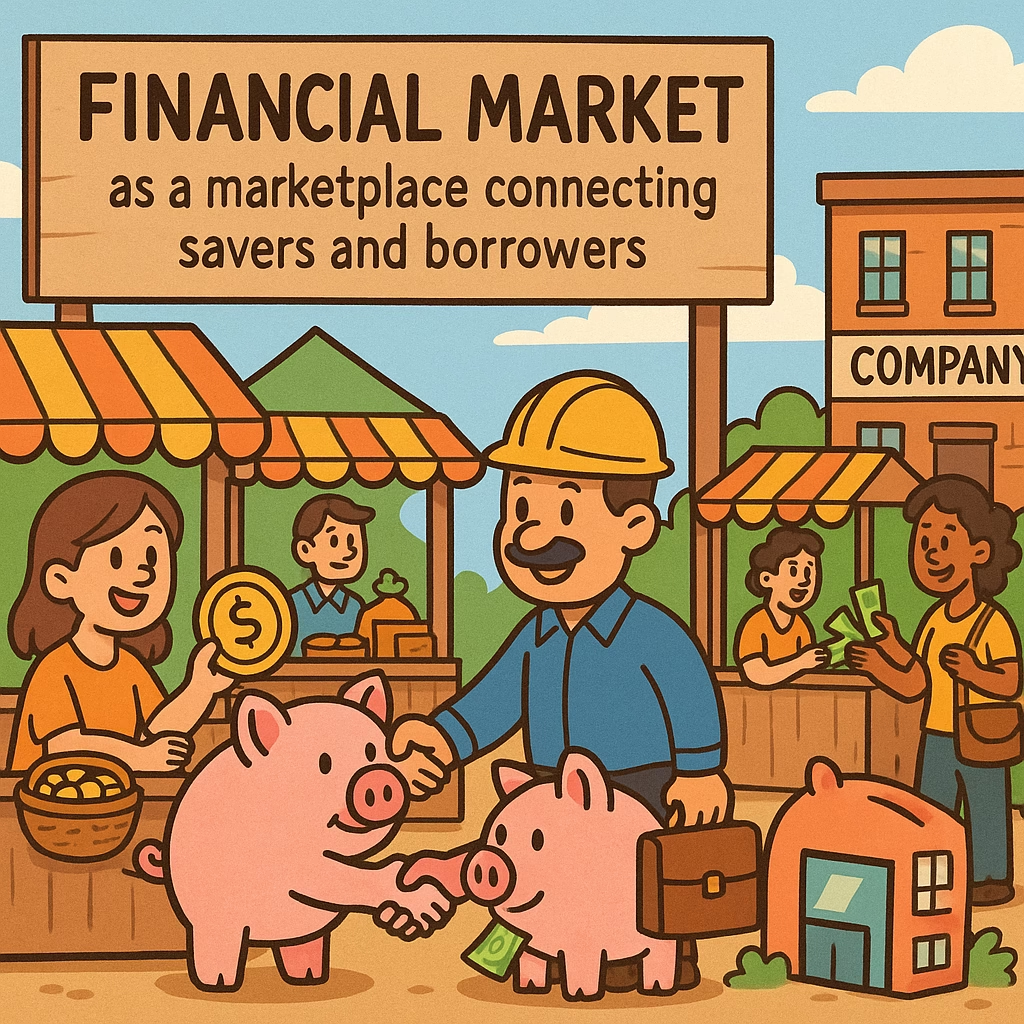
Financial markets can sound complicated, but at their core they are simply places where people exchange money for something else. Imagine a big marketplace – a place full of stalls where people trade toys, fruits and treasures. Instead of toys or fruits, a financial market deals with financial assets such as shares, bonds and loans. These assets help businesses raise money and allow savers to earn a return on their savings.
What is a Financial Market?
To understand why financial markets exist, think about two groups of people: savers and investors. Savers (households and individuals) have extra money they do not need right away. Investors (businesses and entrepreneurs) need money to build factories, hire workers or invent new products.
A financial market is like a bridge that connects these two groups. In the Indian business studies textbook, a financial market is described as “a market for the creation and exchange of financial assets”. It helps direct funds from savers to those who can use them productively cbseacademic.nic.in. When this allocation works well, two important things happen: savers receive a return for lending their money, and the economy grows because businesses can invest in productive activities.
Financial markets perform several key functions:
- Mobilising savings: They gather small amounts of savings from many people and channel them to those who need funds.
- Price discovery: The interaction between buyers and sellers helps set the prices of financial assets. For example, the price of a share reflects what investors are willing to pay today based on what they expect the company to earn in the future.
- Providing liquidity: Financial markets make it easy for investors to convert their investments into cash. This means people can buy or sell financial assets when they need to.
- Reducing transaction costs: By bringing buyers and sellers together in one place and providing information, markets save time and effort.
In the world of finance, there are many different types of markets. Two of the most important are the primary market and the secondary market. These are part of the capital market, which deals with long‑term funds such as shares and bonds. The Institute of Cost Accountants of India notes that a capital market can be “classified into primary and secondary markets”icmai.in. The difference between the two has to do with who is selling the financial assets and why.
The Primary Market – Where New Things Are Born
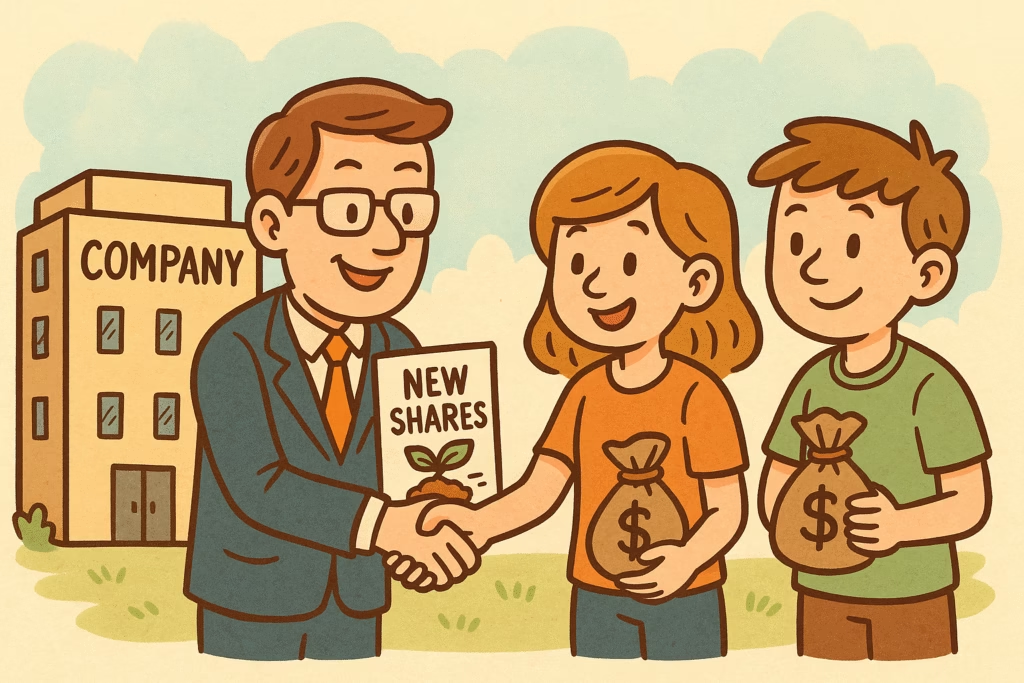
The primary market is like a grand opening day at a toy store. When a company or a government needs money to start a new project or grow the business, it creates new financial assets and sells them for the first time. This is why the primary market is also called the new issue market. The business studies text explains that the primary market deals with “new securities being issued for the first time”. The main job of this market is to transfer funds from savers to entrepreneurs who want to set up or expand enterprises.
How Does the Primary Market Work?
Imagine a group of friends who want to build a treehouse. They need money for wood, paint and tools. To raise the money, they decide to sell special tickets (like membership badges) to other kids in the neighbourhood. Each ticket gives the buyer a right to visit the treehouse whenever they want. By selling these tickets for the first time, the friends collect enough money to build the treehouse.
This is similar to how a company raises money in the primary market. When the company sells shares for the first time in an Initial Public Offering (IPO), it is inviting investors to buy pieces of ownership. It could also issue bonds or debentures, which are like promises to pay back money with interest. The company receives cash, and investors receive new financial assets. The textbook notes that a company can raise capital in the primary market in the form of equity shares, preference shares, debentures, loans and deposits.
Ways Companies Issue New Shares
There are several methods a company can use to issue new securities:

- Public issue (IPO): Shares are offered to the general public. This process transforms a privately held company into a public company. The Institute of Cost Accountants notes that an IPO allows companies to raise equity capital and offers investors a chance to earn returns.
- Rights issue: Existing shareholders are given the first chance to buy additional shares. This is like giving the kids who bought the first tickets a chance to buy more before selling to new kids.
- Private placement: The company sells securities to a small group of investors, such as banks or insurance companies. In this case, the public does not participate.
No matter which method is used, the primary market directly promotes capital formation because money flows from savers to the company cbseacademic.nic.in. Once the securities have been issued, they can no longer be sold in the primary market. Investors who wish to sell their shares or bonds must go to the secondary market.
The Secondary Market – The Home of Trading
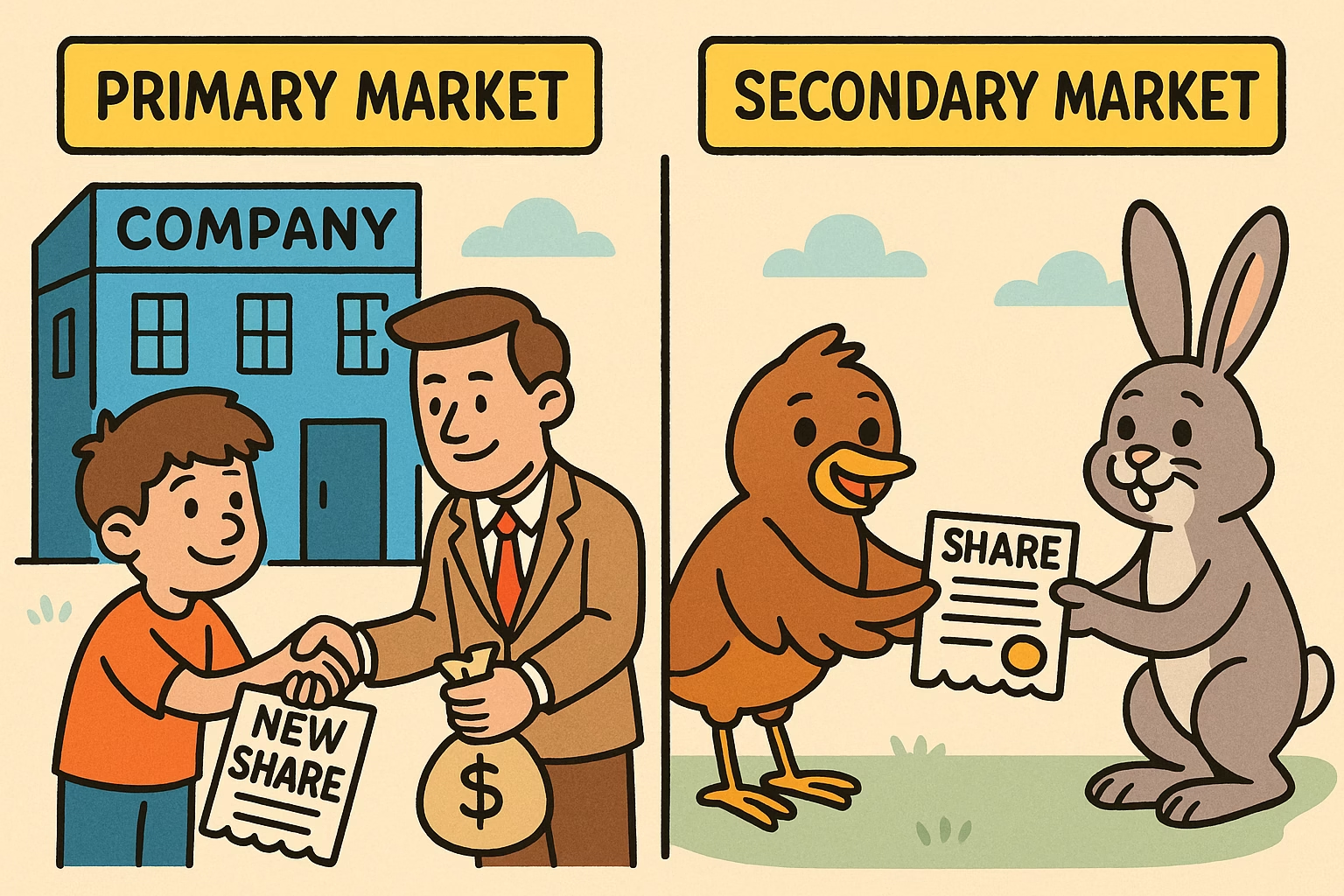
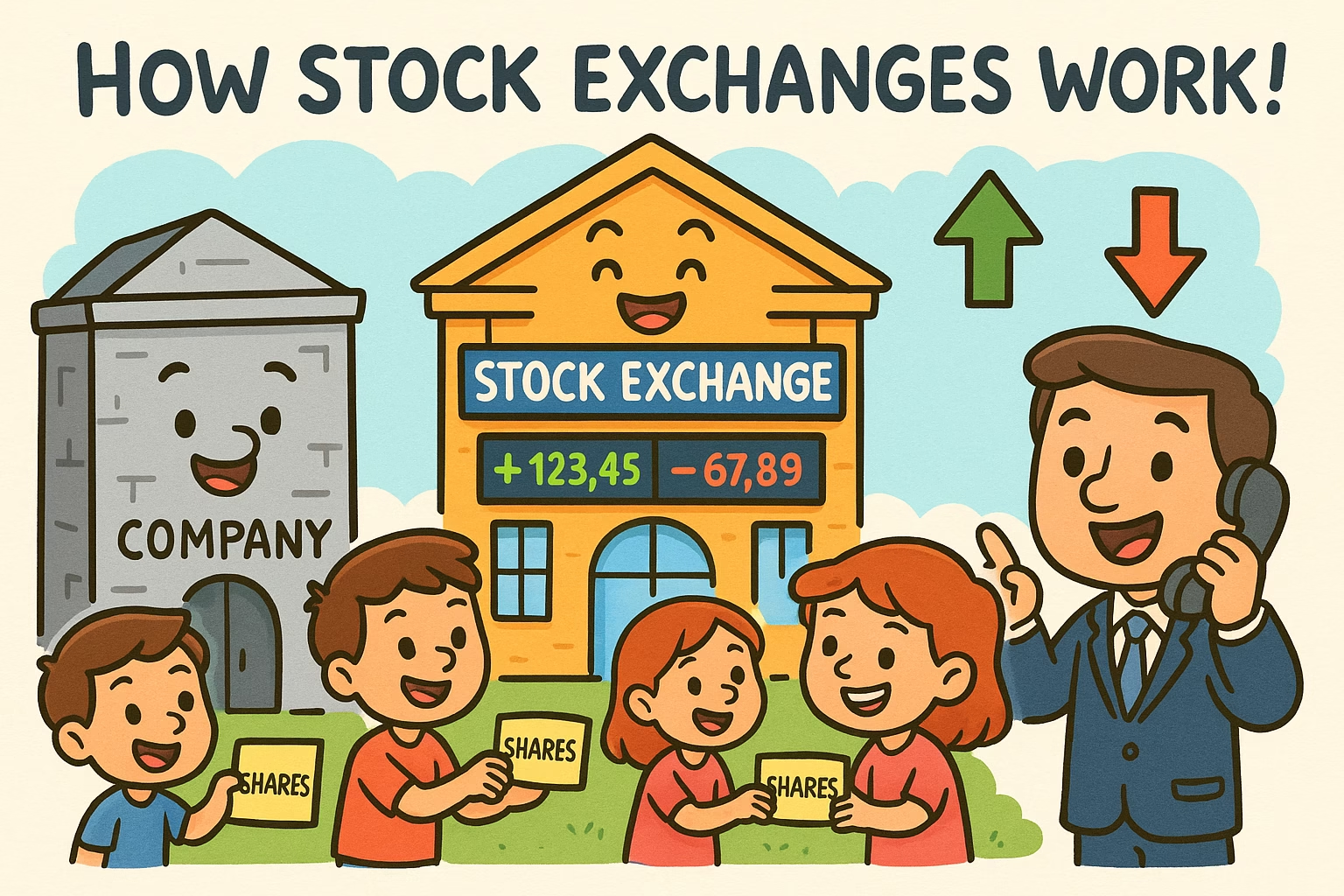
After the treehouse is built and tickets have been sold, some kids might decide they no longer want to visit the treehouse. They might want to sell their tickets to other children. This exchange of old tickets does not give the treehouse builders any new money, but it allows kids to trade among themselves. In finance, this is the job of the secondary market, also called the stock market or stock exchange. The secondary market is where existing securities are bought and sold cbseacademic.nic.in. Because these securities were issued earlier in the primary market, trading them provides liquidity for investors without affecting the company.
Why Do We Need a Secondary Market?
If investors could only buy and never sell their shares, they would be very reluctant to invest. The secondary market solves this problem by creating a continuous market where securities can be bought and sold. This market helps existing investors to disinvest (sell their holdings) and allows new investors to enter the market. It also provides liquidity and marketability to existing shareholders so they can convert their assets into cash.
In India, the National Stock Exchange (NSE) and Bombay Stock Exchange (BSE) are examples of secondary markets. Trading on these exchanges is regulated by the Securities and Exchange Board of India (SEBI) to ensure fairness and transparency. When you hear the word SENSEX on the news, it refers to an index that tracks the performance of stocks on the BSE. The SENSEX is considered a key indicator of how the Indian secondary market is performing cbseacademic.nic.in.
How Does the Secondary Market Work?
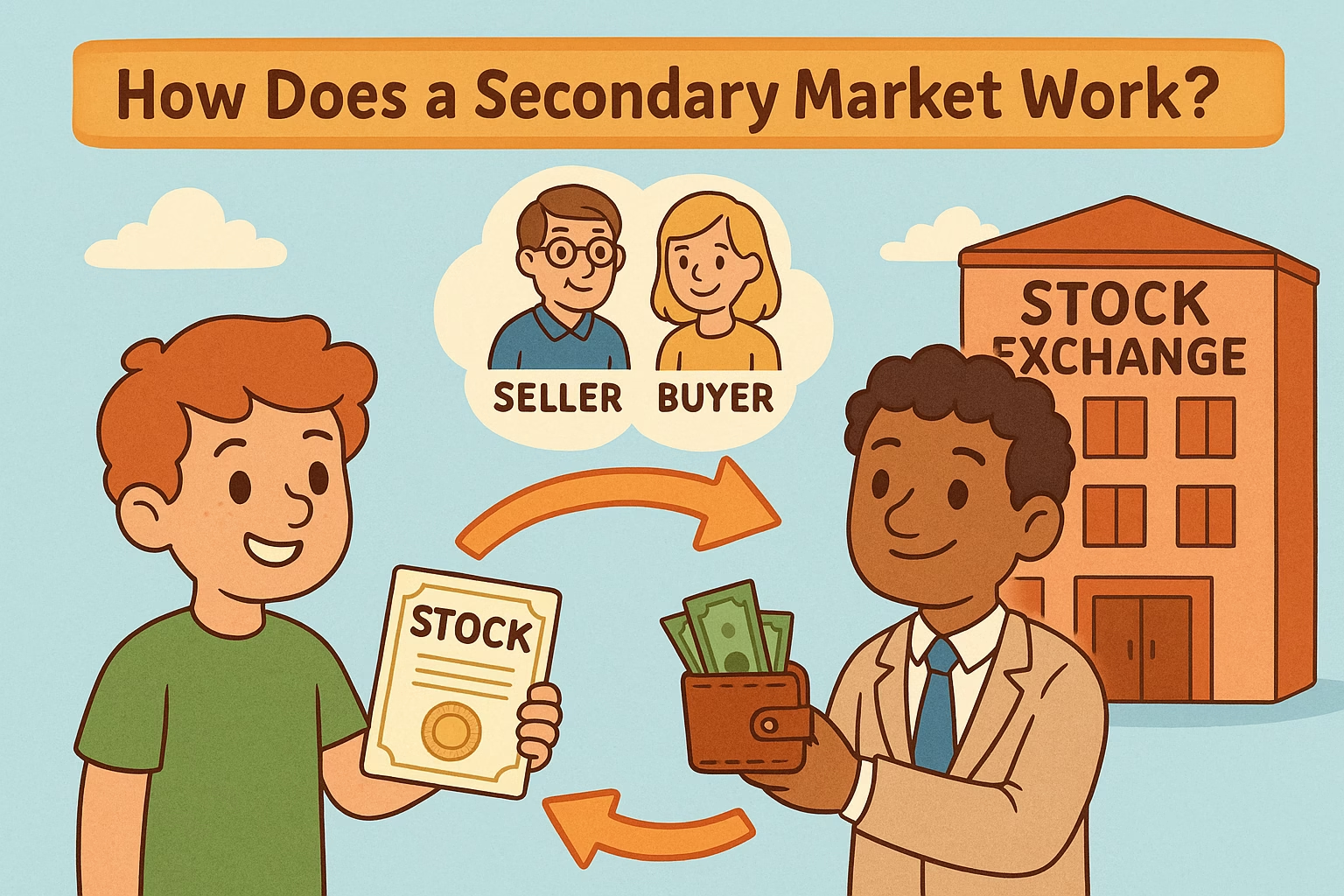
Just like a second‑hand toy market, the price of shares in the secondary market is determined by demand and supply. The textbook notes that in the secondary market, prices are determined by demand and supply for the security. If lots of people want to buy a particular share, its price will go up. If many investors want to sell, the price may fall. The company whose shares are being traded is not involved in these transactions cbseacademic.nic.in.
Trading is done through brokers on computerised platforms. Buyers and sellers do not need to meet each other in person; their orders are matched electronically. SEBI regulates the activities of brokers and ensures that trading is transparent, orderly and safe. The market is also subject to rules about settlement (the transfer of shares and money) to protect both buyers and sellers.
Comparing Primary and Secondary Markets
Although both markets belong to the capital market, they serve different purposes. The primary market creates new financial assets and channels funds to companies; the secondary market allows investors to trade those assets among themselves. Here is a simple comparison:
| Feature | Primary Market | Secondary Market |
|---|---|---|
| Main Purpose | To raise new funds by issuing new securities | To provide a marketplace for trading existing securities |
| Who Sells | The company or government (issuer) sells to investors | Investors sell to other investors; the company is not involved |
| Type of Securities | New shares, bonds, debentures | Already issued shares and bonds |
| Price Determination | Usually set by the issuing company (often through underwriters) | Determined by demand and supply on the stock exchange |
| Transactions | Only buying occurs; investors cannot sell back to the primary market | Both buying and selling occur; investors trade with each other |
| Impact on Company | The company receives funds and increases capital (directly promotes capital formation) | Does not bring new funds to the company but provides liquidity for investors |
| Location | No fixed physical location; issues may be made anywhere | Conducted at specified places (stock exchanges) or online trading platforms |
Why Both Markets Matter
The primary and secondary markets work together like planting and selling fruits. The primary market is where seeds (new securities) are planted – companies get the resources they need to grow. The secondary market is where the fruits (existing securities) are harvested and traded. Without the primary market, there would be no new investments; without the secondary market, investors would be reluctant to buy because they could not sell when they needed money. The Institute of Cost Accountants summarises this relationship: the primary market creates long‑term instruments for borrowings, while the secondary market provides liquidity through the marketability of these instruments.
Fun Facts and Simple Terms
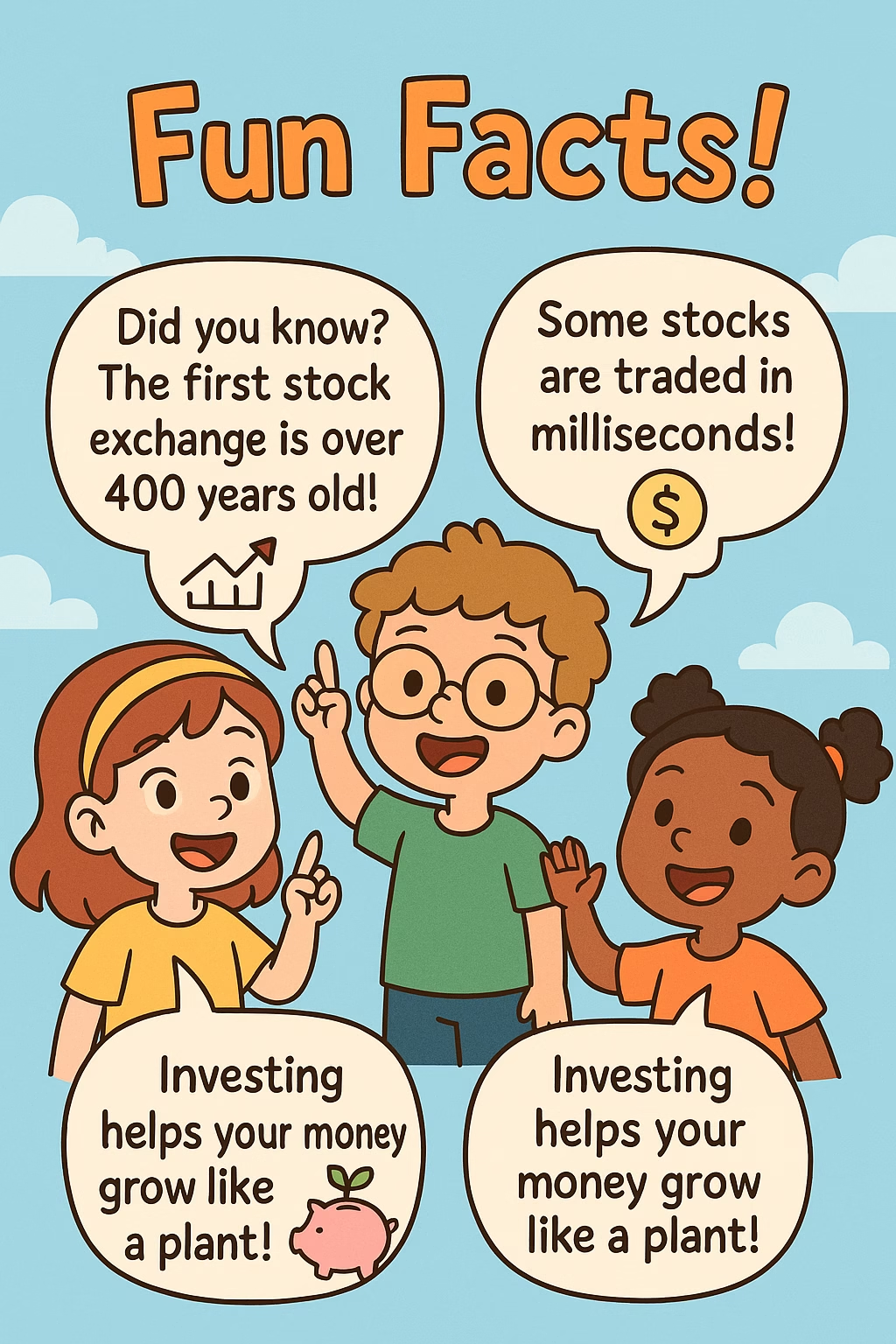
Understanding a few basic terms can make financial markets less mysterious:
- Share (stock): A unit of ownership in a company. Shareholders are part owners of the company and may receive dividends (a share of the profits).
- Bond or debenture: A loan made to a company or government. The issuer promises to pay interest and repay the principal at a set time. Bonds are usually traded in the secondary market after they are issued.
- IPO (Initial Public Offering): The first time a private company sells shares to the public. This happens in the primary market and turns the company into a public company.
- Stock exchange: An organised marketplace where existing securities are bought and sold. Examples include the BSE and NSE. According to the Securities Contracts (Regulation) Act, a stock exchange is an institution that assists and controls the buying and selling of securities.
- Price discovery: The process by which buyers and sellers determine the price of a security based on supply and demand.
- Liquidity: How easily an asset can be converted into cash without affecting its price. The secondary market provides liquidity for shares and bonds.
A Story to Remember
Let’s wrap up with a simple story. Maya lives in a town where there is a new bakery. The bakery needs money to buy ovens and ingredients. The owner prints colourful paper certificates that say “1 Bread Share.” Maya and her friends each buy some of these certificates, giving their pocket money to the baker. This is the primary market – the bakery raises money by issuing new shares.
Later, Maya’s friend Rahul wants to buy a “Bread Share” but the bakery has already sold all the certificates. Maya decides to sell one of hers to Rahul at a slightly higher price because the bakery is doing well.
This transaction between Maya and Rahul takes place in the secondary market. The bakery doesn’t get any more money from this sale, but Maya has turned her investment into cash and Rahul gets to share in the bakery’s future profits. The baker is happy because the existence of a secondary market encourages people like Maya to invest in the first place.
Conclusion
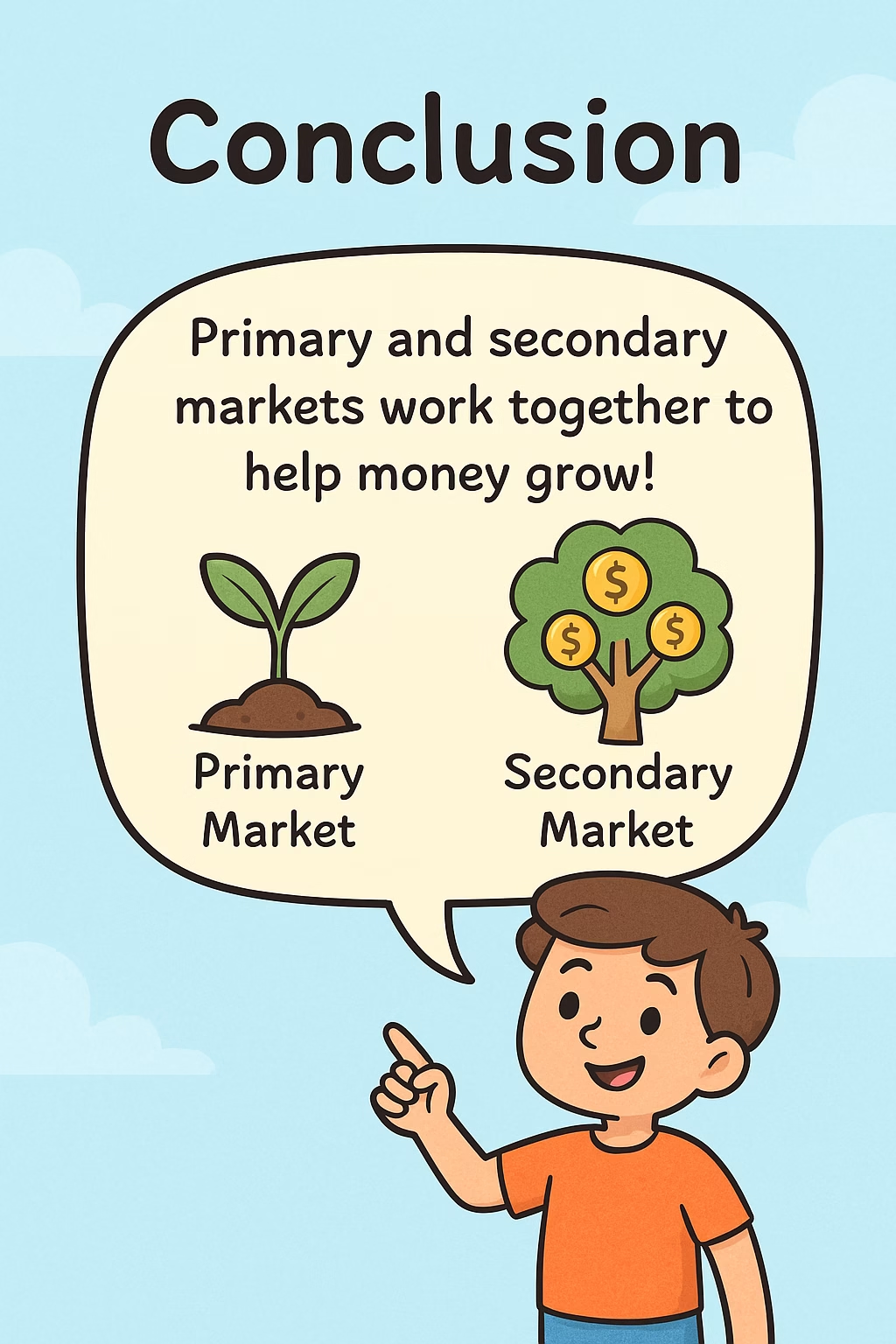
Financial markets may seem like a confusing maze, but when you break them down, they work just like a marketplace you might visit on the weekend. The primary market is where new financial products are created and sold for the first time. It allows companies and governments to raise money to build roads, schools and businesses. The secondary market is where those financial products can be bought and sold among investors. It gives people confidence to invest because they know they can sell later if they need to. Together, these markets help our economy grow and ensure that savings are used in the most productive way.
Understanding these basic ideas when you’re young can make money matters less scary and more exciting. After all, every big tree starts from a small seed, and every great company once invited its first investors.
If You Liked This Article, Then You Might Also Like This –
Value Investing, The Warren Buffett Way : A Kid’s Guide