Table of Contents
Ms. Penny’s classroom was buzzing with curiosity. She had promised a story about giants and mice – but it wasn’t a fairy tale, it was about companies! When one student named Aria heard her parents mention “market capitalization” on the news, she asked, “Ms. Penny, what does market cap mean?” Ms. Penny smiled; this was a perfect chance to teach the class a big idea in a fun way.
What Is Market Capitalization?
Ms. Penny began by explaining the basics. “Market capitalization, or market cap, is just a fancy way to say how much a company is worth on the stock market,” she said. It’s like figuring out the total value of all of a company’s shares of stock. To calculate it, you take the number of shares a company has and multiply it by the price of one share. In simple terms: if one share is like a single puzzle piece of a company, then market cap is the value of the whole puzzle when you put all the pieces together.
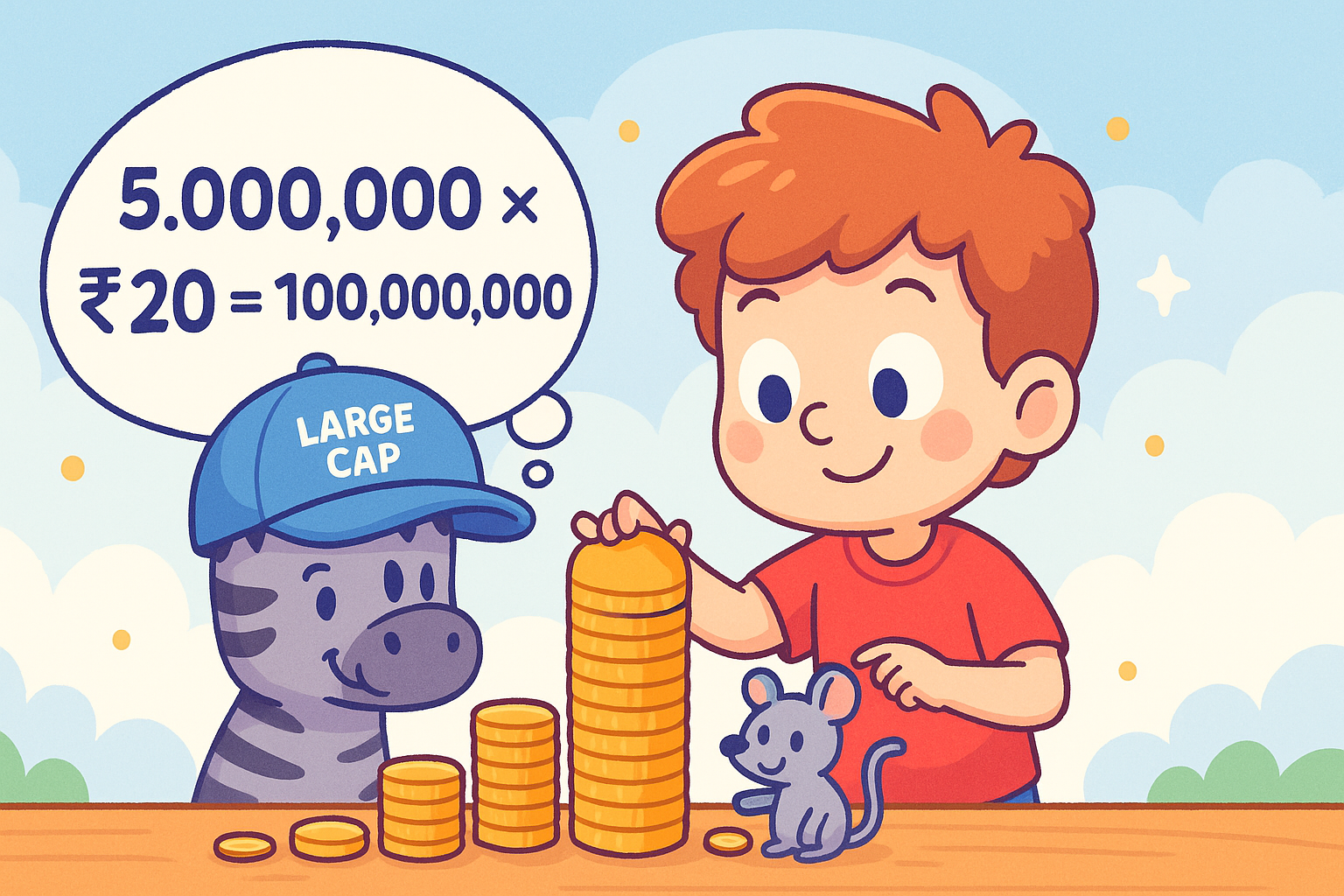
For example, Ms. Penny drew a quick chart on the board: “Imagine a company has 5 million shares, and each share is worth Rs 20. If we multiply 5 million by Rs 20, we get Rs 100 million. So that company’s market cap is Rs 100 million“. The kids nodded as they grasped the idea. It was like counting all the toy blocks in a box and knowing how much the entire box is worth if each block has a price tag.
Large-Cap, Mid-Cap, Small-Cap: Company Sizes
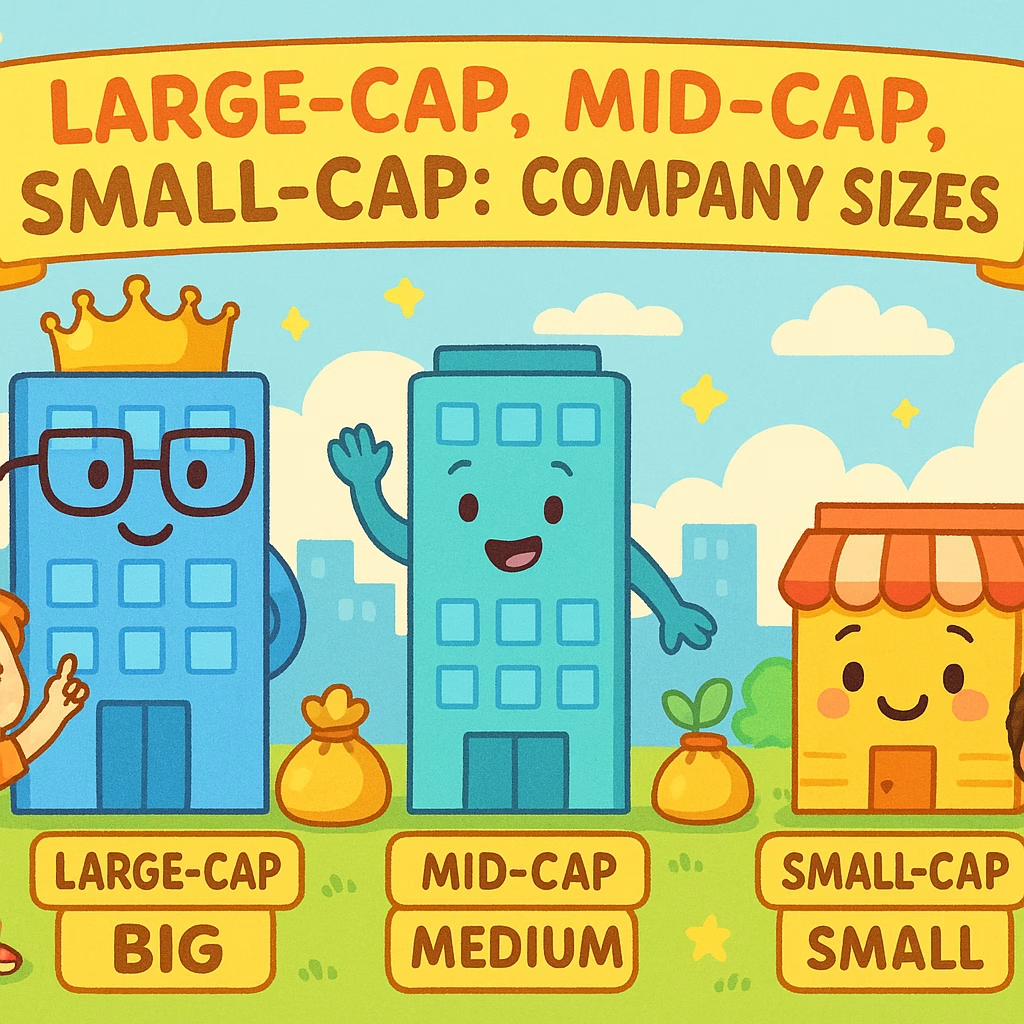
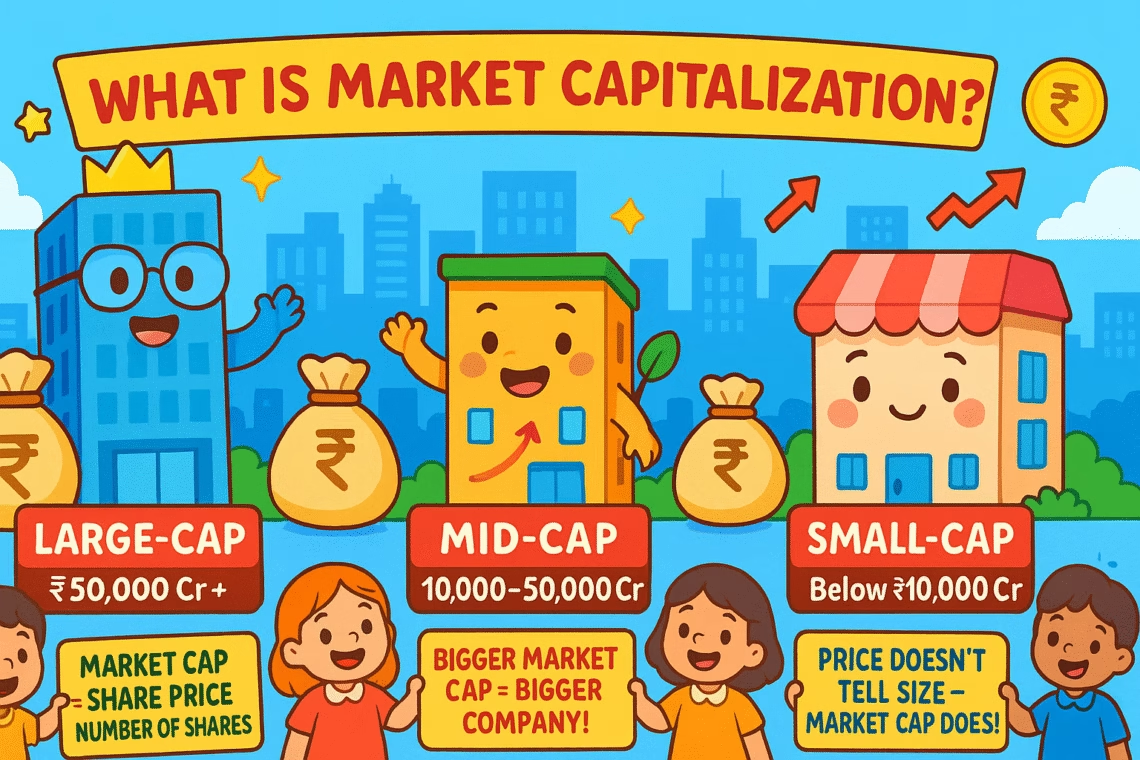
“Now,” Ms. Penny continued, “just like you might sort T-shirts by small, medium, and large sizes, we sort companies by size using their market cap.” Companies often fall into three main groups: large-cap, mid-cap, and small-cap (the word “cap” here is just short for capitalization). There’s no exact rule for the size of each, but generally:
- Large-cap companies are the giants. They usually have a market value above about $10 billion easypeasyfinance.com. These are big, well-known companies you’ve probably heard of, like Apple or Microsoft. They are like the big kids on the block of the business world.
- Mid-cap companies are the medium-sized ones, typically worth around $2 billion to $10 billion easypeasyfinance.com. These are in-between companies – not huge, but not tiny either. They might be companies that are still growing quickly and could become giants someday.
- Small-cap companies are the little ones, often worth less than $2 billion in market value. These could be newer or more specialized companies investopedia.com. They’re like the young kids or the little start-ups that most people might not know much about yet.
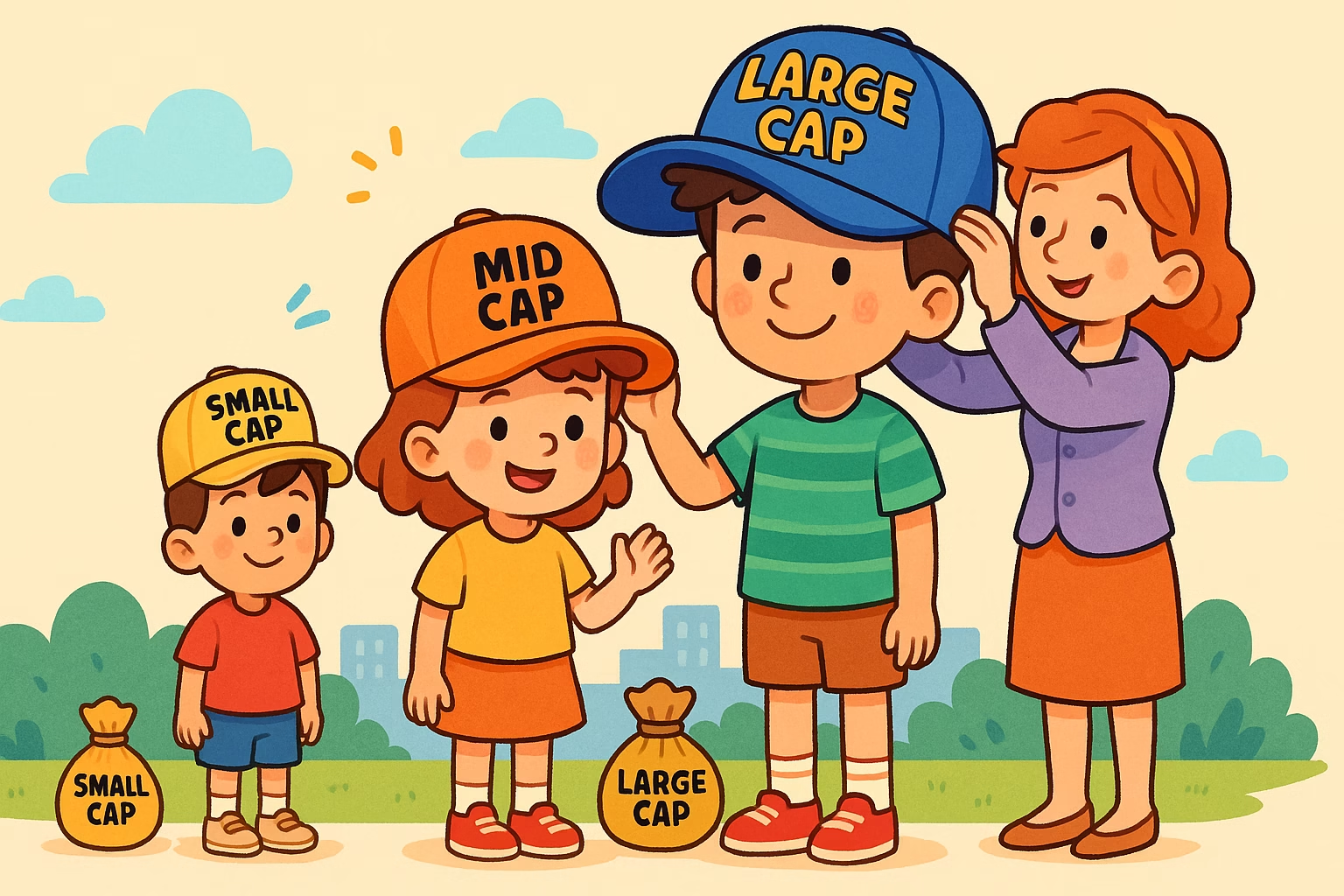
As Ms. Penny explained this, she took out three baseball caps (hats) from a box – one large, one medium, and one small. She labeled them Large, Mid, and Small, and asked one tall, one medium-height, and one short student to come up. The tallest wore the “Large” cap, the middle one wore the “Mid” cap, and the shortest wore the “Small” cap. The class giggled, but the message was clear: a large-cap company is like the tall student wearing the large hat (a big company), and a small-cap company is like the short student with the small hat (a small company). The mid-cap was the one in between. It was a fun way to remember.
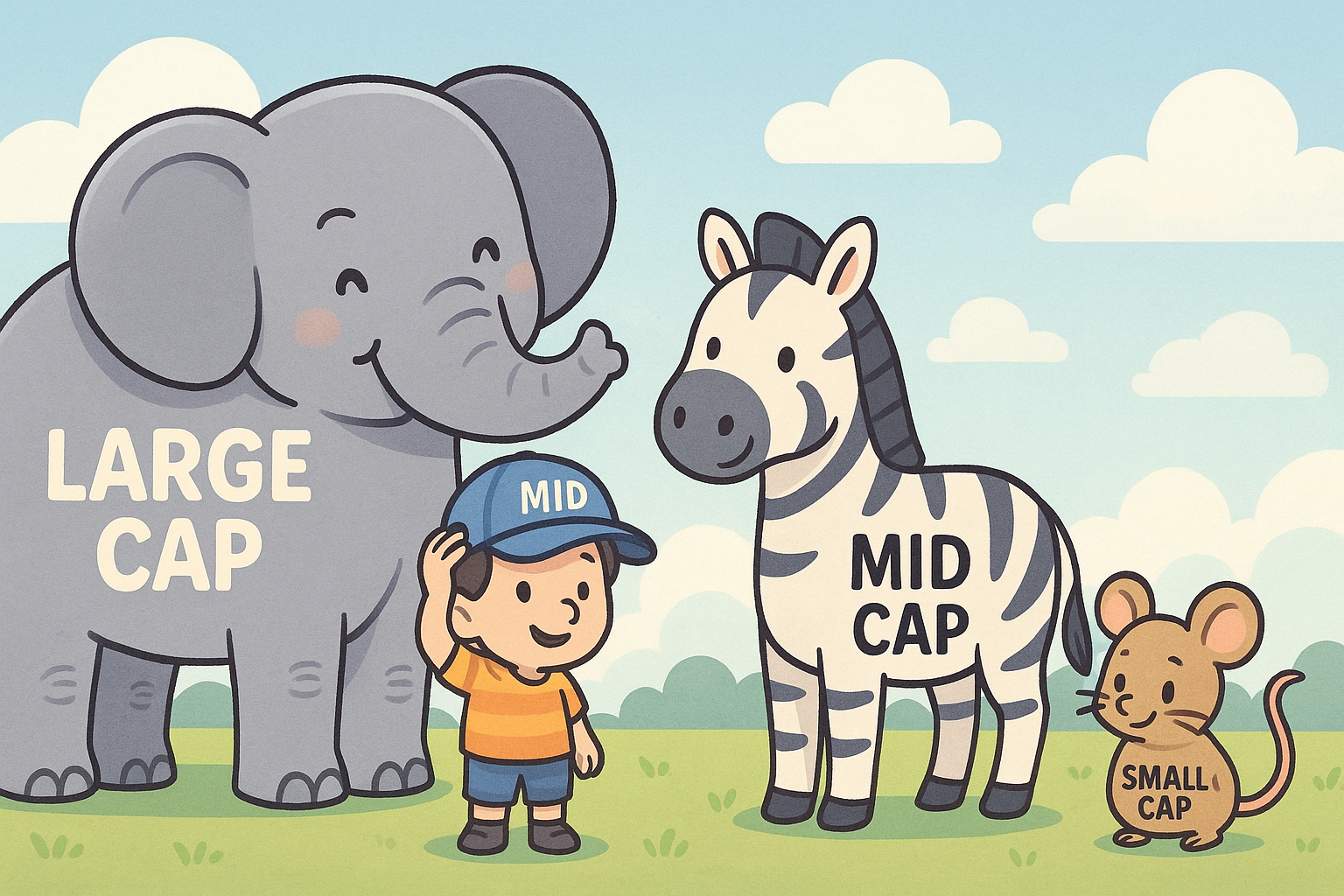
Ms. Penny added, “Think of these companies as characters in a story. A large-cap company could be a gentle giant – a friendly elephant, strong and known by everyone. A mid-cap might be like a zebra – not as big as the elephant but sturdy and fast. And a small-cap could be a mouse or a little bird – small and quick, not as strong, but it could grow in time.”
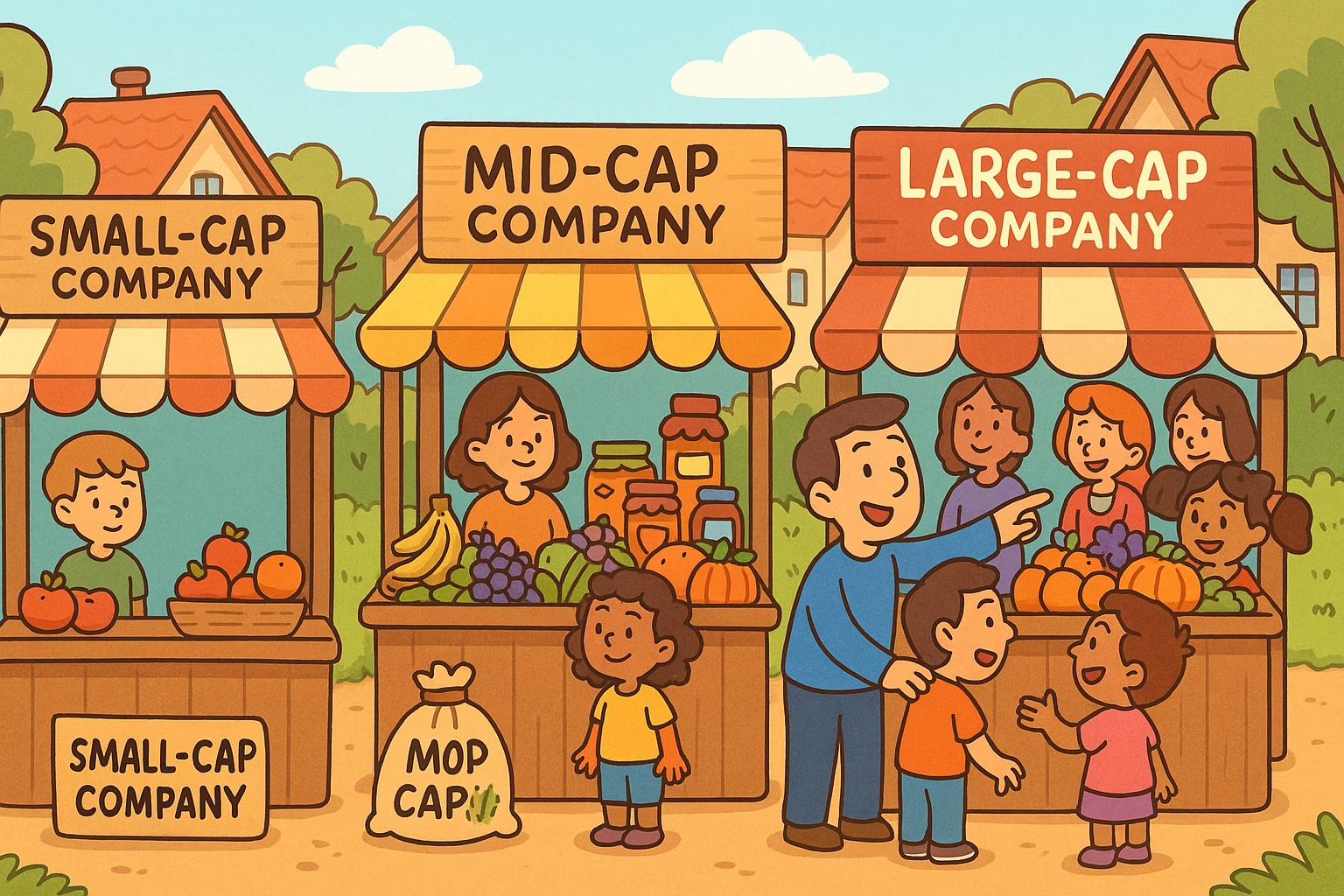
The kids loved these comparisons. Next, Ms. Penny said, “Imagine a marketplace with three stalls: a tiny stall, a medium stall, and a huge stall, each representing a different company size.”
Why Does Market Cap Matter?
Aria raised her hand again. “Why do we care if a company is small or big?” she asked.
Ms. Penny explained that knowing a company’s size – its market cap – helps investors understand how the company might behave. Big companies (large-caps) tend to be more stable. They’re like big old oak trees in a forest – they have deep roots. When strong winds (or tough economic times) come, the big tree sways less; it’s sturdy. Large-cap companies have been around for a long time and often have more money saved and many products, so they can handle ups and downs better. That means they are less likely to have wild ups and downs in their stock price finra.org.
On the other hand, small-cap companies are like young trees or saplings. They can definitely grow much faster than the old oak tree when the sun is shining (when the economy is good). A tiny start-up might double in size if it finds success. But those small sapling companies can also shake more in the wind – meaning their stock prices might change a lot more and they can be riskier if a storm hits. They don’t have as many branches or leaves yet (not as many products or not as much money saved), so tough times can hurt them more.
Mid-cap companies, as you might guess, are in the middle – they can be sturdier than small-caps but usually still have more ups and downs than the giants. They might be like growing trees: not as solid as the oak, but more rooted than a sapling. They often are in an expanding phase, meaning they’re trying to become bigger and well-known. Investors see mid-caps as a bit of a balancing act – with some risks but also a lot of potential to become the next big thing.
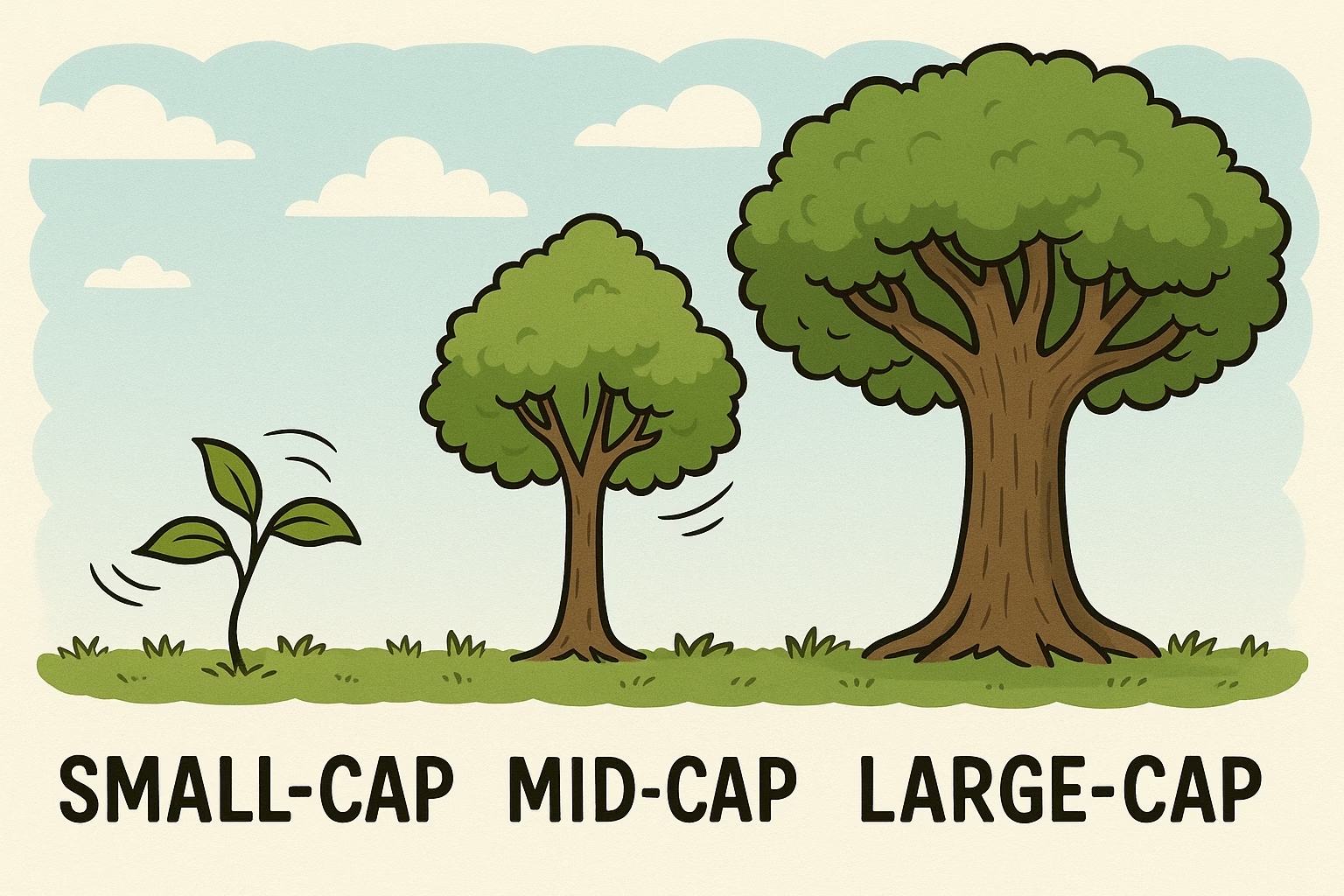
“So, why does all this matter?” Ms. Penny asked, wrapping up. If you (or your parents) invest money in companies, knowing the market cap tells you about the company’s size and what to expect. A large-cap company (like our elephant or oak tree) might be a safer place to put money – it’s established and not likely to change overnight. A small-cap company (like the little mouse or a young tree) might be riskier – it could grow a lot, or get wobbly in tough times. People often invest in a mix of large, mid, and small companies to balance safety and growth. It’s like a sports team with some big, reliable players and some young, high-energy players.
Wrapping Up the Story
By the end of the lesson, the once-confusing term market capitalization made a lot more sense to everyone. The kids learned that market cap is basically a quick way to say how big or small a company is in the stock market. They also discovered that companies are grouped into large-cap, mid-cap, and small-cap just like sorting small, medium, and large sizes. This helps investors understand a company’s profile.
Aria grinned and said, “So a small-cap company is like a little kid and a large-cap is like a grown-up, right?”
“Exactly!” Ms. Penny laughed. “And just like kids can grow up, small-cap companies can grow into large-cap companies one day if they become very successful easypeasyfinance.com. Every giant company you know started out small at one point.”
As the class ended, everyone felt happy and smart. They could go home and tell their parents that they know about market capitalization – and even explain it with fun analogies!
If You Liked This Article, Then You Might Also Like This –
How Stock Exchanges Work: A Fun Guide