Table of Contents
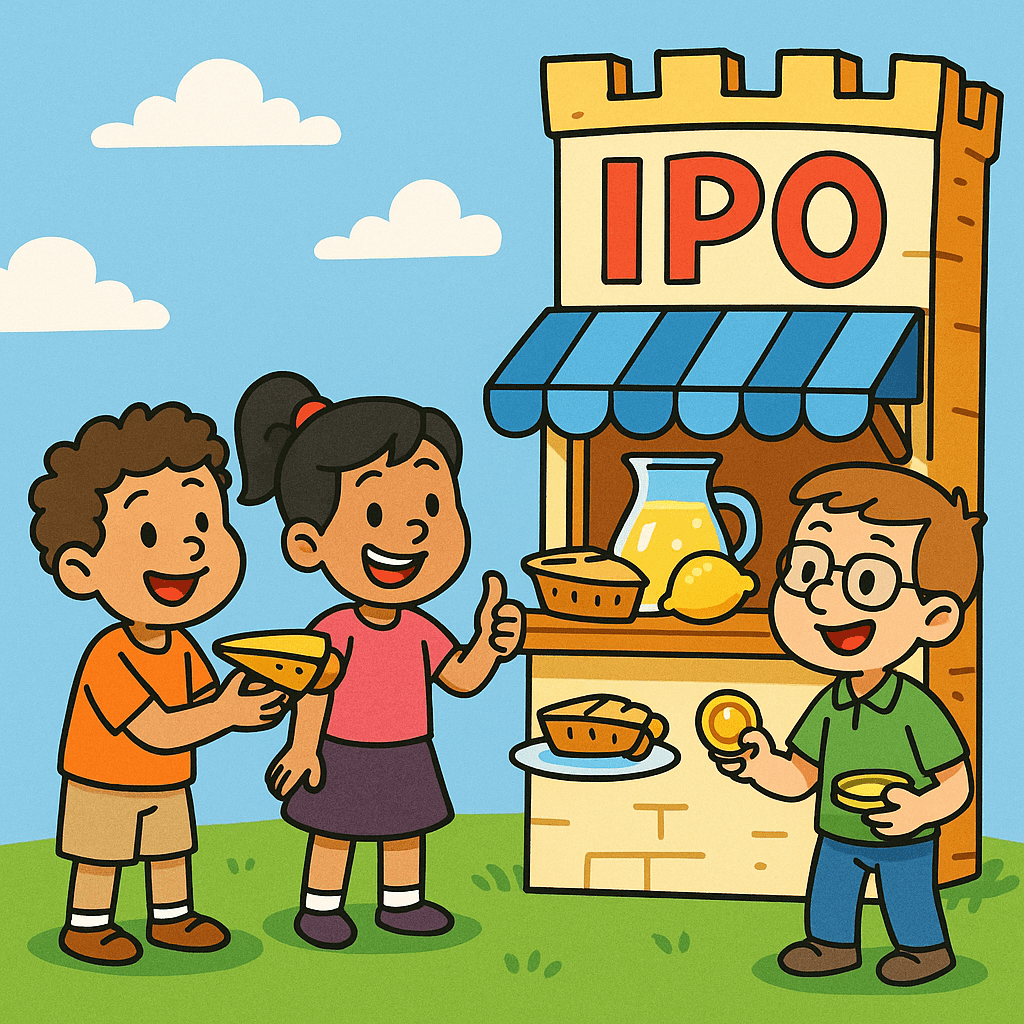
If you have ever run a lemonade stand, you know that starting a tiny business is fun. You might sell cups of lemonade, earn some coins, and dream about buying a bigger jug or more cups. Now imagine your lemonade stand becomes so popular that your friends and neighbours also want to join. You could invite them to give you some money in exchange for a little part of your lemonade stand. In grown‑up terms, this idea of selling small pieces of a company to lots of people is called an initial public offering or IPO. This friendly guide explains What are IPOs in a way that kids and adults can easily understand.
What is an IPO ?
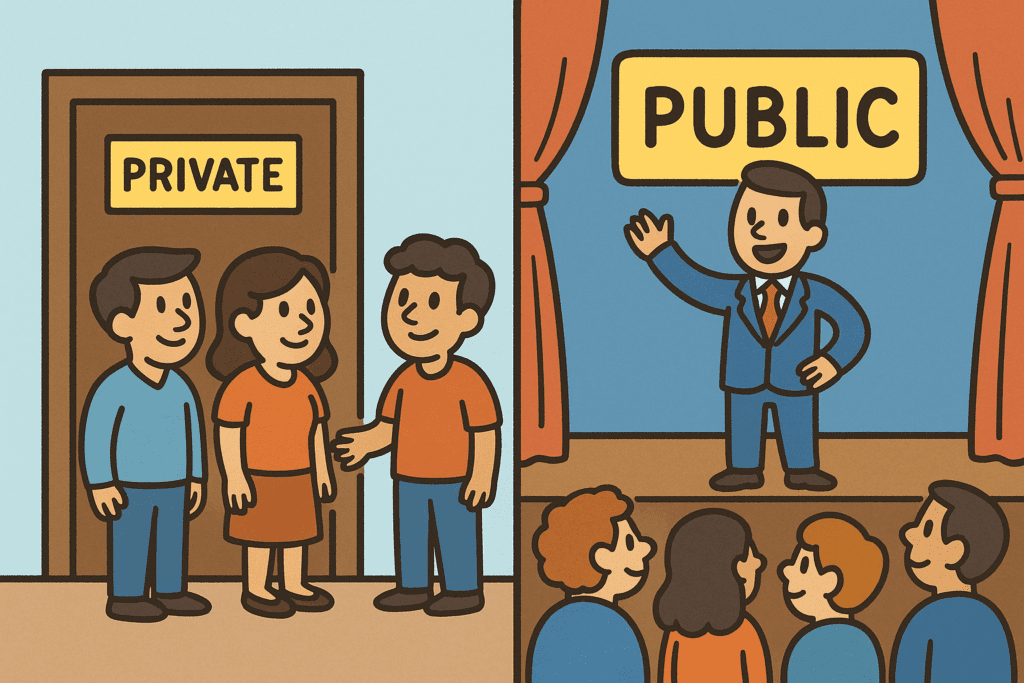
An IPO happens when a company that used to be private (owned by a few people) sells its shares to the public for the first time. Before the IPO, the company’s founders and early investors own all the shares, and the business is like a club with a “private” sign on the door. After the IPO, anyone can buy pieces of the company on a stock exchange, and the business becomes a “public” company. These pieces are called shares or stocks. Each share is like a tiny slice of the company pie.
Private vs. Public Companies
- Private company: Owned by a small group of founders, family members, or early investors. Shares are not traded on stock exchanges.
- Public company: Shares are listed on stock exchanges like the Bombay Stock Exchange (BSE) or National Stock Exchange (NSE) in India, or the New York Stock Exchange (NYSE) or NASDAQ in the United States. Anyone can buy or sell these shares.
When a private company decides to “go public,” it is like opening the doors of the clubhouse so that many more friends can join and own a small part of the club.
Why Do Companies Go Public?
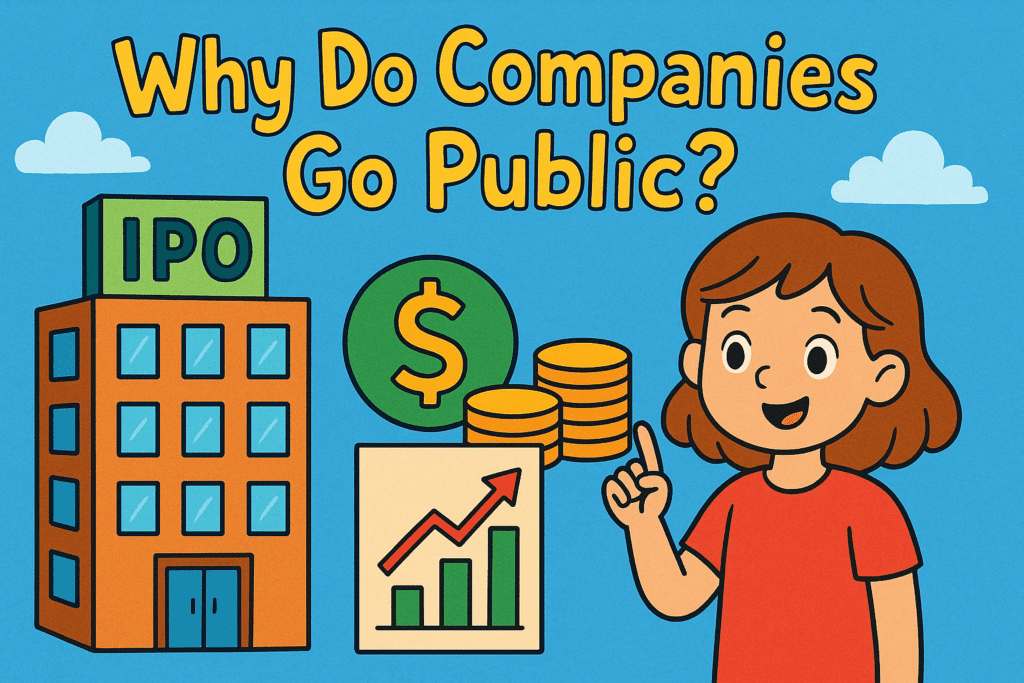
Companies decide to list on a stock exchange through an IPO for several reasons:
- To raise money for growth. Selling shares brings in cash that the company can use to build new factories, open stores, or develop new products. For example, when Indian food‑delivery company Zomato went public, it raised about $1.3 billion to expand its delivery network.
- To give early investors an exit. The founders and early investors can sell some of their shares in the IPO to turn their investment into cash.
- To build credibility and trust. Public companies must share detailed financial information. Being transparent helps the company gain trust from customers, suppliers, and new investors.
- To use shares as currency. Companies can pay for other businesses using their own shares, a useful strategy for mergers and acquisitions.
- To reach global investors. Listing on major stock exchanges lets the company attract investors from around the world.
In short, companies go public because it helps them grow, rewards early supporters, and enhances their reputation.
How Does the IPO Process Work? (Simplified Steps)
The IPO journey is long and requires teamwork. The process is slightly different in India and the United States, but the basic steps are similar. Below is a friendly guide using simple analogies to describe each step.
Step 1 – Board Approval and Team Building
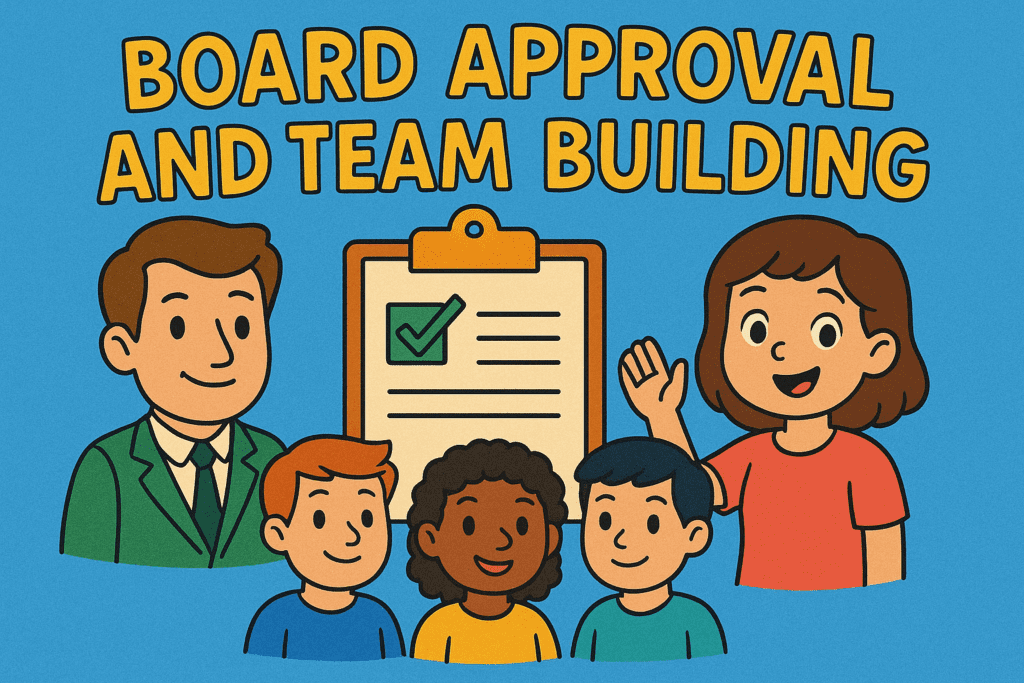
Before doing anything, the company’s leaders (called the board of directors) must agree to go public. They appoint experts such as investment bankers, lawyers, auditors and accountants to form the IPO team. In India, these bankers must be registered with the Securities and Exchange Board of India (SEBI). stockgro.club
In the United States, the company chooses underwriters—usually big investment banks like Goldman Sachs or Morgan Stanley. These underwriters help plan the IPO, determine how much the company is worth, and sell the shares.
Step 2 – Preparing the Prospectus
An IPO is not a secret. The company must share its story with everyone. That story is written down in a long document called a prospectus. It includes:
- Who the company is: its history, business model, and how it makes money.
- Financial information: how much money it earns and spends, debts, profits or losses.
- Risks: what could go wrong (competition, technology changes, laws, etc.).
In India, companies file a draft called the Draft Red Herring Prospectus (DRHP) with SEBI. SEBI reviews it, invites public comments, and asks for corrections. In the United States, companies submit an S‑1 registration statement to the Securities and Exchange Commission (SEC), which includes the prospectus and other disclosures.
Step 3 – Regulatory Review and Approval
Once the prospectus is filed, regulators examine it. SEBI or the SEC may ask for more details or changes. This step ensures that the company tells the truth and follows the law. When the regulator is satisfied, it approves the IPO.
Step 4 – Pricing the Shares (Book Building)
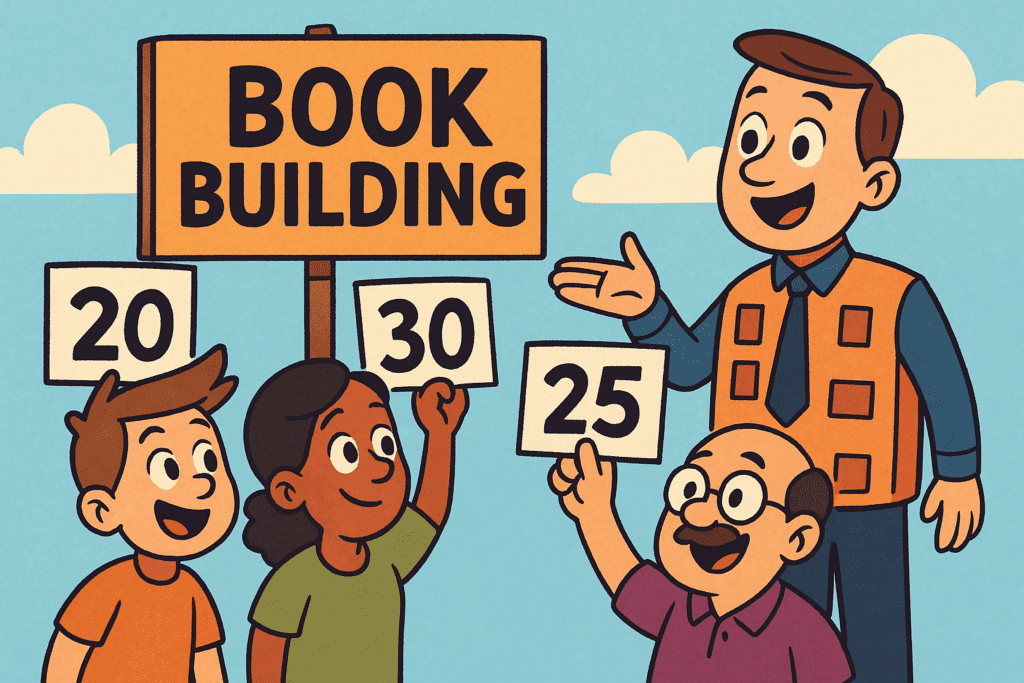
How do companies decide the price of each share? There are two common methods:
- Fixed price – The company sets one price for all investors. This method is simple but may not reflect real demand.
- Book building – This is like an auction. The underwriters ask big investors (like mutual funds) how many shares they want to buy and at what price. They collect these bids in a “book” and use the information to decide on a final price. Book building helps find a fair, market‑driven price.
In India, most IPOs follow the book‑building method. The company sets a price band (for example, ₹72–₹76 per share for Zomato). Investors choose a price within that band or pick the cut‑off price. There are separate quota categories: qualified institutional buyers (QIBs), non‑institutional investors, and retail investors.
Step 5 – Roadshow (Telling the Story)

Before the shares go on sale, company leaders travel around the country (and sometimes the world) to meet potential investors. This tour is called a roadshow. Executives explain the company’s vision and answer questions. Investors decide whether they want to buy shares.
Step 6 – Subscription
Once the IPO opens, investors can place orders for shares. If more people want shares than are available, the IPO is oversubscribed, and shares are allocated proportionally. For example, Life Insurance Corporation of India (LIC), the country’s biggest insurer, saw its IPO oversubscribed nearly three times in May 2022 with policyholders bidding 6.1 times their reserved portion.
Step 7 – Listing Day
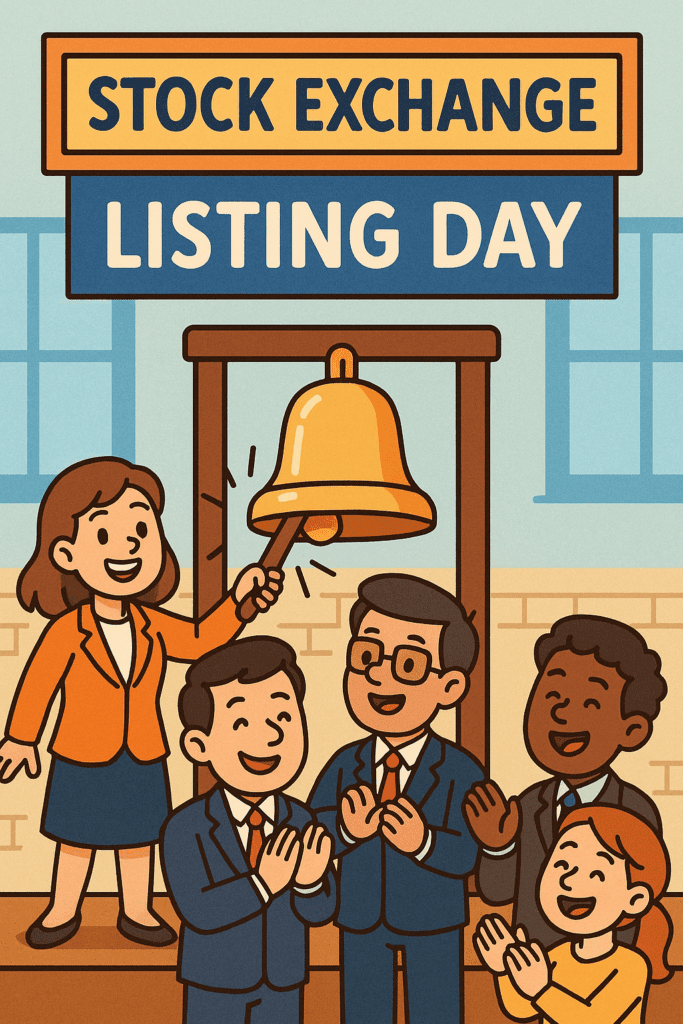
On listing day, the company’s shares start trading on the stock exchange. There is usually a celebration where executives ring a bell. The share price may go up or down based on investor excitement. For example, the electric‑vehicle company Rivian sold shares at $78 each during its IPO in November 2021 and raised about $12 billion; when trading started, the price jumped to more than $100, giving Rivian a market value over $100 billion.
IPO Processes Compared: India vs. United States
Below is a simple table highlighting key differences in the Indian and U.S. IPO processes. The cells contain short phrases and numbers (no long sentences).
| Feature | India | United States |
|---|---|---|
| Key regulator | SEBI | SEC |
| Main document | Draft Red Herring Prospectus (DRHP) | S‑1 registration statement |
| Pricing method | Mostly book‑building, price band (e.g., ₹72–₹76 for Zomato) | Often book‑building, sometimes direct listing or SPAC |
| Subscription categories | QIB, non‑institutional, retail | No formal categories; underwriters allocate to institutional and retail investors |
| Popular exchanges | NSE, BSE | NYSE, NASDAQ |
Even with these differences, the core idea is the same: sharing ownership with the public to raise funds and grow.
Different Ways to Go Public
Not all companies choose a traditional IPO. There are other ways to become a public company:
- Direct listing: Instead of selling new shares, the company simply lists its existing shares on a stock exchange. There are no underwriters, so the company does not raise new money. In April 2021, cryptocurrency exchange Coinbase went public via a direct listing. Its shares opened at $381 (above a reference price of $250) and were briefly valued at more than $100 billion.
- SPAC (Special Purpose Acquisition Company): A SPAC is like a shell company that raises money and then looks for a private company to merge with. This allows the private company to become public faster. SPACs have become popular in the United States because they can simplify and speed up the listing process. pitchbook.com
Each method has benefits and risks. Direct listings avoid underwriting fees but do not raise fresh capital. SPACs provide certainty over valuation but may have less transparency. A traditional IPO remains the most common path for big companies in India and the United States.
Real‑Life Examples from India
Zomato (Food Delivery)
In July 2021, Zomato, a leading Indian food‑delivery platform, priced its IPO between ₹72 and ₹76 per share. The offer raised about $1.3 billion and was oversubscribed 38 times, with bids worth $46.3 billion reuters.com. The strong demand showed how excited investors were about India’s booming digital economy. At the time, Zomato had over 41.5 million monthly customers and delivered more than 400 million orders in the previous year.
Nykaa (Beauty & Fashion)
In November 2021, Nykaa, an online beauty and fashion marketplace, held an IPO that was oversubscribed 82 times. Investors bid nearly $32.55 billion for shares in a ₹53.52 billion offering reuters.com. Nykaa set a price range of ₹1,085–₹1,125 per share, valuing the company at about $7.11 billion. Thanks to its strong brand and profitable track record, Nykaa’s shares jumped about 96% on debut, rewarding investors.
Life Insurance Corporation (LIC)
In May 2022, the Indian government sold a 3.5% stake in LIC, the country’s largest insurer. The IPO, worth around ₹21,000 crore (about $2.7 billion), was oversubscribed nearly three times. Policyholders’ portion of the issue was oversubscribed 6.1 times and employees’ portion 4.4 times. Special discounts were offered: ₹60 per share for policyholders and ₹45 for retail investors. LIC’s listing brought many first‑time investors into India’s stock market.
Paytm
In November 2021, digital‑payments company Paytm launched India’s largest IPO, aiming to raise $2.5 billion. The offering was 1.89 times oversubscribed, with institutional investors bidding 2.79 times and retail investors 1.66 times. Despite the huge size, some investors worried about Paytm’s path to profitability. This example shows that not all highly hyped IPOs lead to soaring prices—investors carefully weigh a company’s potential and valuation.
Real‑Life Examples from the United States
Tech Giants: Uber, Snap, and Meta
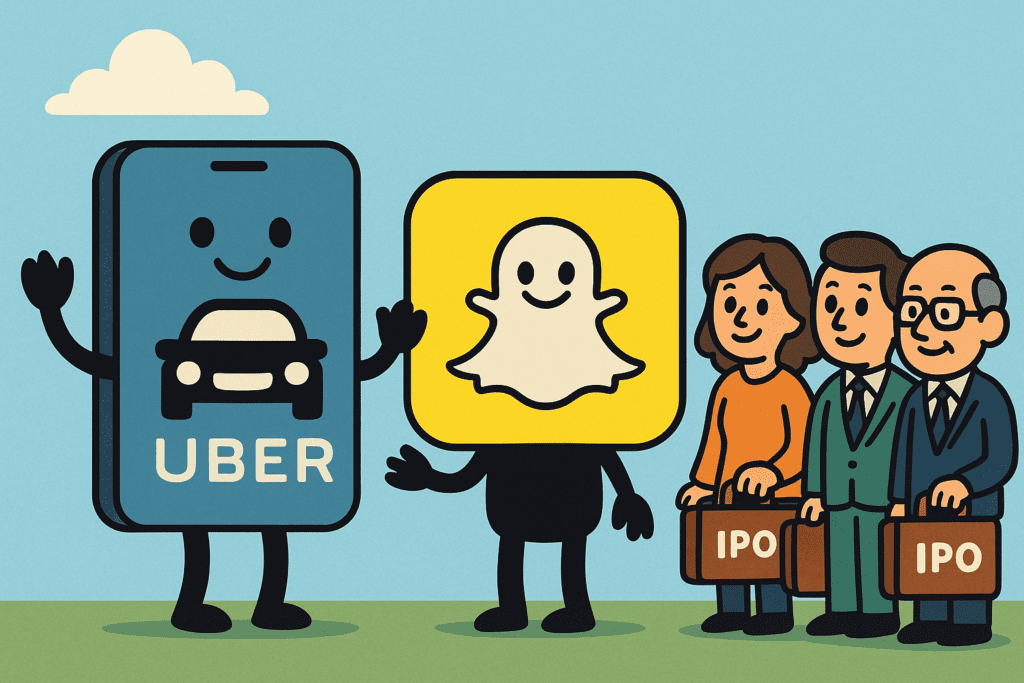
- Uber (2019): Ride‑sharing company Uber raised about $8.1 billion, selling 180 million shares at $45 each. Uber’s IPO valued the company around $75.7 billion. The stock price slid a little after the debut, reminding investors that even well‑known companies can have bumpy starts.
- Snap (2017): Social‑media app Snap (known for Snapchat) sold 200 million shares at $17 each, raising $3.4 billion. Snap’s shares surged on opening day, and the company became a popular example of a modern tech IPO.
- Meta Platforms, formerly Facebook (2012): Facebook’s IPO raised $16 billion, valuing the company at $81.2 billion. It was one of the largest tech IPOs in history. Even though the stock stumbled at first, Facebook later became one of the world’s most valuable companies.
Coinbase Direct Listing
In April 2021, cryptocurrency exchange Coinbase skipped the traditional IPO and chose a direct listing. Its shares opened at $381, far above the reference price of $250, giving the company a valuation of over $100 billion. Coinbase’s listing highlighted another path to the public markets: existing shareholders can sell their stock without issuing new shares.
Rivian Automotive
The electric‑vehicle maker Rivian went public in November 2021. It priced its shares at $78 and sold 153 million shares, raising almost $12 billion. On the first day of trading, the price climbed to around $100, valuing Rivian at more than $100 billion. This was the biggest U.S. IPO of 2021 and showed investors’ excitement about electric vehicles.
Fun Facts and Tips for Young Investors
Even though 10‑year‑olds cannot buy stocks themselves, learning about IPOs helps develop financial literacy. Here are some fun facts and tips:
- Long‑term thinking matters. Many famous companies had bumpy starts after their IPOs but grew over time. Don’t judge a company only by its first‑day performance.
- Diversity of examples. IPOs happen in many industries—food delivery (Zomato), beauty (Nykaa), digital payments (Paytm), ride sharing (Uber), and electric vehicles (Rivian). This variety shows how different ideas can attract investors.
- Regulations protect investors. Bodies like SEBI and the SEC review prospectuses to make sure companies share truthful information. This helps protect small investors.
- Savings first, investing later. Before buying shares, it’s important to learn about saving money, budgeting, and understanding risks. Investing is exciting, but it carries risks, and prices can go up or down.
Summary
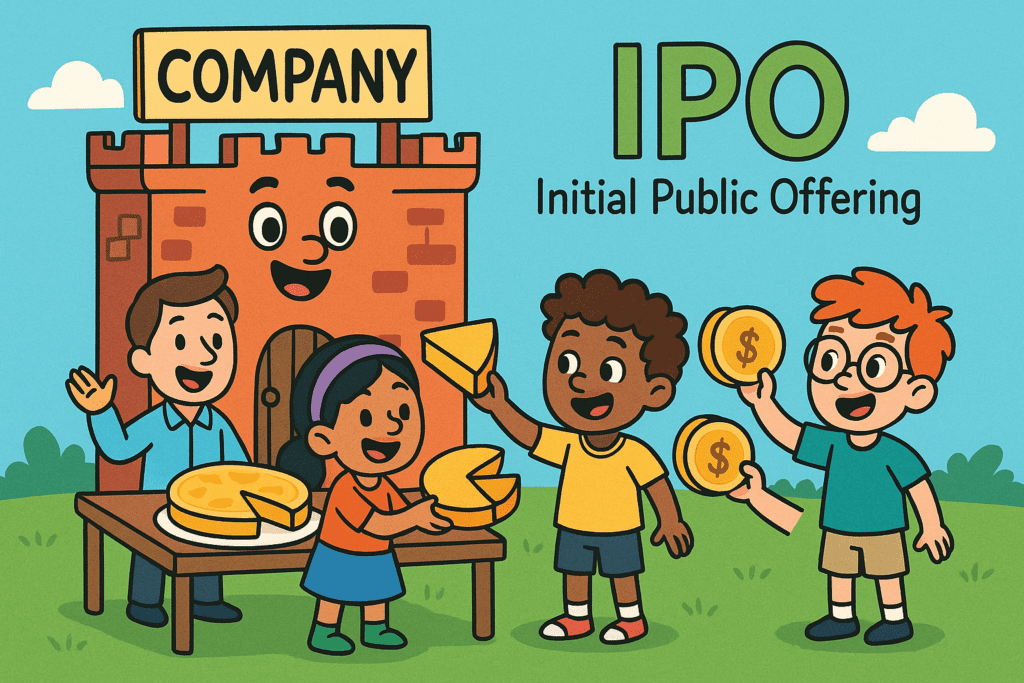
An initial public offering (IPO) is like inviting lots of people to own a little slice of your company. Companies go public to raise money, give early investors a chance to sell, build credibility, and reach a wider audience.
The IPO process involves team building, drafting a prospectus, getting regulatory approval, setting a price through book building, meeting investors on a roadshow, opening subscriptions, and listing on a stock exchange.
Whether in India or the United States, going public is a big milestone for a company. Real‑life examples—Zomato, Nykaa, LIC, Paytm, Uber, Snap, Meta, Coinbase, and Rivian—show how exciting and varied IPOs can be. By understanding how IPOs work, kids and adults alike can appreciate how businesses grow and how investors become part‑owners of companies.
If You Liked This Article, Then You Might Also Like This –
Value Investing vs Growth Investing: A Kid‑Friendly Guide



One comment on “What Are IPOs and How Do They Work?”