
Table of Contents
Investing can feel like a big game of building blocks. Companies grow, shrink and sometimes break apart to make new pieces. One interesting way they do this is called a spin‑off. Spin‑offs happen when a big company takes one part of itself and turns that part into a brand‑new company. Instead of selling the part to someone else, the big company gives shares of the new company to its own shareholders. That means if you owned stock in the parent company, you also get shares in the new company.
This article will explain what spin‑offs are, why companies use them, how they affect investors and show examples from the United States and India. It uses simple words so that even a 10‑year‑old can follow along. Colourful cartoon pictures help bring the ideas to life.
What Is a Spin‑Off?
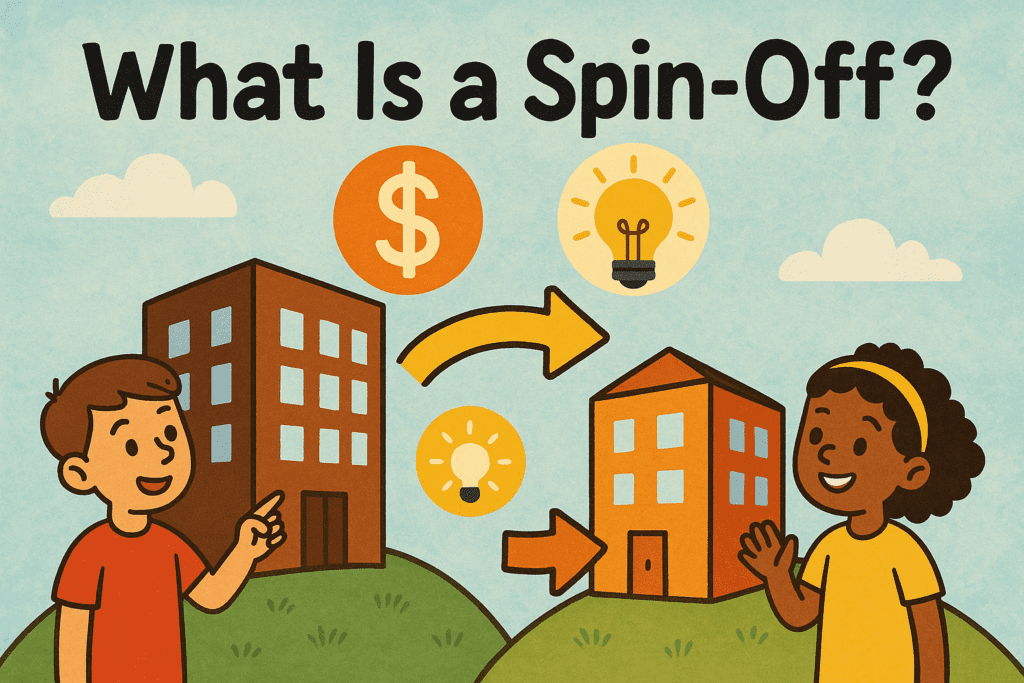
Imagine you own a big toy store that sells cars, dolls and puzzles. You notice that your puzzle business is doing great, but the car and doll sections are slow. You think the puzzles could grow faster if they had their own manager and could raise their own money. So you decide to take the puzzle section and turn it into a separate toy shop run by someone else. Because you still care about your customers, you give your original customers shares in the new puzzle shop. That is a spin‑off!
In grown‑up terms, a spin‑off is a corporate strategy where a company separates one of its divisions into a new independent company. The new business takes its own assets, people, products and sometimes debts. investopedia.com Instead of selling it for cash, the parent company distributes shares of the new entity to its existing shareholders based on a fixed ratio. In most cases, this split is tax‑free for shareholders.
Spin‑offs are different from divestitures, where a company sells a division to another business for immediate cash. In a spin‑off, no cash changes hands. The goal is usually to create long‑term value for shareholders rather than quick money.
How Does a Spin‑Off Work?
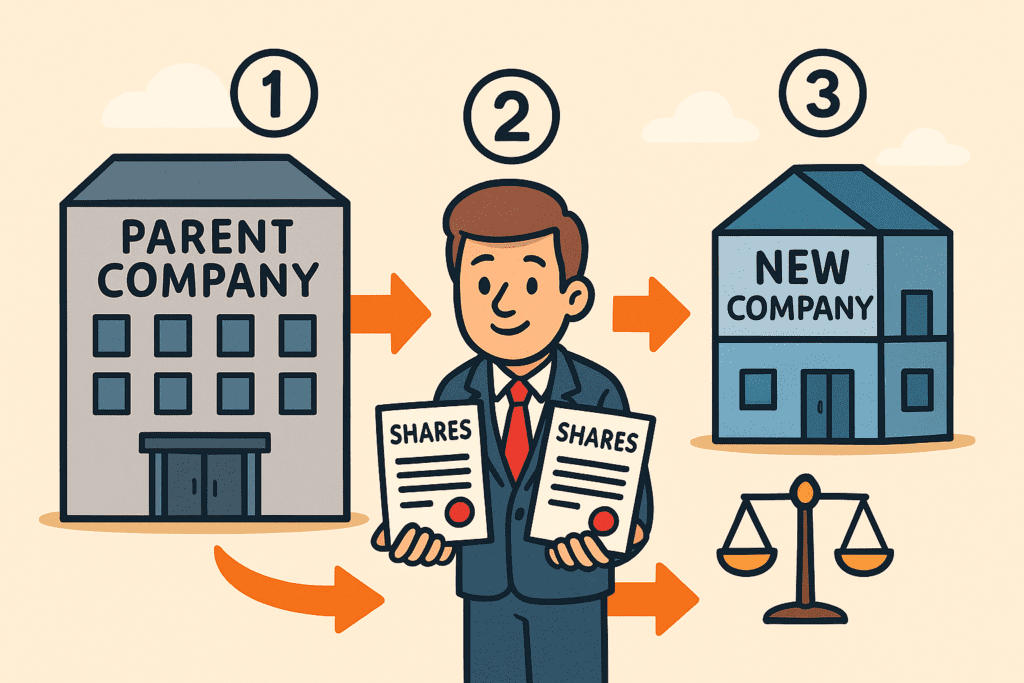
Here is a simple checklist of what happens during a spin‑off:
- Decision and Announcement: The parent company’s leaders decide that a division should become an independent company. They announce the plan and file documents with regulators (like the U.S. SEC Form 10‑12B). The news can cause the parent company’s stock price to rise or fall depending on whether investors like the idea.
- Allocation of Shares: A date is set when shareholders must own the parent company’s stock to receive shares in the new company. For example, when Reliance Industries in India spun off its financial services arm in July 2023, investors received one share of Reliance Strategic Investments (later renamed Jio Financial Services) for every share of Reliance they owned.
- Listing and Trading: The new company begins trading independently on stock exchanges. The parent company’s share price adjusts downward to reflect that part of its business has moved to the spin‑off. Investors now have two separate stocks in their portfolio: the parent company and the spun‑off company.
- Continued Relationships: Often, the parent company keeps a stake in the spin‑off or offers support services such as human resources or technology. The new company gets its own management team but may still work with the parent through contracts or licensing agreements.
- Investor Choice: Shareholders can decide whether to keep or sell their shares in either company. Investors should consider their investment goals, the spin‑off company’s prospects and the parent company’s new focus. finra.org
Why Do Companies Spin Off Parts of Their Business?
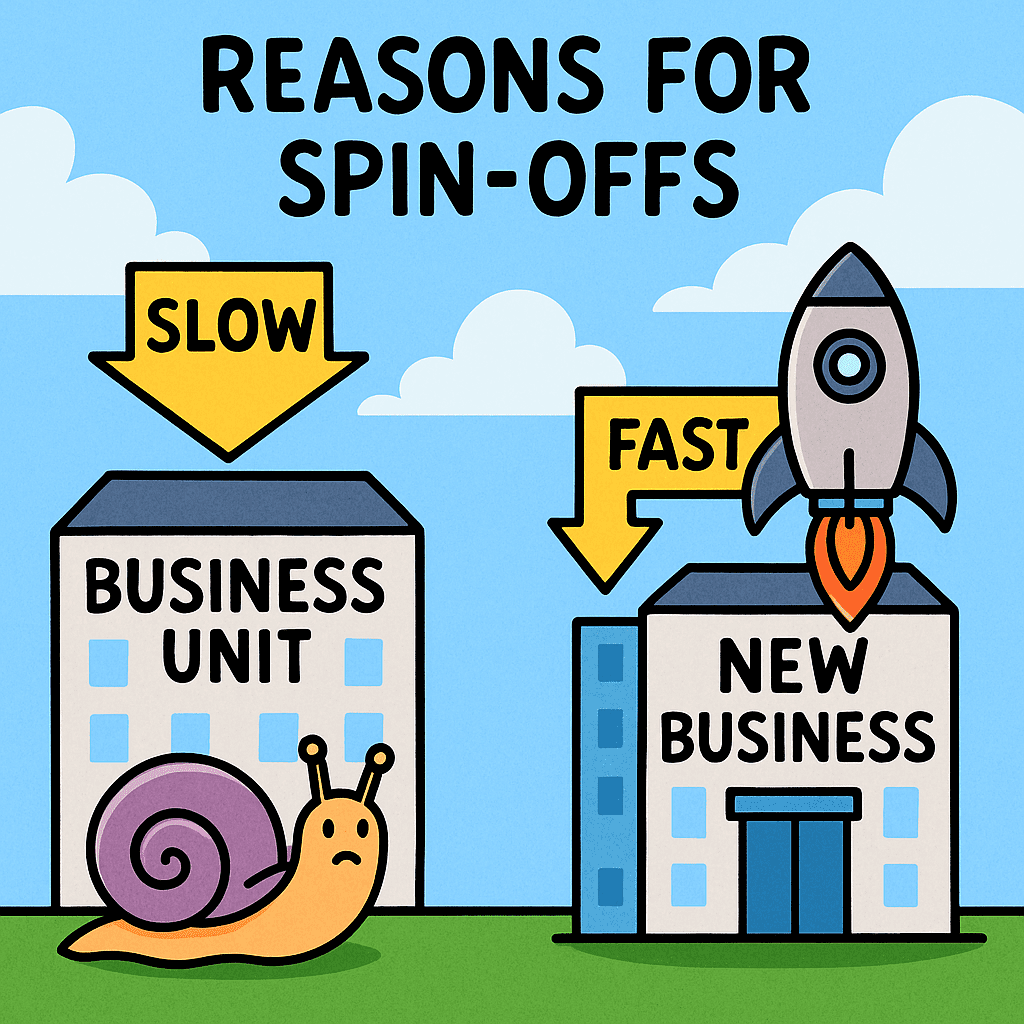
Companies pursue spin‑offs for many reasons. These reasons usually revolve around making each business healthier and more focused. investopedia.com Here are some common motives:
Focusing on Core Strengths
Large companies often have divisions with very different products or growth rates. A slow but steady division can drag down a fast‑growing one. By separating them, each business can focus on its own strategy.
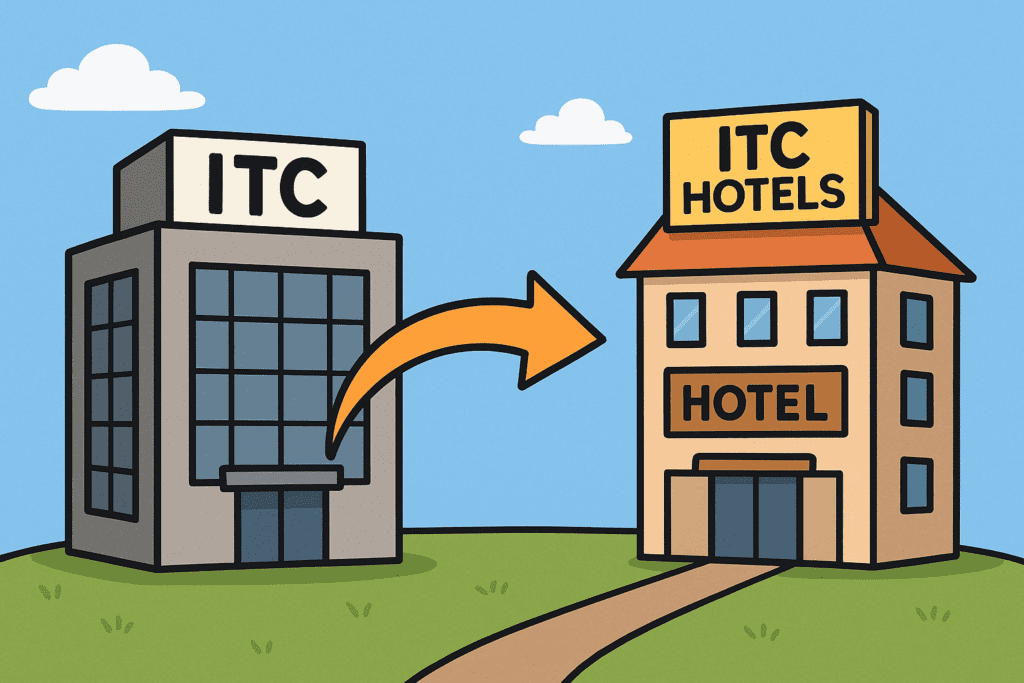
An example is the Indian conglomerate ITC. ITC sells cigarettes, packaged foods and runs hotels. In 2023 it demerged its hotel business. Shareholders received one share of ITC Hotels for every ten shares of the parent company. Separating the hotel business allows ITC to concentrate on its consumer goods while giving investors clearer visibility into the hospitality unit.
Allowing Fast‑Growing Divisions to Raise Capital
Sometimes a small division is growing quickly but is constrained by the parent company’s size and budget. Spinning it off lets the new company raise money through its own stock or debt. For instance, Ferrari used to be part of Fiat Chrysler. Ferrari’s sports cars had a very different brand and valuation. In 2016 Fiat Chrysler spun off Ferrari so that it could attract investors focused on luxury vehicles.
Managing Different Strategies

Different divisions might need distinct management styles, marketing efforts or regulations. Spinning off a unit allows each company to tailor its strategy. The Paytm Money blog explains that Reliance Industries spun off its financial services business into Jio Financial Services because the financial arm required a “differentiated strategy aligned to its industry‑specific risks, market dynamics and growth trajectory”. Separating it allows the new company to attract specialized investors and operate under financial‑sector regulations.
Unlocking Shareholder Value
Many spin‑offs happen because investors believe the combined company is undervalued. Management might think the market will value each business higher separately than together. Research shows that the market often assigns a higher valuation to focused businesses.
Complying with Regulations or Reducing Debt
Sometimes a company spins off a division to comply with antitrust laws or to clean up its balance sheet. A parent might load the spin‑off with debt to improve its own finances, which can be risky for the new company. acquirersmultiple.com
Benefits of Spin‑Offs for Investors

When done for good reasons, spin‑offs can create opportunities for investors.
More Focused Businesses
After a spin‑off, each company can focus on its own strengths without being distracted by unrelated divisions. This focus may lead to better management decisions, improved efficiency and higher profits. Analysts also find it easier to evaluate simpler companies, which can attract more investor attention.
Potential for Greater Returns
Historical data shows that spin‑offs can outperform the broader market. For example, Chipotle Mexican Grill was part of McDonald’s until 2006. McDonald’s wanted to devote more energy to its core burger business, so it spun off Chipotle. The burrito chain sold shares at $22 during its initial public offering. By July 2021, its stock price had risen to over $1,500 per share. Separating allowed Chipotle to innovate and grow without being limited by McDonald’s priorities.
Unlocking Hidden Value

Spin‑offs help reveal the true value of fast‑growing divisions that may be buried inside large conglomerates. Investors who receive shares in the new company can benefit if the business performs well. The parent company can also become more efficient and gain a higher valuation when the market recognizes its streamlined operations.
Attractive for Specialized Investors
A spin‑off can attract investors with specific interests. For instance, investors who like financial services might be more interested in Jio Financial Services than in a diversified conglomerate like Reliance Industries. Similarly, investors who prefer luxury cars may be more keen on Ferrari than on a parent company that also sells mass‑market vehicles.
Tax Advantages
Most spin‑offs in the United States are structured to be tax‑free for shareholders, meaning you do not owe taxes when you receive shares in the new company. Taxes may apply only when you later sell the shares.
Risks and Challenges of Spin‑Offs

Spin‑offs are not always a magic trick. There are risks that investors should understand:
Higher Costs and Distraction
Splitting a company requires time and money. Managers must organize legal filings, adjust operations and transition employees. While they focus on the spin‑off, the main business might suffer.
Uncertain Performance
A new stand‑alone business may struggle without support from the parent company. The spin‑off might have less cash, fewer resources or take on extra debt. If the division was losing money inside the parent company, it may continue to struggle alone.
Volatile Share Prices

Because the new company has no historical performance as an independent entity, its stock price can be volatile. Some investors might quickly sell their spin‑off shares if the business does not fit their portfolio, causing short‑term price swings.
Parent Company Decline
Spinning off a profitable division can reduce the parent company’s revenue and earnings. If investors dislike what remains, they may sell the parent’s stock.
Debt Loading
Occasionally, a parent company off‑loads debt onto the spin‑off so its own balance sheet looks better. As discussed by investment commentators, some spin‑offs are used to get rid of “bad assets.” In such cases, the parent (remain‑co) may become more attractive, while the spin‑off (bad‑co) may struggle. Investors must examine which assets and liabilities are moved to the new company before investing.
Examples of Spin‑Offs in the United States
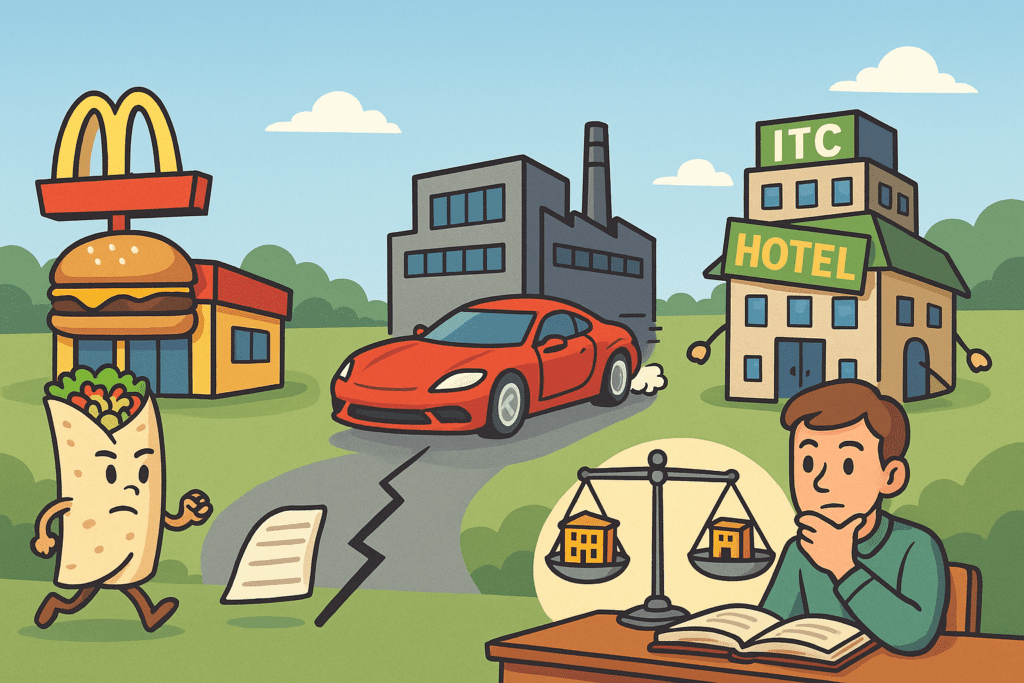
Chipotle from McDonald’s
In the early 2000s, McDonald’s owned about 90% of the burrito chain Chipotle. McDonald’s management realised that its fast‑food hamburger business needed more attention and that Chipotle’s growth strategy was different. In 2006 the company spun off Chipotle through an initial public offering and then distributed its remaining shares to McDonald’s shareholders. The spin‑off allowed Chipotle to pursue its own vision and raised its stock price dramatically. McDonald’s focused on burgers and breakfast, while Chipotle became a leader in fast‑casual dining.
Ferrari from Fiat Chrysler

Ferrari is known for its sleek red sports cars. Before 2016 it was part of Fiat Chrysler Automobiles. Because Ferrari operates in a luxury niche with high margins and a different customer base, analysts thought it could be valued more highly as a stand‑alone company. Fiat Chrysler spun off 80% of Ferrari’s shares to its shareholders and sold the rest through a stock offering. After the spin‑off, Ferrari traded under its own ticker symbol, and the market could value it separately.
Zoetis from Pfizer
Pharmaceutical giant Pfizer developed a profitable animal health division. To focus on human medicine and unlock value, Pfizer spun off this unit as Zoetis in 2013. The spin‑off gave Zoetis its own management and allowed it to raise money specific to animal health products. Investors who kept Zoetis shares benefited from strong growth in the pet and livestock medicine market.
Proposed Gap/Old Navy Split that Didn’t Happen
In 2019 clothing retailer Gap announced plans to spin off its successful Old Navy division to help each business focus on its own strategy. Old Navy generated nearly $8 billion in sales compared with $9 billion from all other Gap brands. However, in 2020 Gap called off the split due to competitive pressure and economic uncertainty. investopedia.com This example shows that not every spin‑off proposal becomes reality.
Examples of Spin‑Offs in India
ITC and ITC Hotels
ITC is one of India’s largest conglomerates, selling cigarettes, packaged foods, personal care products and running hotels. In 2023 ITC demerged its hotels business. Shareholders were allotted one share of ITC Hotels for every ten shares of ITC. The spin‑off aimed to unlock value and give the hospitality business its own focus. It also allowed investors to choose whether they wanted exposure to hotels or to ITC’s consumer goods.
Reliance Industries and Jio Financial Services

Reliance Industries operates in oil refining, telecom, retail and financial services. Managing such diverse businesses can be challenging. To allow its financial arm to grow with a separate strategy, Reliance announced in 2023 that it would demerge Reliance Strategic Investments, later renamed Jio Financial Services. Under the plan, investors received one share of Jio Financial Services for each share of Reliance. The Paytm Money blog notes that the demerger would create an independent company focused on financial services, capable of attracting different investors, partners and lenders. It would also unlock value for Reliance shareholders.
Other Notable Indian Spin‑Offs

- Adani Wilmar – Adani Enterprises spun off its edible oil and food processing division into Adani Wilmar to focus on consumer products.
- Bajaj Auto and Bajaj Finserv – Bajaj Auto separated its financial services business, creating Bajaj Finserv. The move allowed the financial arm to grow rapidly and generated wealth for investors.
- Jindal Stainless – Part of the Jindal group restructuring, the spin‑off created a focused stainless‑steel company for industrial clients.
These examples show that Indian companies, like their U.S. counterparts, use spin‑offs to focus on specific sectors, raise capital and create value.
Tips for Investors Considering Spin‑Offs

Investors should not automatically assume that every spin‑off is a great bargain. Here are some tips to keep in mind:
- Read the Spin‑Off Documents: In the U.S., look up the company’s Form 10‑12B or Form 8‑K filed with the Securities and Exchange Commission for details about the spin‑off. In India, review the scheme of arrangement posted by the company.
- Understand Why It’s Happening: Ask whether the spin‑off is being done to unlock value and focus strategy, or if the parent is off‑loading debt and struggling assets. Prefer spin‑offs that separate promising businesses rather than dumping bad ones.
- Assess the Management Team: Examine who will lead the new company. Often, leaders come from the parent company. A strong, experienced management team increases the chance of success.
- Evaluate the Industry: Consider whether the new company’s sector is growing. Spin‑offs can be attractive if the business operates in a booming industry (e.g., pet health for Zoetis or digital payments for Jio Financial Services).
- Consider Your Portfolio Fit: Receiving new shares does not mean you must hold them forever. Check if the spin‑off aligns with your risk tolerance, diversification and financial goals. If not, you may choose to sell your shares.
- Be Patient: Spin‑offs often take time to stabilise. Share prices may be volatile in the early months. Patience can reward investors who believe in the long‑term prospects.
Are Spin‑Offs Good for Investors?

Spin‑offs can be powerful tools for unlocking hidden value, improving focus and creating opportunities. Many famous companies—from Chipotle to Ferrari—thrived after leaving their parents. Indian businesses like ITC Hotels and Jio Financial Services are using the same strategy to grow in their own ways. Studies show that, on average, the separate parts of a company are often worth more than the whole.
However, spin‑offs are not risk‑free. Investors must look carefully at why a company is spinning off a division, who will run the new business and whether the new company fits their investment goals. A spin‑off that dumps debt or weak assets onto a new company may do more harm than good. It is wise to read official documents, follow news updates and, if possible, consult a financial adviser.
In the end, spin‑offs can be good for investors when they create focused companies with room to grow. By understanding how they work and doing a bit of homework, investors can decide whether to hold, buy more or sell their spin‑off shares. Just like splitting a big tree into two healthy saplings, the right spin‑off can help both the parent and the new company thrive.
If You Liked This Article, Then You Might Also Like This –
What Are IPOs and How Do They Work?






One comment on “Spin‑Offs: Are They Good for Investors?”