
Table of Contents
Introduction: Why central banks matter
So, First of all, What is all this Fed and RBI ?
And what do we mean by the Impact of Federal Reserve & RBI on Stock Markets.
Well, just wait a bit and you’ll figure everything out, just in a short while.
Imagine there are two giant money managers – one looking after the United States and the other looking after India. In America, that manager is called the Federal Reserve (often shortened to the Fed), while in India the manager is called the Reserve Bank of India (RBI). These institutions are not ordinary banks; they are central banks. Their job is to keep the economy healthy by making sure there is enough money for people and businesses to borrow, spend and invest, but not so much that prices spiral out of control.
Central banks have two main goals:
- Keep prices stable – avoid runaway inflation or deflation. The Fed’s policy committee aims to achieve maximum employment and stable prices.
- Help the economy grow – encourage companies to hire workers and invest in factories, technology and services.
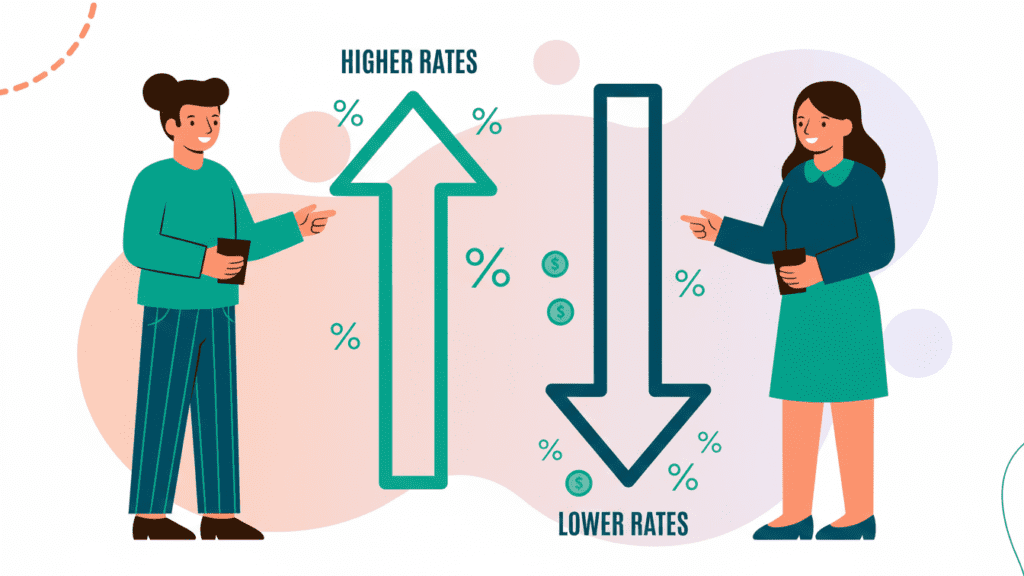
To reach those goals they adjust a special tool called interest rates. Interest is the cost of borrowing money. When a central bank raises its interest rate, borrowing becomes more expensive. When it lowers rates, loans become cheaper. The Fed uses a rate called the federal funds rate and the RBI uses the repo rate.
How interest rates influence borrowing and spending

In the United States
The Fed changes interest rates to influence how much people and companies borrow. When interest rates go down, it costs less to take out a loan for a car or a house. Businesses can afford to borrow money to buy new machines or open more stores. The Fed notes that lower interest rates encourage people to obtain mortgages or borrow for cars and home improvements, and encourage businesses to invest in expansion and hire more workers. When rates go up, borrowing costs increase and families and companies often postpone spending. federalreserve.gov The Fed hopes to keep the economy balanced by nudging rates in either direction.
In India
The RBI uses a similar tool called the repo rate, the rate at which it lends money to commercial banks. When the RBI raises the repo rate, borrowing costs rise for companies, which reduces corporate profitability and leads to lower stock valuations. When it cuts the repo rate, borrowing becomes cheaper, boosting profits and stock prices. The RBI also manages other instruments like the cash reserve ratio (CRR) and statutory liquidity ratio (SLR) to control how much money banks must keep in reserve.
The RBI uses its policies to control inflation and maintain financial stability. If inflation is high, the RBI may raise rates to cool spending. A stable inflation rate creates a favourable environment for businesses and boosts investor confidence. gwcindia.in
What happens to stock markets when rates change?
Why low rates can lift share prices
Lower interest rates reduce the cost of borrowing. Companies can issue bonds or take out loans at lower costs, invest in new projects and earn higher profits. Investopedia notes that when rates fall it becomes cheaper for businesses to raise capital; this makes their future growth prospects better and can lift their stock prices. When enough companies experience rising profits, broad market indexes like the Dow Jones Industrial Average or S&P 500 tend to go up. investopedia.com
A cut in interest rates can also encourage investors to move money out of savings accounts or low‑yield bonds into the stock market. This influx of capital may cause stock prices to rise. In India, when the RBI slashes the repo rate, it injects liquidity into the economy. Expansionary policy – lower rates and reduced CRR or SLR – injects liquidity, driving stock market rallies. For example, during the COVID‑19 pandemic in 2020, the RBI slashed the repo rate to record lows and infused liquidity through open‑market operations, which triggered a massive rally in Indian equities.
Why high rates can cool markets
Higher interest rates have the opposite effect. Companies have to pay more when issuing bonds or borrowing from banks. This hurts their growth prospects and near‑term earnings. As profits shrink, stock prices usually fall. If enough companies face higher borrowing costs, entire indices can decline. Sectors that depend heavily on loans – such as banks, real estate and automobiles – are especially sensitive. Religare points out that higher interest rates cause stock market volatility; sectors reliant on loans often see earnings squeeze, leading to cautious investor sentiment.
In India, raising the repo rate means higher EMIs (equated monthly instalments) for home and car loans. This can slow demand for houses and vehicles. When the RBI raised rates several times in 2022 to curb inflation, rate‑sensitive sectors like banking, real estate and automobiles corrected. In the United States, the Fed’s rate hikes also weigh heavily on technology and growth stocks, which rely on cheap borrowing to fund innovation.
Liquidity: injecting or draining money

Beyond simply changing rates, central banks also adjust liquidity – the amount of money circulating in the economy – through open‑market operations and other tools. The RBI’s FAQs explain that open‑market operations (OMOs) are the sale or purchase of government securities to/from the market to adjust rupee liquidity. When the RBI sells securities, it sucks out liquidity; when it buys securities, it releases money into the system. The Liquidity Adjustment Facility allows banks to borrow from or deposit money with the RBI overnight using repurchase agreements. The RBI sets the repo and reverse repo rates for these operations. This tool helps manage day‑to‑day liquidity and is an important part of monetary policy. rbi.org.in
In the United States, the Fed uses open market operations to buy or sell U.S. Treasury and mortgage‑backed securities. During the COVID‑19 crisis, the Fed resumed quantitative easing (QE) – purchasing massive amounts of debt securities to restore smooth functioning in markets and support the economy. In March 2020 it announced it would buy at least $500 billion in Treasury securities and $200 billion in mortgage‑backed securities, and later made these purchases open‑ended. Such bond‑buying lowers long‑term interest rates and boosts liquidity, which often supports stock prices by giving investors more cash to invest.
Inflation, currency and rate decisions

Central banks watch inflation closely. Inflation measures how fast prices are rising. If inflation gets too high, money loses value and consumers have to spend more on essentials, leaving less to invest. When inflation accelerates, the Fed or RBI may raise interest rates to slow spending and bring prices under control. The Fed’s policymakers monitor indicators like the Consumer Price Index (CPI) and Producer Price Index (PPI) and raise rates when these climb above 2–3%. A classic example occurred in 1980–81 when U.S. inflation reached 14%; the Fed raised the federal funds rate to 19%, causing a recession but successfully halting runaway inflation.
In India, the RBI also raises rates to curb inflation. According to Goodwill’s blog, high inflation erodes purchasing power and corporate margins, so the RBI may hike rates to control it. Stable inflation provides a supportive environment for businesses and encourages investor confidence. BondBazaar notes that inflation indirectly influences stocks because central banks hike rates to control it; higher interest rates mean higher borrowing costs for companies and can make bonds more attractive. When investors can earn more from safer instruments like fixed deposits or government bonds, they may sell stocks.
Currency effects and global flows

Interest rate changes also affect exchange rates. When the Fed raises rates, it often strengthens the U.S. dollar. A stronger dollar attracts foreign investors to U.S. assets, pulling money away from emerging markets like India. The CFO Bridge article explains that a U.S. Fed rate hike triggers global capital reallocation – the dollar strengthens, foreign investors rotate funds to the U.S., and India’s rupee can depreciate by 1–3% in days. Higher U.S. rates push up India’s 10‑year government bond yields and domestic loan rates.
If the rupee depreciates, the cost of imported goods (like fuel and electronics) rises, squeezing company profits. Businesses that borrow in dollars see their interest payments increase. For example, CFO Bridge notes that even a 1% drop in the rupee can raise the cost of servicing dollar‑denominated loans. The RBI may need to adjust the repo rate or use reserves to stabilise the currency.
Different sectors react differently
Interest rate changes affect industries in unique ways:
| Sector | What happens when rates rise? | What happens when rates fall? |
|---|---|---|
| Banking & NBFCs | Higher borrowing costs can squeeze margins and slow loan growth. | Loan demand improves and profitability rises. |
| Real Estate | Costlier home loans slow housing demand; sales decline. | Cheaper mortgages boost home buying and construction. |
| Automobiles | Vehicle loans become expensive; customers postpone purchases. | Lower EMIs encourage car purchases and help auto companies. |
| IT & Pharma | Less sensitive to domestic rates; benefit from stable currency and global demand. | A stable or weaker rupee can increase export earnings. |
| Infrastructure | Projects are costlier to finance; companies may delay expansions. | Cheaper capital encourages new projects and job creation. |
Rising rates can also shift investor preferences. When returns on fixed deposits (FDs) or government bonds become attractive, risk‑averse investors may sell stocks and buy FDs. Conversely, falling rates push investors towards equities and real estate.
How the Fed influences India

Because financial markets are globally connected, actions taken by the Fed can quickly affect India. The CFO Bridge article summarises a chain of events:
- Fed raises rates – the benchmark U.S. rate hits 5.5% in 2024.
- Dollar strengthens and capital flows shift – investors move money into U.S. assets, pulling funds out of emerging markets like India, causing the rupee to depreciate by 1–3%.
- Indian market impact – 10‑year Indian government bond yields rise to about 6.76% and domestic loan rates increase. Companies face higher borrowing costs.
- Imported costs and margins – a weaker rupee increases the cost of imported raw materials and dollar‑denominated loans.
- RBI’s reaction – the RBI must decide whether to follow the Fed by raising rates to protect the rupee or to focus on domestic growth and keep rates steady. It balances global pressures with local needs, such as inflation and employment.
Thus, even though the Fed is far away, its decisions can influence the cost of capital in India. Investors in both countries need to pay attention to policies on both sides of the globe. The Inter&Co article reminds international investors that the U.S. dollar is the world’s reserve currency, so the Fed’s policies trigger chain reactions in emerging markets, currency values and globally held assets. It recommends following Federal Open Market Committee (FOMC) meetings, held about eight times a year, and watching U.S. economic indicators.
Case studies: learning from real events
The Fed’s battle with inflation in the early 1980s
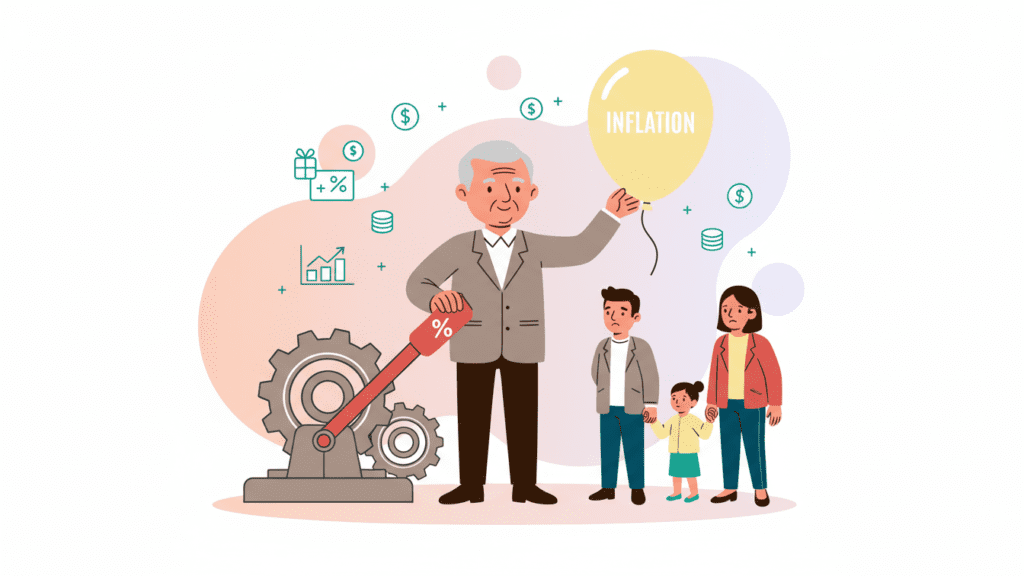
In the late 1970s and early 1980s, U.S. inflation reached double digits. To bring prices under control, the Fed under Chairman Paul Volcker raised the federal funds rate to about 19%. This drastic hike led to a painful recession but successfully cooled inflation. Stock markets fell sharply in the short term, but the policy restored price stability and set the stage for growth in later years. The lesson: sometimes central banks must make tough choices to protect the economy in the long run.
RBI’s response during the COVID‑19 pandemic

When the COVID‑19 pandemic began, India faced an economic slowdown. The RBI reduced the repo rate to historic lows and conducted large open‑market purchases of government securities, injecting liquidity. This accommodative stance triggered a massive rally in Indian equities, illustrating how lower rates can boost investor sentiment. Similarly, the Fed restarted quantitative easing in March 2020, promising to buy hundreds of billions of dollars in Treasury and mortgage‑backed securities. Stocks rebounded as investors anticipated easier borrowing conditions.
Rate cuts in 2025
According to ClearTax’s 2025 report, the RBI reduced the repo rate by 25 basis points to 5.25% and projected inflation at around 2%. When the RBI cut rates earlier that year, some stocks jumped because investors believed companies would make more money with cheaper loans, especially in banking, real estate and automobile sectors. However, if the market had already anticipated the cut, the reaction was muted. Rate cuts can boost spending and economic growth: lower loan payments leave more money in consumers’ pockets and encourage businesses to expand. Yet there are also downsides: savers earn less interest on deposits, inflation can tick up and the rupee may weaken.
Practical tips for young investors and families

Understanding how central banks affect markets can help families make smarter decisions. Here are some simple guidelines inspired by expert advice.:
- Pay attention to announcements – The Fed and RBI regularly announce their policy decisions (the Fed’s FOMC meets about eight times a year, while the RBI holds a bi‑monthly review). Changes in rates often move markets.
- Diversify your investments – Don’t put all your money in one place. A mix of stocks, bonds, real estate and savings can balance risk. Different assets react differently to rate changes.
- Think long term – Markets may swing wildly after rate announcements, but history shows that patient investors who stay invested tend to do better than those who panic and sell. Focus on your goals (like buying a house or funding education) rather than short‑term news.
- Consider sector sensitivity – If you own shares in banks, real estate or auto companies, be aware that these sectors are more sensitive to interest rate changes. In contrast, companies in technology, pharmaceuticals or consumer staples may be less affected.
- Watch inflation and currency – High inflation or a weak rupee can erode returns. Keep an eye on price trends and currency movements; central banks will respond accordingly.
Although you may not yet invest in stocks, understanding these concepts will help you as you grow. Even simple actions like saving pocket money in a bank account teach the idea of earning interest.
Conclusion

Central banks are like careful captains steering the economic ship. The Federal Reserve and the RBI use interest rates, open‑market operations and other tools to keep their economies on a stable course. When they cut rates, borrowing becomes cheaper, investors feel optimistic and stock markets often rise. When they raise rates, borrowing costs go up, spending slows and markets may dip. They also inject or withdraw money from the system through bond purchases or sales to manage liquidity. Inflation, currency values and global capital flows add complexity to their decisions. The Fed’s choices ripple across the world and can influence India’s currency and borrowing costs. cfobridge.com Meanwhile, the RBI must balance global pressures with local needs like inflation and employment.
For young readers and families, the key takeaway is that interest rates are like the price of money. When the price goes down, it’s easier for businesses and households to borrow, spend and invest. When the price goes up, they become more cautious. Understanding how central banks use this tool can help you make better decisions about saving and investing in the future.
If You Liked This Article, Then You Might Also Like This –
What Are Options (Call & Put)? A Simple Explanation for Complete Beginners