Table of Contents
Understanding the stock market can feel like trying to speak another language, especially when grown‑ups toss around animal names like “bull” and “bear.” If you’re a 10‑year‑old or a parent who wants an easy explanation, this guide is for you! We’ll explore what Bull and Bear markets mean, why they matter in countries like India and the United States, and how you can think about them without feeling overwhelmed.
What Is the Stock Market?
Imagine you have a toy shop where people can buy tiny pieces of different toys. Instead of buying a whole toy car or doll, they buy a small part of it. Those tiny pieces are like shares, and the entire shop full of shares is the stock market. When people buy and sell shares, they are basically trading small pieces of companies like Apple, Microsoft or Reliance Industries. If a company does well, its shares become more valuable, and people who own them can make money. If the company has trouble, the shares can lose value.
In India, the main market is called the BSE (Bombay Stock Exchange) and NSE (National Stock Exchange). In the United States, big markets include the New York Stock Exchange (NYSE) and the NASDAQ. When news channels talk about the Sensex or the Dow Jones, they’re referring to numbers that represent how groups of shares are doing in those countries. If these numbers rise, people cheer; if they fall, people worry.
The Bull Market: When Prices Charge Upward
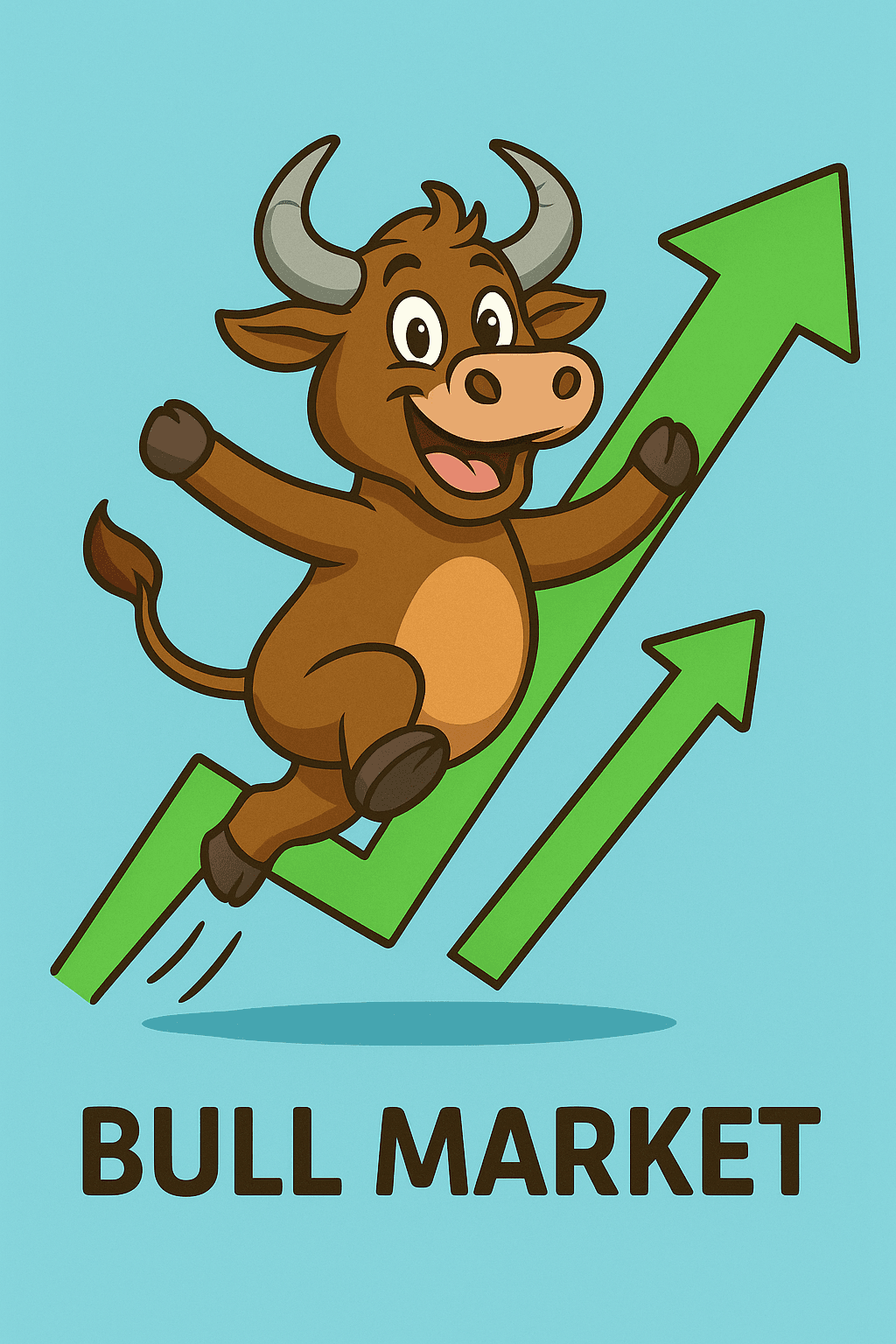
The term “bull market” comes from the way a bull attacks with its horns pointing upward. In finance it means stock prices are rising, investors feel confident, and the economy is generally strong investopedia.com. Many experts say a market becomes a bull market when a broad index has risen at least 20 % from a recent low.
Features of a bull market
- Prices go up: Share prices climb because lots of people want to buy them.
- Optimistic mood: Investors are excited and believe prices will keep rising.
- Strong economy: Businesses make good profits, and most people have jobs.
- Higher demand than supply: There are more buyers than sellers, which pushes prices up.
Simple example
Think of a marketplace during a festival, such as Diwali in India or Thanksgiving in the United States. People are happy, they have extra money, and they buy more sweets or toys. Shops may raise prices because demand is high. A bull market is similar—confidence and good news encourage people to buy shares, which makes prices rise further. Here are a few real‑world examples:
- India’s 2003‑2008 bull run: The Indian Sensex index rose from around 3,000 points to nearly 20,000 points as the economy boomed and foreign investors poured money into Indian companies.
- America’s 2009‑2020 bull market: After the 2008 financial crisis, the U.S. stock market recovered and then kept climbing for more than a decade, thanks to low interest rates and strong corporate earnings.
The Bear Market: When Prices Hibernate

The “bear market” term comes from a bear swiping its paws downward. A bear market happens when stock prices fall at least 20 % from a recent high westpac.com.au. People become cautious, and businesses may slow down. In other words, the market feels sleepy—just like a bear getting ready to hibernate.
Features of a bear market
- Prices go down: More people want to sell than buy, so share prices drop.
- Pessimistic mood: Investors worry that prices may fall further.
- Weak economy: Companies struggle to make profits; unemployment can rise.
- Supply is greater than demand: There are more sellers than buyers, so prices continue falling.
Simple example
Imagine it’s winter, and everyone starts saving money for warm clothes and food. They aren’t buying many toys because they’re worried about the cold. Shops lower prices to convince buyers to spend. A bear market works the same way—bad news or economic troubles make investors sell shares. Here are some well‑known bear markets:
- India’s 2008 crash: After the long bull run, the global financial crisis hit, and the Sensex tumbled by over 50 %. Investors panicked, and many sold shares.
- The U.S. 2008–2009 bear market: The collapse of big banks caused a severe recession, and the S&P 500 index fell by more than 50 % before recovering.
- The 2020 pandemic crash: Both Indian and U.S. markets plunged in March 2020 as COVID‑19 spread. Governments took action, and markets eventually rebounded, but for a while people were very worried.
Bulls vs Bears: Spotting the Differences

It can be hard to remember all the details, so here is a quick comparison to help you see how bull and bear markets differ. The table uses keywords rather than full sentences to make it easy to understand.
| Feature | Bull Market | Bear Market |
|---|---|---|
| Price direction | Rising | Falling |
| Investor mood | Optimistic | Pessimistic |
| Economy | Strong; low unemployment | Weak; higher unemployment |
| Supply vs demand | More buyers; less supply | More sellers; low demand |
| Goal for investors | Buy early, hold, sell higher | Protect wealth; consider safer assets |
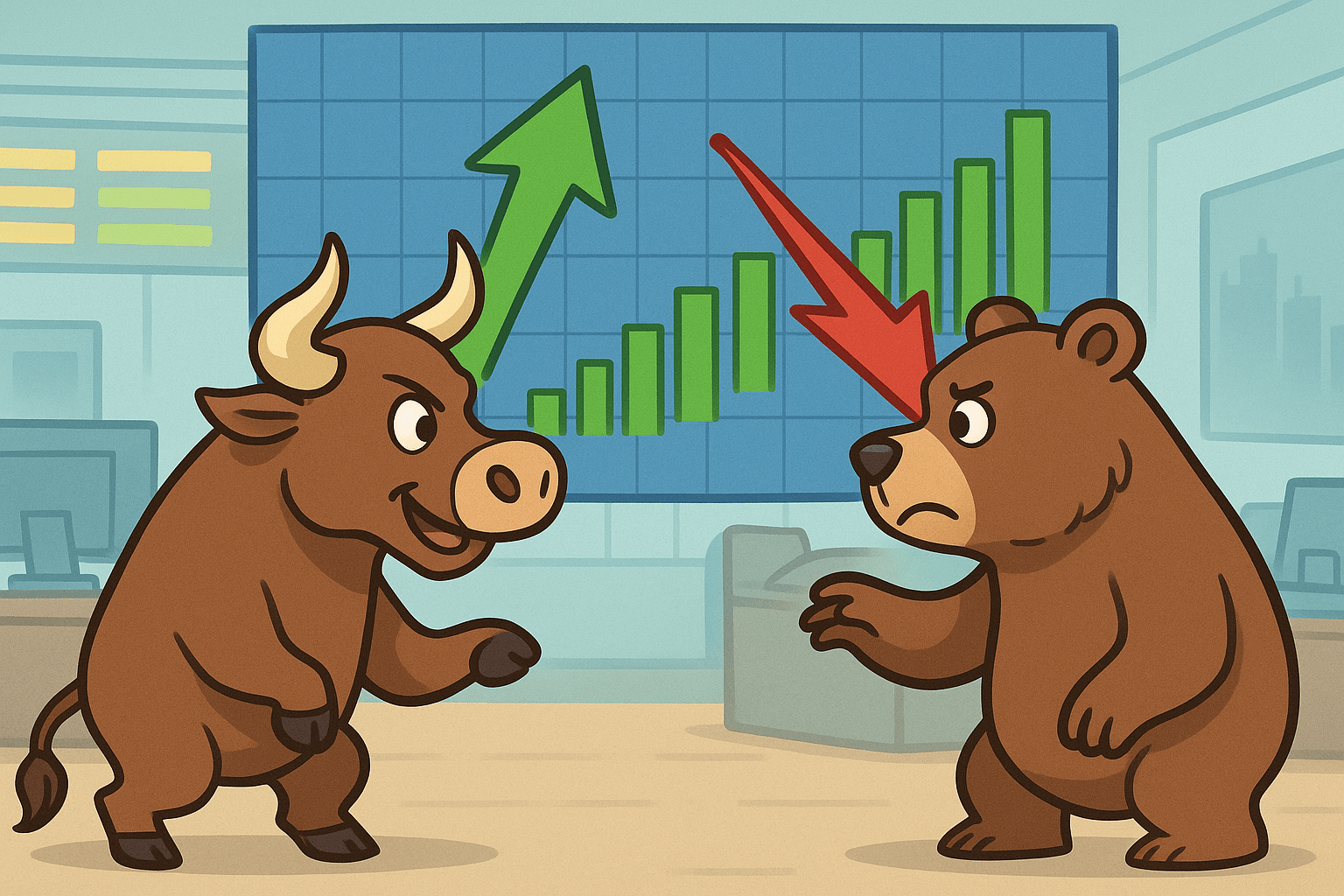
These differences show why people talk about bulls and bears fighting. They represent opposite moods in the market. Sometimes this battle is illustrated as a tug‑of‑war, with both animals pulling on a rope shaped like a stock chart.
What Causes Bull and Bear Markets?

Markets move for many reasons. Here are some factors that can push prices up or down:
- Supply and demand for shares: When lots of people want to buy and few want to sell, prices rise; when the opposite happens, prices fall.
- Investor psychology: If investors feel confident, they buy shares; if they’re scared, they sell.
- Economic conditions: A healthy economy with growing companies and plenty of jobs supports a bull market. A weak economy with job losses and slow business growth leads to a bear market investopedia.com.
- Global events: Wars, pandemics, natural disasters, or political changes can trigger fear or optimism. For example, the global financial crisis in 2008 and the COVID‑19 pandemic in 2020 influenced markets worldwide.
- Interest rates: Central banks like the Reserve Bank of India (RBI) and the U.S. Federal Reserve adjust interest rates. Lower rates often encourage borrowing and investing, which can fuel a bull market; higher rates can slow the economy and lead to a bear market.
Sometimes markets don’t move strongly in either direction. They may go sideways—neither bull nor bear. These phases allow investors to catch their breath and look for the next trend.
What Should You Do? (Not Financial Advice)

If you’re a kid, your first job is simply to learn. Talk with your parents about saving money and how the stock market works. For adults, remember that investing always carries risk. Here are some general tips inspired by experts:
- During a bull market: Some investors like to buy shares early and ride the wave up. They might sell part of their holdings when prices have risen a lot. Long‑term investors often keep investing regularly, a strategy called dollar‑cost averaging, which smooths out ups and downs.
- During a bear market: Losses can be scary. Many people focus on protecting their savings by investing in safer assets like government bonds or defensive stocks—companies that provide essential services (like electricity or healthcare). Others continue investing small amounts, hoping prices will rise in the future.
- Keep a long‑term view: Both Indian and U.S. markets have historically grown over long period. Short‑term swings are normal. Having a plan and sticking to it helps you avoid acting on emotion.
- Learn before you leap: Before buying or selling shares, understand what a company does and why its share price might go up or down. Always seek guidance from a trusted adult or financial advisor.
Real Stories from India and America

To make these ideas more concrete, here are a few moments when bulls and bears took centre stage in India and America:
- Harshad Mehta and the dot‑com bubble: In India during the early 1990s a stockbroker named Harshad Mehta created an artificial bull run that collapsed when his scam was exposed. Around the same time in the United States, technology companies without profits saw their share prices soar and then crash during the dot‑com bubble. Both episodes showed how hype and fraud can end badly.
- India’s 2003–2008 bull run: Economic reforms and foreign investment caused Indian shares to rise more than six‑fold, but the run ended when the global financial crisis arrived.
- America’s post‑crisis bull market (2009–2020): After the 2008 crash, low interest rates helped the S&P 500 enjoy one of its longest bull markets.
- The 2020 pandemic crash and recovery: When COVID‑19 spread, markets in both countries plunged and then rebounded after governments stepped in.
These stories show that bull and bear markets happen everywhere. By understanding them, people in Ghaziabad, Mumbai, New York, or Texas can make better choices with their savings.
Conclusion

Bull and bear markets are more than animal names; they represent the mood of the marketplace. Bulls charge ahead during good times, while bears hibernate during tough times. Prices rise when more people want to buy and fall when more want to sell. Investor feelings, the economy and world events all play a role.
For kids, the most important lesson is to be curious and learn how money works. For adults, patience and knowledge are your best friends. Markets will always move up and down, but over the long term they have a record of growing investopedia.com. Whether you’re in India or the United States, understanding bulls and bears will help you make smarter decisions and stay calm when markets roar or growl.
If You Liked This Article, Then You Might Also Like This –
What Is Liquidity in the Stock Market and Why It’s Important?