Table of Contents
A magical story about money
Imagine planting a tiny seed. At first it looks like nothing is happening, but with sunlight and water the seed begins to sprout. Before long it turns into a little plant, then a bush, and one day a tall tree full of fruit. The seed did not stay small because it kept growing upon what it grew before.
This is the magic of compounding, and it is why people often call it the “eighth wonder of the world.”
Compounding is like planting money seeds: your savings can grow on top of the growth you already earned. Although the famous phrase is often linked to the scientist Albert Einstein, researchers note that the quote’s origin is uncertain and some sources even list it among anonymous sayings. Whether or not Einstein said it, the idea behind the phrase is what matters: compounding can turn small amounts into something big.
What is compounding?
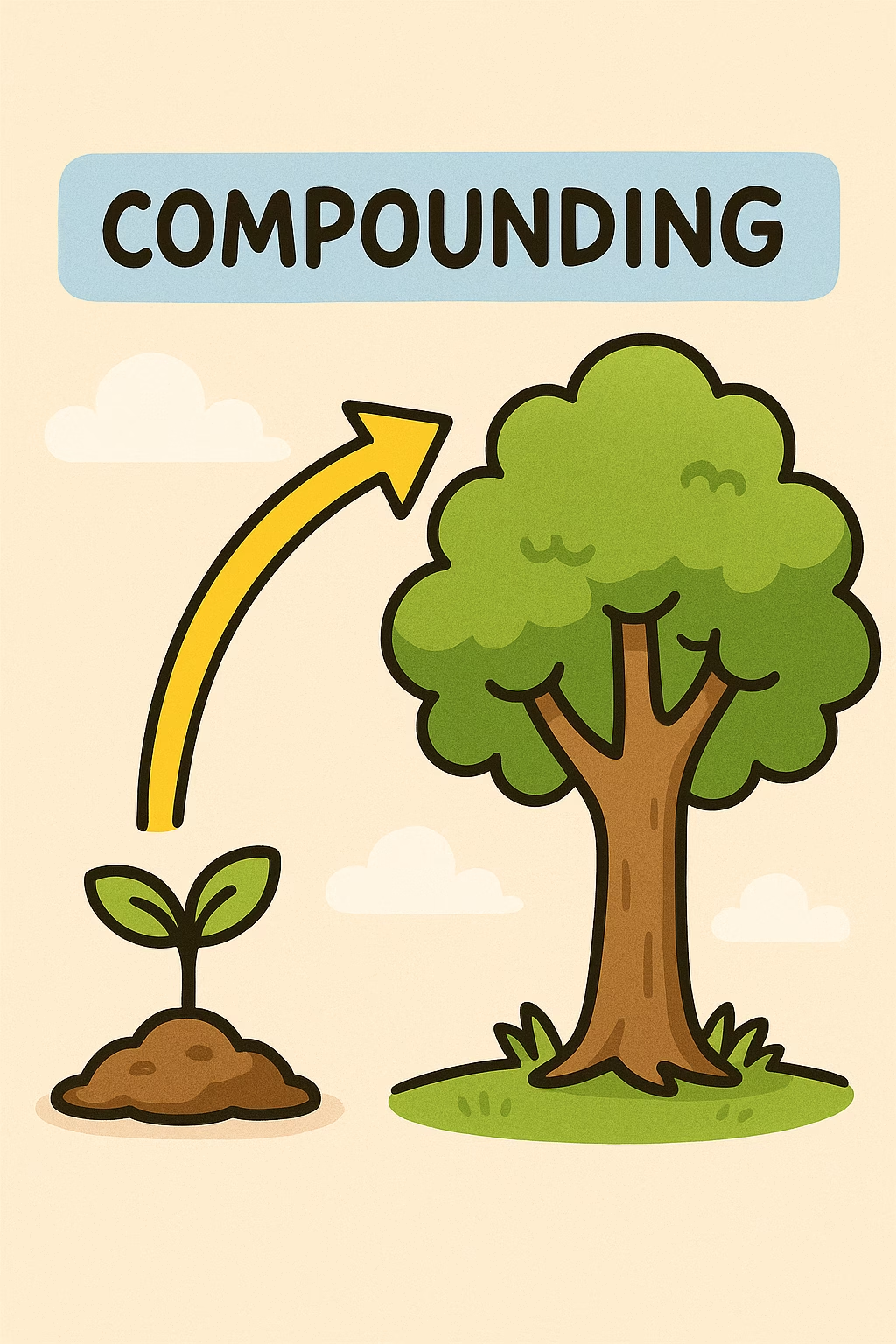
Compounding happens when you earn interest (a reward paid for saving or investing) on the money you deposit and on the interest that has already been added. With regular simple interest you only earn on the original amount. But with compound interest your earnings also earn more money. It is like a snowball rolling down a hill – each turn adds more snow, so the ball grows bigger and bigger as it rolls.
A simple example
To see compounding in action, let’s start with just $100 and earn 5 % interest each year. According to a U.S. Securities and Exchange Commission (SEC) lesson for young investors, after the first year you would have $105 investor.gov. During the second year, you earn interest on both the original $100 and the $5 interest from the first year. At the end of that second year the account balance becomes $110.25.
The extra 25 cents may not sound like much, but it shows that interest can also earn interest. If you leave the money alone, compounding keeps working. After 10 years that little $100 would grow to more than $162, and after 25 years it would be almost $340 without adding anything extra!
Here is the pattern:
- Year 1: Start with $100 → earn 5 % → end with $105.
- Year 2: The $5 interest earns its own interest → end with $110.25.
- Year 10: Without adding any money, the balance grows past $162.
- Year 25: Thanks to compounding, the balance is nearly $340.

The numbers above may look like magic, but they come from a simple formula: you multiply the balance by 1 + the interest rate each year. The interest earned is added back to the principal, and the process repeats. Over time the increases get bigger even though the interest rate stays the same.
The Rule of 72: A Handy Shortcut
Financial teachers often use something called the Rule of 72 to show how powerful compounding is. If you divide 72 by the interest rate, the result tells you roughly how many years it takes for an investment to double.
The SEC’s education page notes that if the expected rate of return is about 9 %, the money will double in value every 8 years because 72 divided by 9 equals 8 investor.gov. The rule works with other rates too: at 6 % your money doubles in about 12 years (72 ÷ 6 = 12). This shortcut helps students see that higher interest rates or longer time periods lead to more growth.
Real‑life stories: how compounding affects you
Saving with certificates of deposit (CDs)
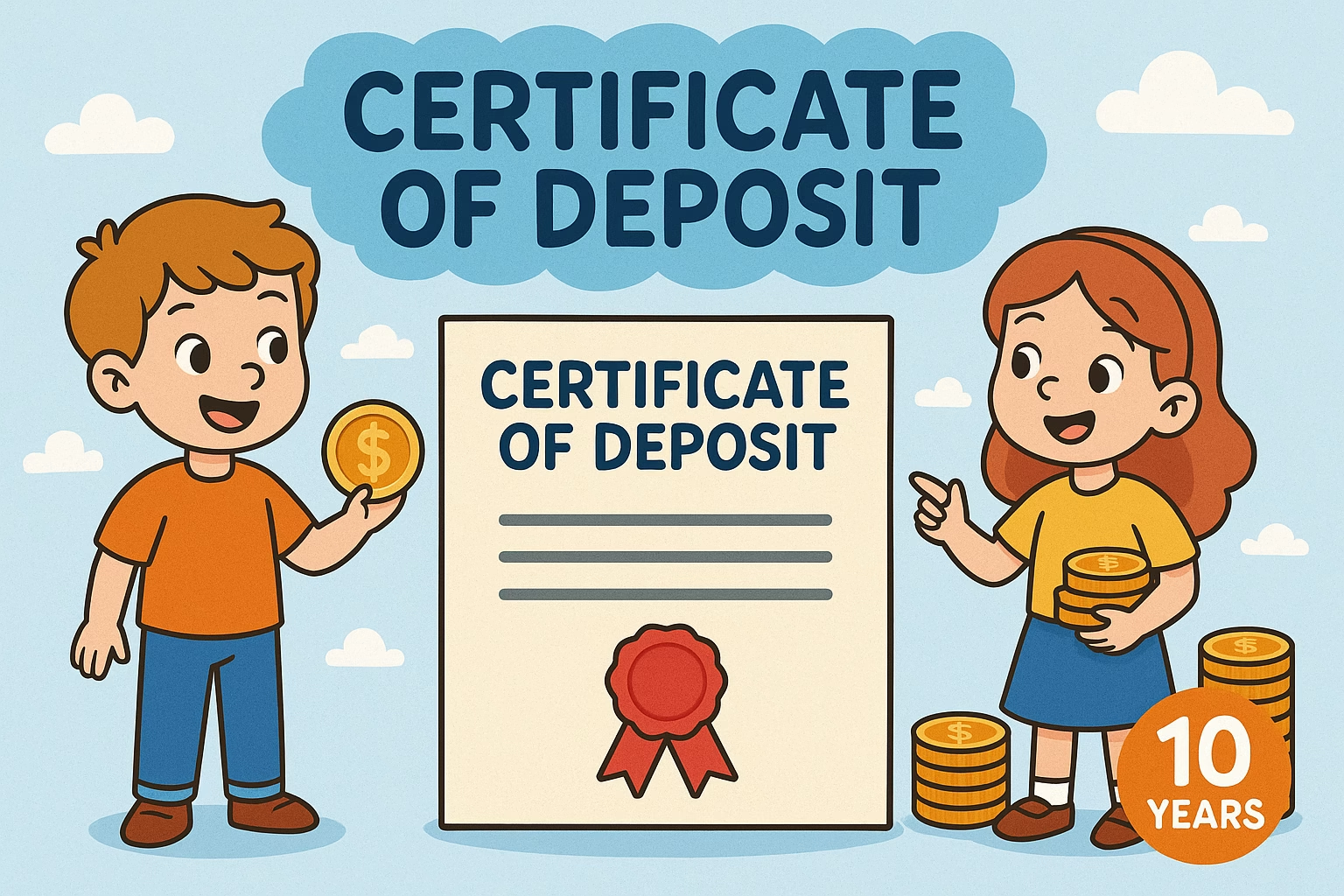
Banks and credit unions often offer products like certificates of deposit (CDs) that pay compound interest. Suppose you open a CD with $1 000 for 60 months (five years) at an annual percentage yield (APY) of 1 %.
According to the USPS Federal Credit Union, each year the account earns interest on both the original deposit and the previous interest. After five years the balance would be $1 051, meaning you earned $51 simply by leaving the money alone. If you instead start with $3 000, the CD would grow to $3 153 in the same period uspsfcu.org. In both cases the money quietly grows without any extra effort.
The pizza experiment: giving up treats to grow money
The SEC’s lesson also offers a fun thought experiment using pizza. If a slice of plain pizza costs $2 and you buy one slice every day for a year, you spend $730. Imagine skipping those slices for a year and saving the $730 instead.
If you invest that savings at 5 % interest, after five years the money grows to about $931.69. Leave it there for 30 years and it becomes $3 155.02. By giving up a small daily treat, you can grow your savings into something much bigger. This example shows how small, consistent contributions combined with time can produce amazing results.
Beware of compounding debt
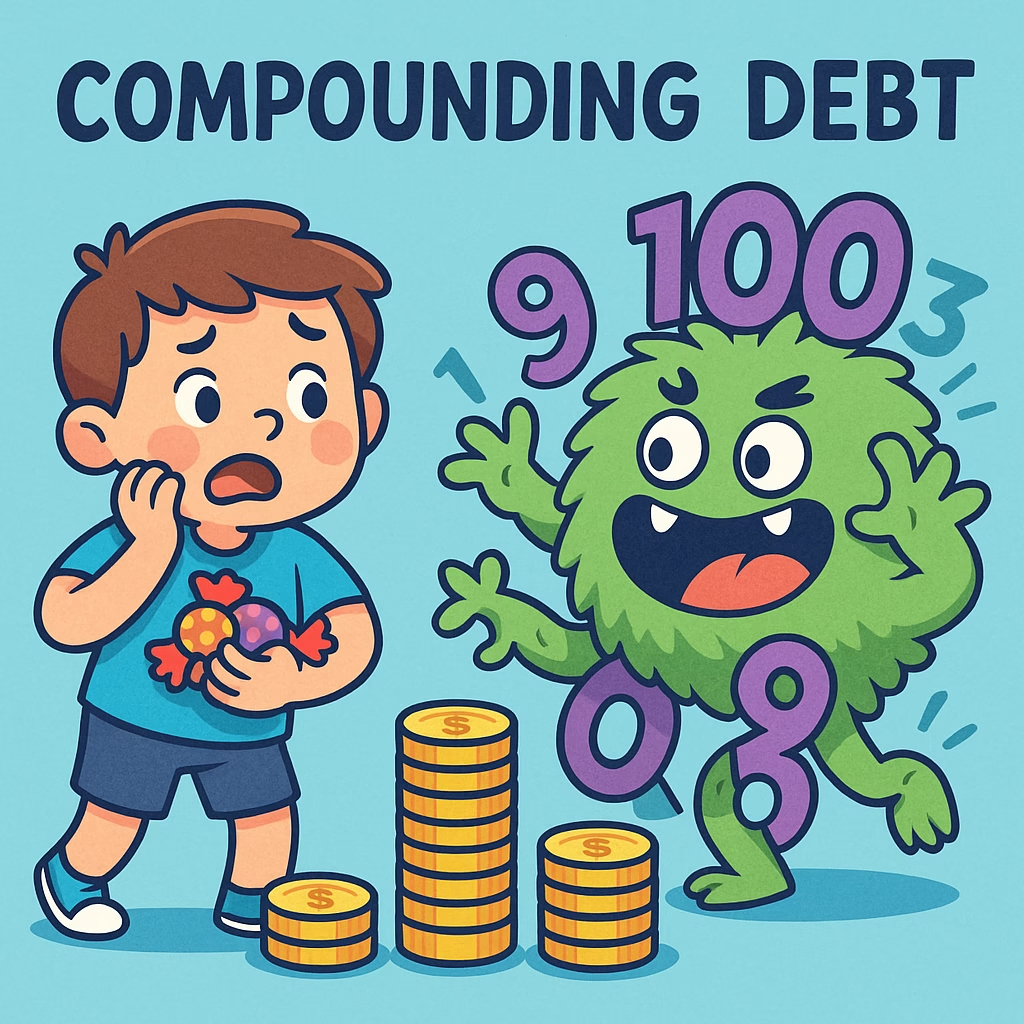
Compounding does not just help savers; it also applies to borrowing. Interest on loans and credit cards can compound if unpaid balances linger. The USPS Federal Credit Union warns that compounding can work against you if you are not careful. Imagine buying a $1 000 laptop with a 17 % interest credit card and only paying the minimum of $25 each month.
Even if you do not make new purchases, the unpaid balance collects interest on interest. It would take five years to pay off that laptop, and you would end up paying $486 in interest charges, making the total cost $1 486. That means nearly half of what you pay goes toward interest! This example shows why paying off debts quickly is important—otherwise compound interest turns small debts into large burdens.
A lifetime annuity example
Compounding also plays a role in long‑term plans like annuities. A financial professional noted that a 35‑year‑old who places part of a settlement into a lifetime annuity could receive $1 000 per month for life with a 20‑year guarantee. If the annuity compounds annually at 2 %, the individual might receive $892 967 in total payments over the rest of their life, even though the annuity cost $520 000. The extra $372 967 comes from the magic of compounding—earning interest on the interest every year.
Why call it the “Eighth Wonder of the World”?
Many stories attribute the saying “Compound interest is the eighth wonder of the world. He who understands it, earns it; he who doesn’t, pays it” to Albert Einstein. While the phrase is popular, its origin is unclear.
One article on structured settlements notes that the authenticity of the quote is questionable patrickfarber.com. A separate compilation of Einstein quotes lists the “Eighth Wonder” line under anonymous sources. That means the quote is more like a folk proverb than a verified Einstein statement. Even so, the message is powerful: understanding compounding helps you earn money, and ignoring it can cost you.
How kids (and parents) can use compounding
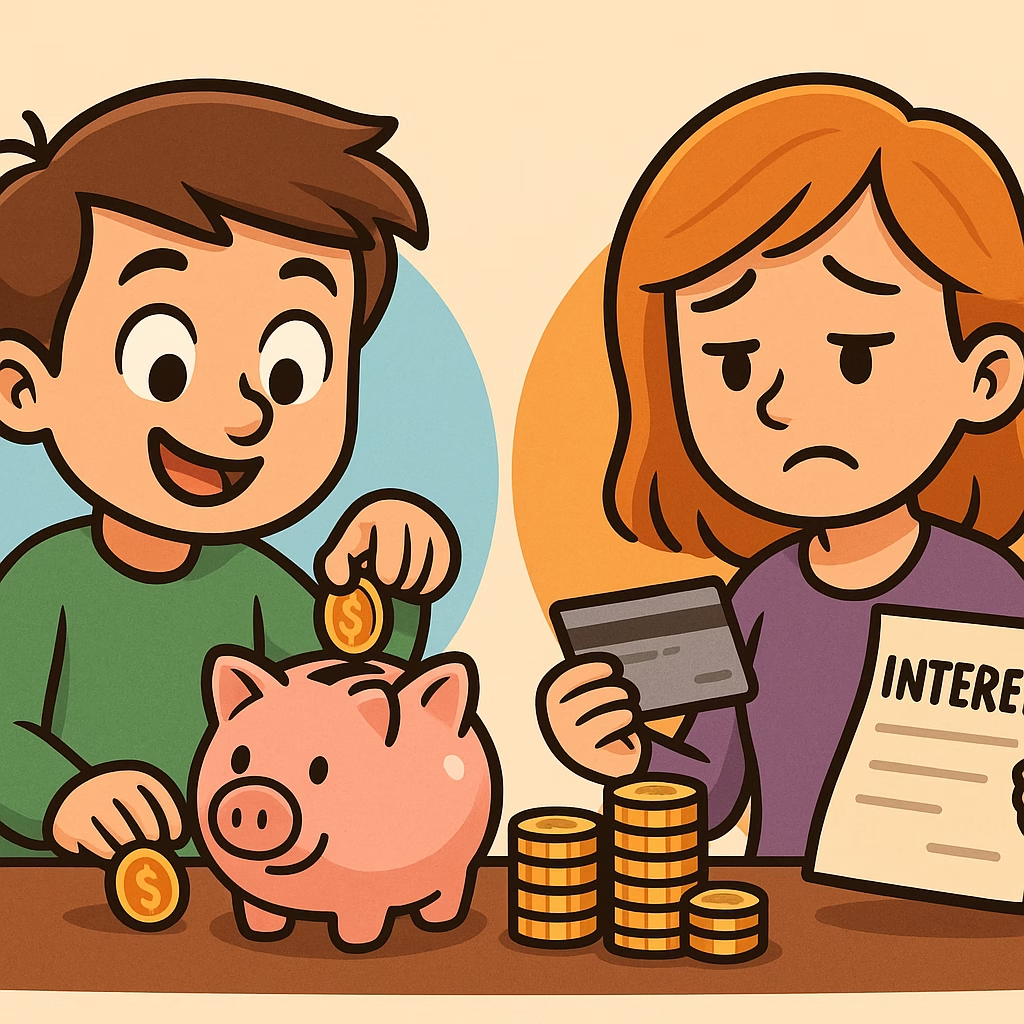
Young people have a special advantage when it comes to compounding: time. The earlier you start saving, the more time your money has to grow. Here are some simple tips to harness this “wonder”:
- Start a savings habit early. Even small amounts add up. Put part of your allowance or gift money into a piggy bank or a savings account each week. The SEC’s pizza example shows how saving just $2 a day can turn into thousands over decades.
- Let your earnings grow. Resist the urge to withdraw interest and instead keep it in the account so that it earns more interest. Over many years the extra growth can be huge.
- Reinvest your rewards. If you receive dividends or profits from investments, reinvest them instead of spending them. This makes compounding even stronger.
- Avoid high‑interest debt. Credit cards and loans can also compound. Paying only the minimum on a high‑interest debt can dramatically increase the total cost. Try to pay your balances in full each month so you earn interest instead of paying it.
- Use the Rule of 72. Practice estimating how long it takes to double your savings by dividing 72 by the interest rate. This simple rule helps you set goals and see how different rates affect your money.
- Talk with parents or guardians. Open a youth savings account together, watch the balance grow, and celebrate milestones. Learning about money can be a fun family activity.
Common questions kids ask about compounding
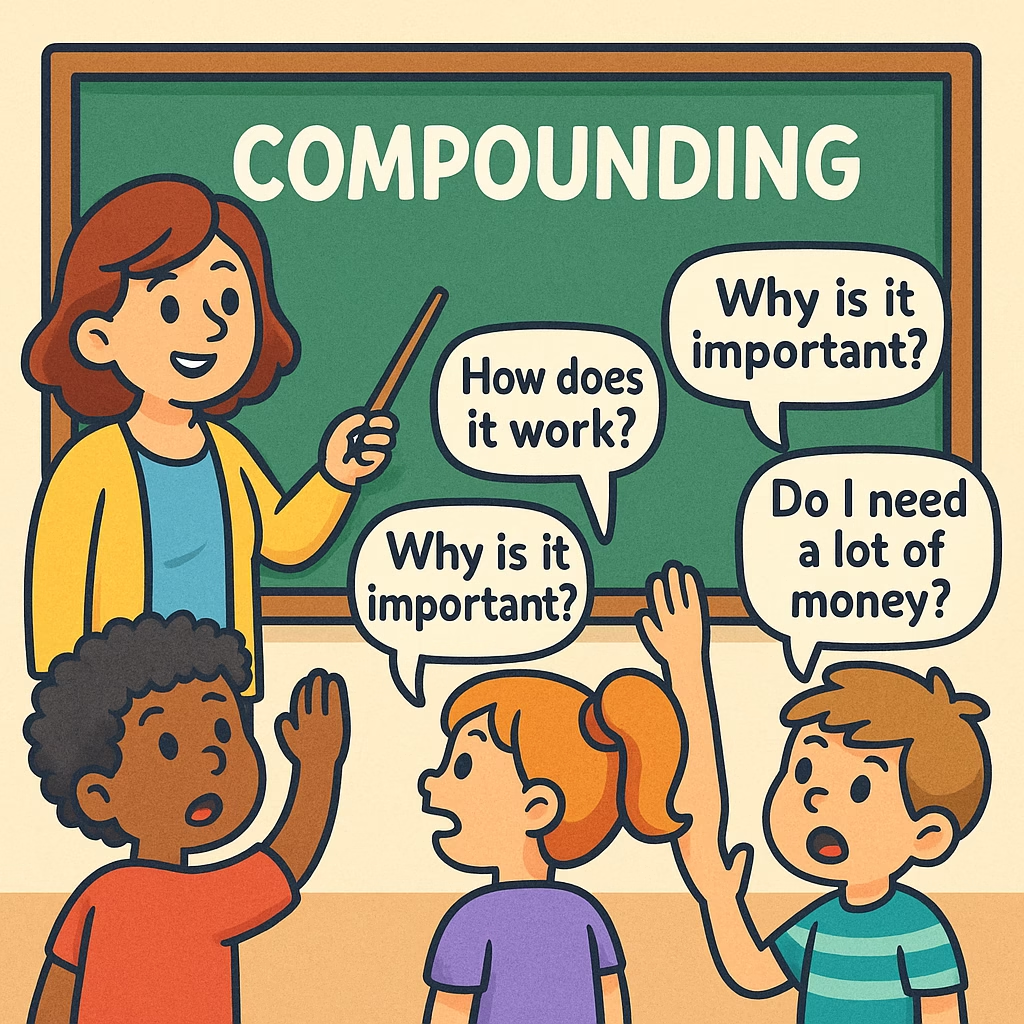
“Why does the money grow faster over time?”
Because with compounding you earn interest on the interest you already earned. Each year there is a bigger base to earn from. In the SEC example, the interest grows from $5 in the first year to more than $40 after 25 years investor.gov. Small increases at the start create bigger increases later.
“Is compounding good or bad?”
It can be both! Compounding helps your savings grow when you save or invest. But if you borrow money and let the interest pile up, it can make debt grow quickly. The credit‑card example shows how a $1 000 purchase can end up costing $1 486 uspsfcu.org. That is why you should use compounding to your advantage (by saving) and avoid it when borrowing.
“Do I need a lot of money to benefit?”
No. The pizza experiment begins with saving the cost of a slice each day—just $. Over time even small amounts compound into much larger sums. Starting with whatever you have is more important than starting with a large amount.
Final thoughts
The magic of compounding shows that time and patience can make money grow. By saving early, letting interest earn interest, and avoiding high‑interest debt, you can harness this “eighth wonder” to build a brighter financial future. Remember that compounding works quietly: you might not see huge changes right away, but like a seed growing into a tree or a snowball rolling down a hill, the growth accelerates over time. Empower yourself and your family by planting your money seeds today!
If You Liked This Article, Then You Might Also Like This –