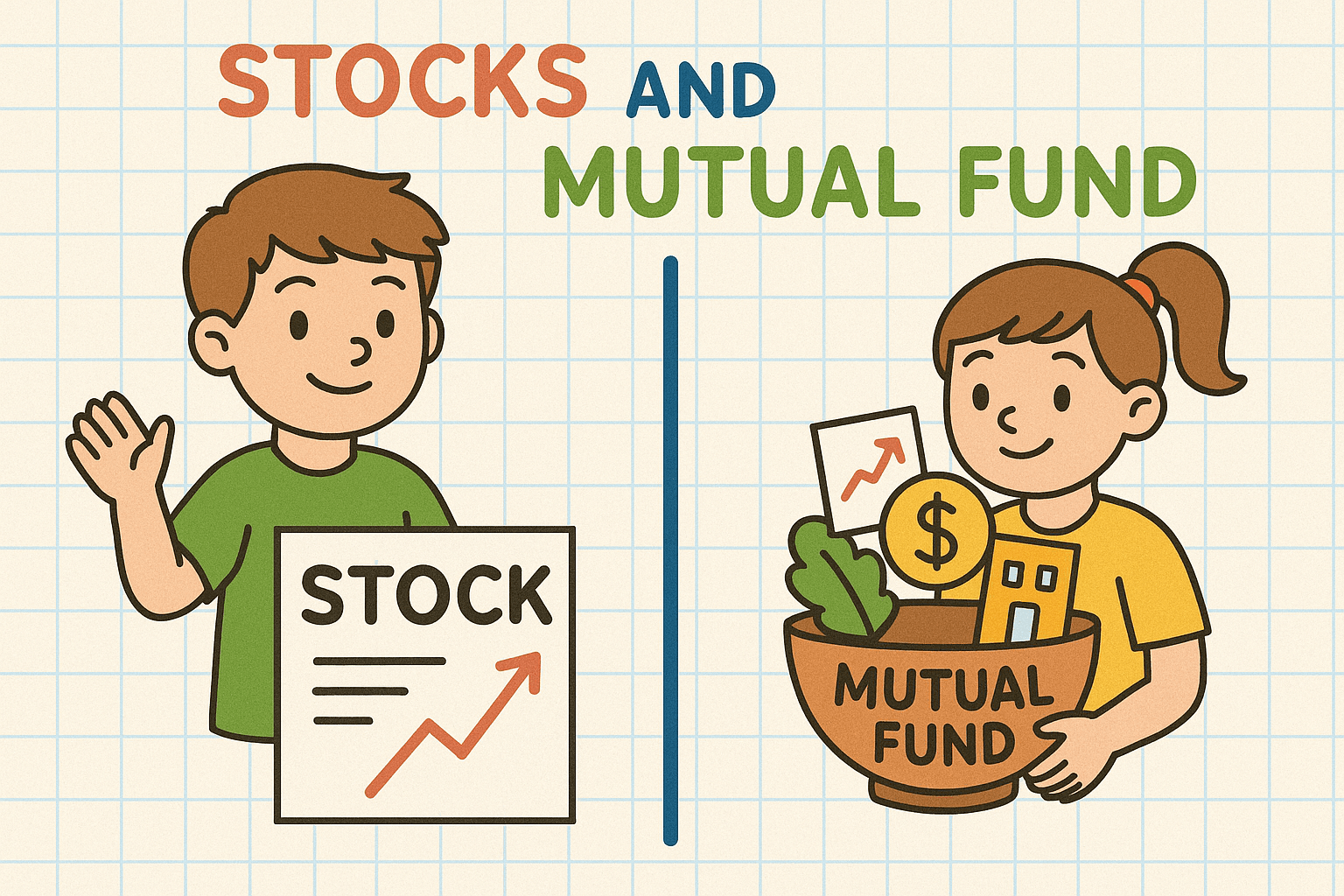
Investing can seem like a mysterious grown‑up topic, but it doesn’t have to be. When you understand some basic ideas – like the difference between stocks and mutual funds – it becomes clear how saving and investing can help your money grow over time. This blog is written so clearly that even a ten‑year‑old can follow along. I’ll use simple analogies and lots of examples (and fun pictures!) to show how these two popular investments work and why people choose one or the other.
1. What is a Stock?
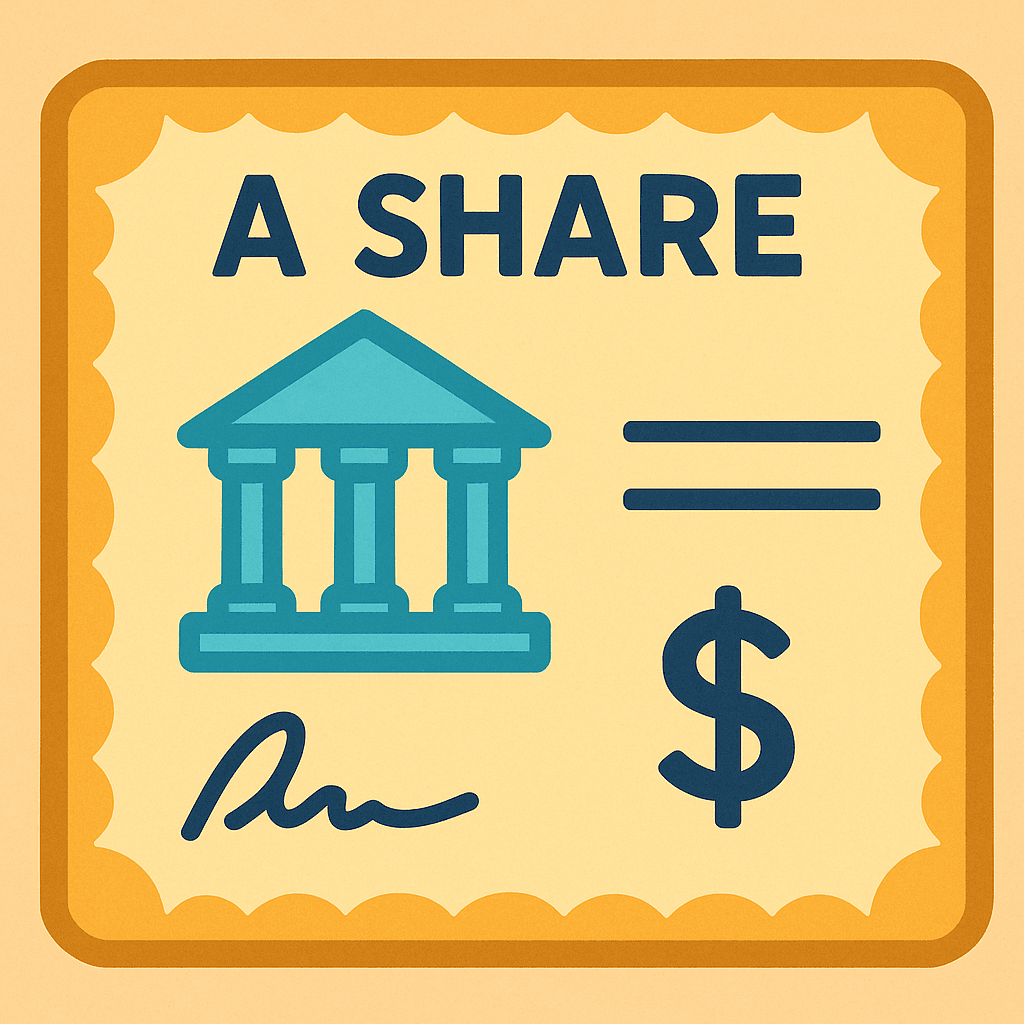
Imagine a large company as a pizza. The pizza is cut into many slices. Each slice represents a stock. When you buy a stock, you are buying a small slice of ownership in that company. According to investment guides, stocks represent small pieces of ownership in a company – also called shares or equities. Companies issue stocks to raise money for things like launching new products or expanding their business. When you own a stock, you share in the company’s success; if the company grows and earns more profits, the value of your slice (your stock) often goes up. However, if the company performs poorly, the price of its stock can fall.
Types of stocks
There are two main types of stocks:
- Common stock – The most common type. Owners usually get to vote on company matters and may receive dividends (small payments from the company’s profits).
- Preferred stock – This type usually doesn’t have voting rights, but owners often receive dividends at a fixed rate and get paid before common stockholders if the company goes bankrupt.
Most people start with common stock because it is easier to buy and it can benefit more if the company grows quickly.
How stock prices change
Stock prices move because people buy and sell them. Think about supply and demand. When more investors want to buy a particular stock, its price goes up; when more want to sell, the price goes down. When demand for tickets increases, prices go up and when there are lots of empty seats, prices are cheaper. Stock prices can also swing wildly because of investor emotions: good news about a company might lead many people to buy, while bad news (like a poor earnings report) could prompt people to sell. These quick moves are why stocks are often described as risky – you can make a lot of money, but you can also lose money.
Why people buy stocks
People buy stocks for two main reasons:
- Dividends – some companies pay part of their profits to shareholders. These payments provide income even if the stock price doesn’t change.
- Price appreciation – if the price of the stock rises above what you paid, you can sell and make a profit. For example, if you buy a stock for ₹100 and later sell it for ₹120, you earn ₹20.
Stocks are like riding a roller coaster. You could have ups and downs in a short time. That’s why many grown‑ups say investing in stocks requires patience and a willingness to handle big swings in value.
2. What is a Mutual Fund?
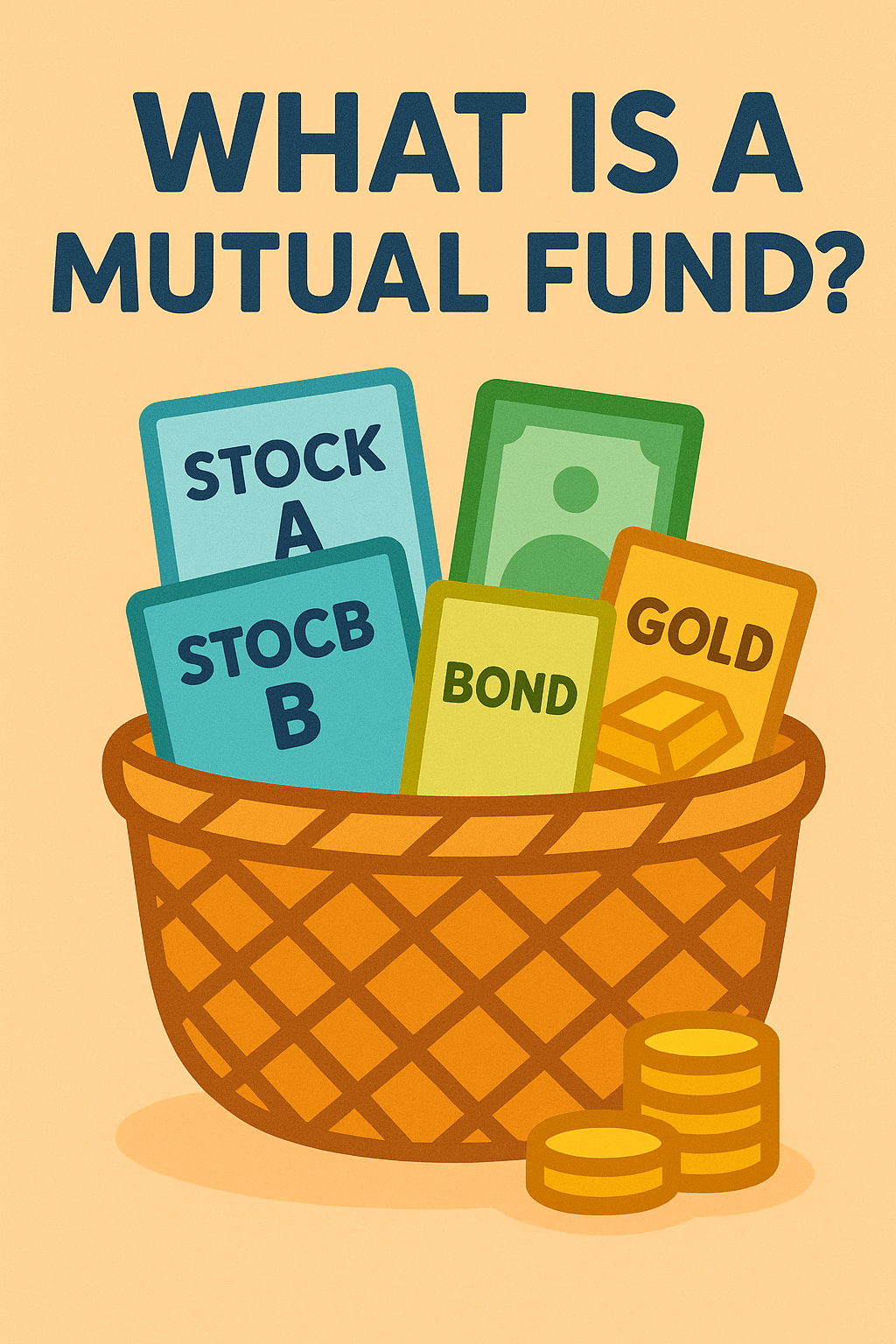
If a stock is a slice of a pizza, then a mutual fund is like a basket filled with lots of different treats – maybe a cookie, an apple, a candy, and a sandwich. When you invest in a mutual fund, you and many other investors pool your money together. The mutual fund company uses this pool of money to buy a mix of investments such as stocks, bonds, or even gold. Wealthsimple explains that mutual funds let investors pool their money to invest in a broad range of assets, and instead of owning those assets directly, investors own shares of the fund. The value of your share rises or falls based on the combined value of all the assets in the fund.
How mutual funds work
Think of a mutual fund like a set‑top box package. In the Fi Money guide, mutual fund schemes are compared to television packages: some packages have more sports channels, others have more drama or kids’ shows. Likewise, some mutual funds invest mostly in stocks (called equity funds), while others may focus on bonds, gold or a mix of everything. Investors choose which “package” suits their goals.
When you buy into a mutual fund, you are purchasing units of the fund rather than individual stocks. The price of each unit is called the Net Asset Value (NAV). It represents the total value of the fund’s investments divided by the number of units outstanding. If the value of the underlying stocks and bonds increases, the NAV goes up; if they go down, the NAV falls.
Professional management
The funds are managed by trained professionals called fund managers. They decide which stocks or bonds to buy or sell. SoFi notes that mutual funds are managed by professionals, making them a good option for people who do not want to manage investments themselves. This means that rather than researching dozens of companies, you can let experts do the work. RBC’s mutual fund page describes it as “an easy way to invest in a pool of stocks, bonds and other securities managed on your behalf by an experienced money manager”.
Types of mutual funds
There are many kinds of mutual funds. Some major categories include:
- Equity funds – invest mostly in stocks.
- Money‑market funds – invest in very short‑term bonds like treasury bills.
- Fixed‑income funds – focus on bonds that pay interest.
Additionally, mutual funds can be actively managed, where managers try to beat the market by picking specific investments, or passively managed, where funds track a market index (for example, the Nifty 50 or the S&P 500). Passive funds often have lower fees because there is less active trading.
Why people choose mutual funds
Investors like mutual funds because they offer diversification. Instead of putting all your money into one company, your money is spread across many companies and types of investments. SoFi explains that mutual funds offer a diversified portfolio in a single investment, while stocks are shares in individual companies. This diversification can reduce the impact if one investment performs poorly. The Fi Money guide notes that you can invest in a mutual fund scheme with as little as ₹500 and immediately own a basket of different securities. This makes mutual funds accessible to people who want broad exposure but have modest savings.
Mutual funds are also convenient because they are managed by professionals, and you can invest systematically through programs like SIPs (Systematic Investment Plans), putting in small amounts each month. Many funds reinvest earnings back into the fund, which means your returns benefit from compounding – earning “interest on interest”.
3. Key Differences Between Stocks and Mutual Funds
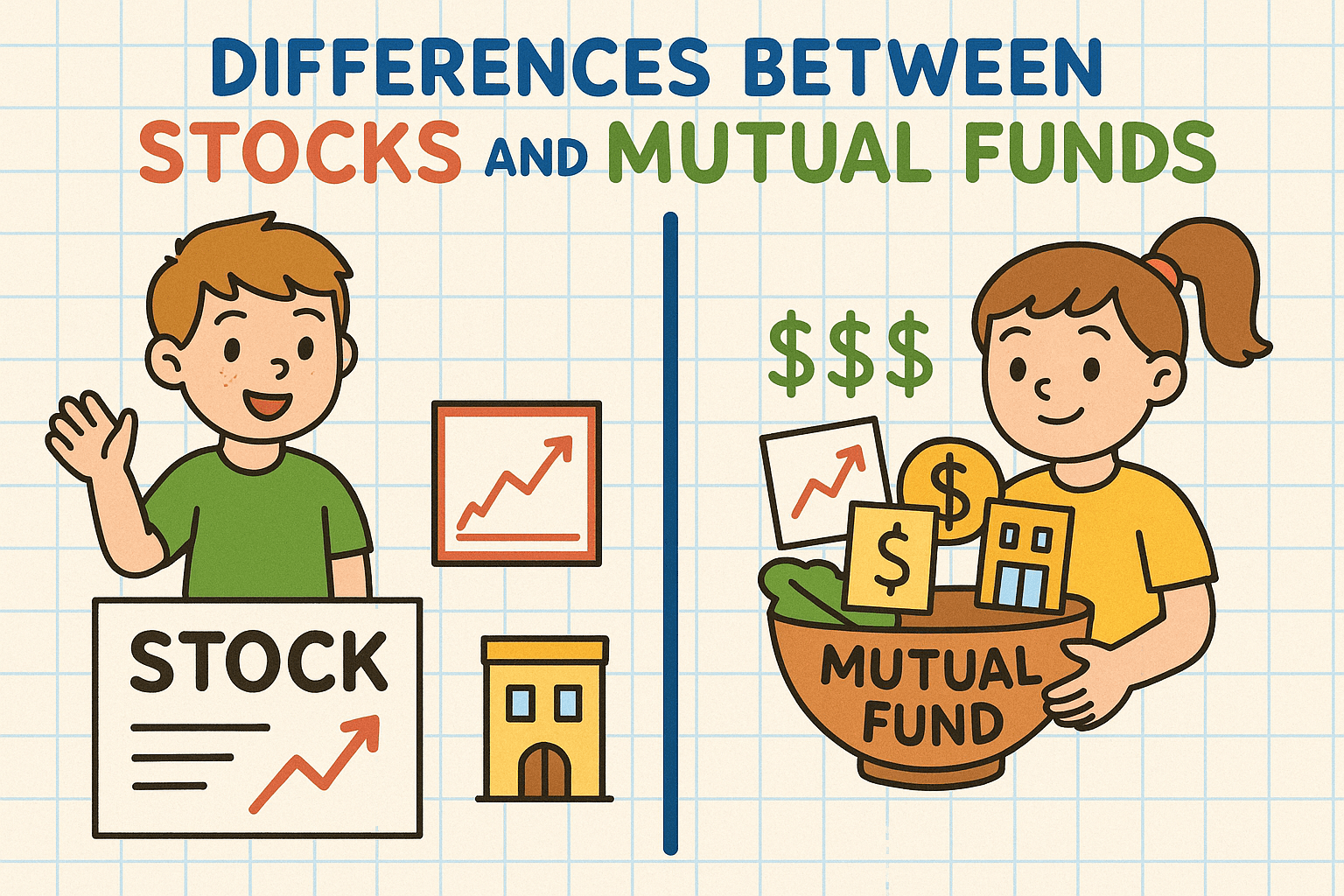
To understand how stocks and mutual funds compare, let’s look at some major differences. The table below summarizes the key points in short phrases. It doesn’t include long sentences; instead, it uses clear keywords to highlight contrasts.
| Feature | Stocks | Mutual funds |
|---|---|---|
| Ownership | Direct slice of a single company | Fraction of a pooled portfolio |
| Diversification | None unless you buy many stocks | Instant: many assets in one basket |
| Management | You decide when to buy/sell | Professional managers make decisions |
| Risk | Higher volatility, big ups and downs | Lower individual risk due to diversification |
| Cost | No ongoing fees, but you pay per trade | Pay management fees (expense ratio) |
| Best for | Hands‑on investors comfortable with research | Beginners or busy people seeking convenience |
Explaining the differences in plain language
- Owning one vs. owning many – When you buy a stock, you own just one company. Your success depends entirely on that company. With a mutual fund, you own a tiny portion of many companies (or bonds). If one company does poorly, the others may balance it out.
- Who manages it? – If you hold stocks, you have to decide when to buy and sell. You may need to read company news and understand financial reports. With mutual funds, professional managers handle the buying and selling for you.
- Risk level – Stocks can have big price swings. They might go up a lot or down a lot quickly. Mutual funds spread the risk; they tend to be less volatile, though they can still lose money. As the Office of Financial Readiness notes, mutual funds tend to be less risky because they contain a mix of investments (diversification), while individual stocks can be more volatile.
- Fees – When you buy or sell stocks, you might pay a brokerage fee. After that, there are no ongoing fees (unless you use a service). Mutual funds charge management fees because professionals are running the fund. But these fees can reduce returns over time.
- Minimum investment – Some individual stocks are expensive; you must buy at least one share. Mutual funds often allow you to start with a small amount (₹500 or less) and still own parts of many companies.
- Returns – Stocks can provide high returns if the company’s stock price soars or if it pays generous dividends. However, returns can also be negative if the company performs badly. Mutual funds can’t promise high individual stock returns, but they benefit from compounding since profits are reinvested automatically. This helps your money grow steadily over time.
Visual analogy: pizza vs. basket

To make this comparison vivid, imagine a giant pizza alongside a colorful basket. Owning a stock is like taking one slice of pizza: you get a taste of one flavor. Owning a mutual fund is like owning the whole basket: inside are many different snacks – chips, fruit, cookies – each with its own flavor. If one snack tastes bad, there are still many others to enjoy. Here’s an illustration:
4. Risk and Reward: Roller Coaster vs. Smooth Sailing

Stocks behave like a roller coaster. The price can soar sky‑high one week and plummet the next, making them exciting but nerve‑racking. Mutual funds, because they hold many different investments, usually experience gentler ups and downs – more like a sailboat sailing on gentle waves. This doesn’t mean mutual funds are risk‑free (they can still lose money when markets fall), but the ride is often smoother.
The Investopedia article points out that a single stock can deliver higher returns but at higher risk. Conversely, mutual funds mitigate risk through diversification.
5. Who’s in Charge? You vs the Coach
When you invest in stocks, you call the shots. You decide what to buy, when to sell, and how long to hold. That means you also need to do the research. Some investors enjoy reading about companies and following market news. Others may find it time‑consuming.
With a mutual fund, it’s like having a coach. A team of professionals manages the investments, aiming to reach certain goals on behalf of all investors. They research companies, decide when to buy or sell, and manage the mix of assets. This arrangement can be great for beginners or for people who don’t have the time or knowledge to pick individual stocks. On the other hand, some investors prefer the control and flexibility of picking stocks themselves.
6. Growth Over Time and the Power of Compounding
Whether you invest in stocks or mutual funds, the goal is for your money to grow. Stocks can grow dramatically if the company becomes more valuable. However, they can also shrink if the company struggles. Mutual funds can grow steadily because they reinvest earnings back into the fund, allowing compounding to work its magic. Compounding means you earn a return not only on your original investment, but also on past earnings. Over many years, compounding can make a big difference – a small investment grows like a plant sprouting from a tiny seed.
You can visualise growth with this plant analogy. The pot represents your initial investment, the coins at the base show your contributions, and the plant’s leaves and fruit symbolize the returns you earn over time. When you water the plant (continue contributing), it grows even faster.

7. Diversification: Don’t Put All Your Eggs in One Basket
One of the oldest investment sayings is “Don’t put all your eggs in one basket.” That’s exactly what diversification means. Investing in one stock is like putting all your eggs in one basket; if the basket drops, all your eggs break. Mutual funds spread your eggs across many baskets, reducing the chance of losing everything at once. Even if one investment performs poorly, others may do well.
8. Costs and Fees
Stock costs
When buying or selling stocks, you typically pay a commission or trading fee to a brokerage. Some brokers offer commission‑free trading, but others may charge a small fee per trade. After that, there are no ongoing costs. However, you may pay taxes on dividends or capital gains when you sell.
Mutual fund costs
Mutual funds come with management fees. These fees (expressed as an expense ratio) pay the fund managers for researching, buying and selling investments. Investopedia warns that fees can reduce your returns over time. For example, if you invest ₹100,000 in a mutual fund that charges a 1% fee, you pay ₹1,000 per year. While this cost is reasonable for professional management, you should compare funds to find low‑cost options.
Some mutual funds also have a load, which is a sales commission. Wealthsimple notes that funds with a load charge a fee when you buy or sell. Other funds, called no‑load funds, don’t charge this fee and generally have lower expenses.
Taxes
In India, dividends and capital gains from stocks and mutual funds may be subject to different tax rates depending on how long you hold the investment. Always check the latest tax rules or consult a financial advisor to understand how taxes affect your returns.
9. Which Should You Choose?
There isn’t a one‑size‑fits‑all answer. The best choice depends on your goals, risk tolerance, and how much time you want to spend learning about investing. Here are some guidelines:
- If you enjoy researching companies, have a higher tolerance for risk, and want the potential for higher returns, investing directly in stocks may be appealing. Stocks offer direct ownership and can grow significantly if you pick successful companies.
- If you prefer a smoother ride, want instant diversification, and don’t have time to follow individual companies, mutual funds are a convenient choice. They allow you to invest small amounts across many companies and are managed by professionals.
- Consider a mix – Many investors hold both stocks and mutual funds. For example, you could own a few shares of companies you love (like your favorite toy or technology brand) and also invest in a mutual fund for diversification. In fact, investing guides often recommend holding both to balance risk and return.
- Look at fees – Compare expense ratios and management fees across funds. Low fees mean more money stays in your pocket.
- Think long term – Whether you choose stocks or mutual funds, investing works best over many years. Time allows your investments to grow and compounds your returns.
10. Teaching Kids About Investing
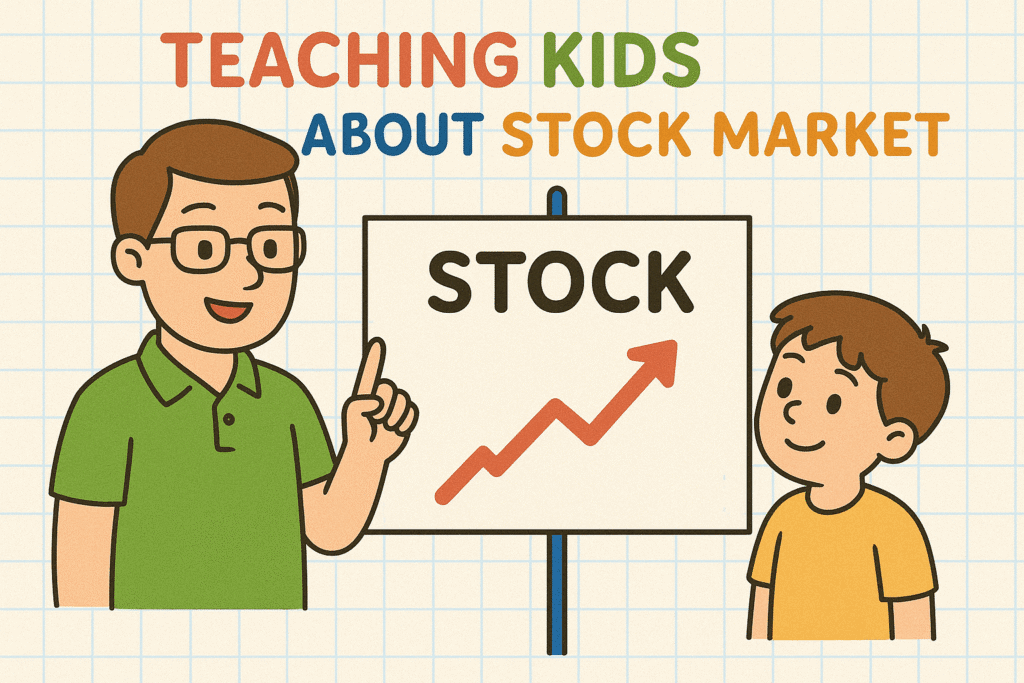
Helping children understand the basics of investing can set them up for lifelong financial health. Here are some fun ideas for parents and teachers:
- Use analogies – As this blog shows, analogies like pizza slices and baskets make abstract ideas concrete. With younger kids, use their favourite toys or snacks to represent different investments.
- Play games – Create a pretend store or stock market where children “buy” items and see how prices can change. Use fake money to demonstrate profit and loss.
- Start small – Allow older kids to invest a tiny amount of money under adult supervision. Some platforms allow fractional shares, making it affordable to invest in big companies.
- Talk about patience – Explain that investing is like growing a plant. It takes time. Discuss long‑term goals rather than quick profits.
- Discuss risk and reward – Use the roller coaster analogy to show that bigger rewards usually come with bigger risks. Encourage them to think about what makes them comfortable.
11. Conclusion
Understanding the difference between stocks and mutual funds is like learning the rules of a game. Stocks give you a direct stake in a single company – the thrill of a roller coaster and the chance for big rewards. Mutual funds, on the other hand, offer a ready‑made basket of investments managed by professionals, providing diversification and a smoother ride. Both have their place in an investment plan. By learning these basics now, you’ll be better prepared to make smart decisions with your money and maybe even help others understand the magic of investing.