So, what do you think?
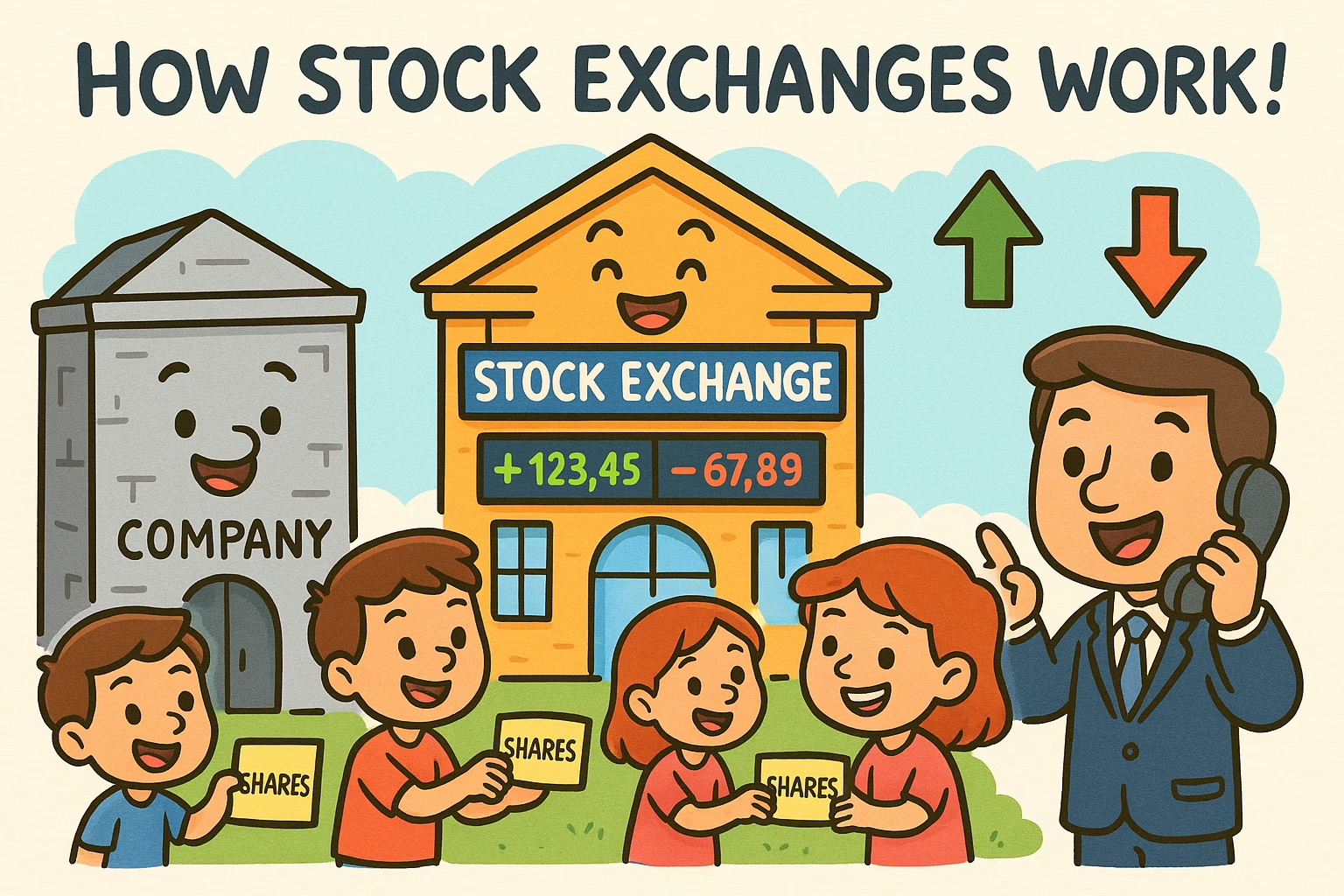
How Stock Exchanges Work?
Imagine your favorite pizza divided into many slices. If you own one slice, you own a part of the whole pizza. In the same way, a stock (or share) is like owning a small piece of a company. When a company wants to grow, it can sell shares of itself – kind of like selling slices of a big pizza – to people who want to invest. If you buy a share, you become a part owner of that company, even if it’s just a tiny part!
Why would a company sell pieces of itself? Think of a lemonade stand run by you and your friends. To make a lot of lemonade, you need money for lemons, sugar, and cups. If you don’t have enough money, you could sell “shares” of your lemonade stand to friends or family.
In return, they give you money to buy supplies, and now they each own a small part of your lemonade stand. This first sale of shares to raise money is how companies get money to grow – they sell stock to the public. Later on, if your lemonade stand becomes super popular, those shares might become more valuable because everyone wants a piece of the successful business.
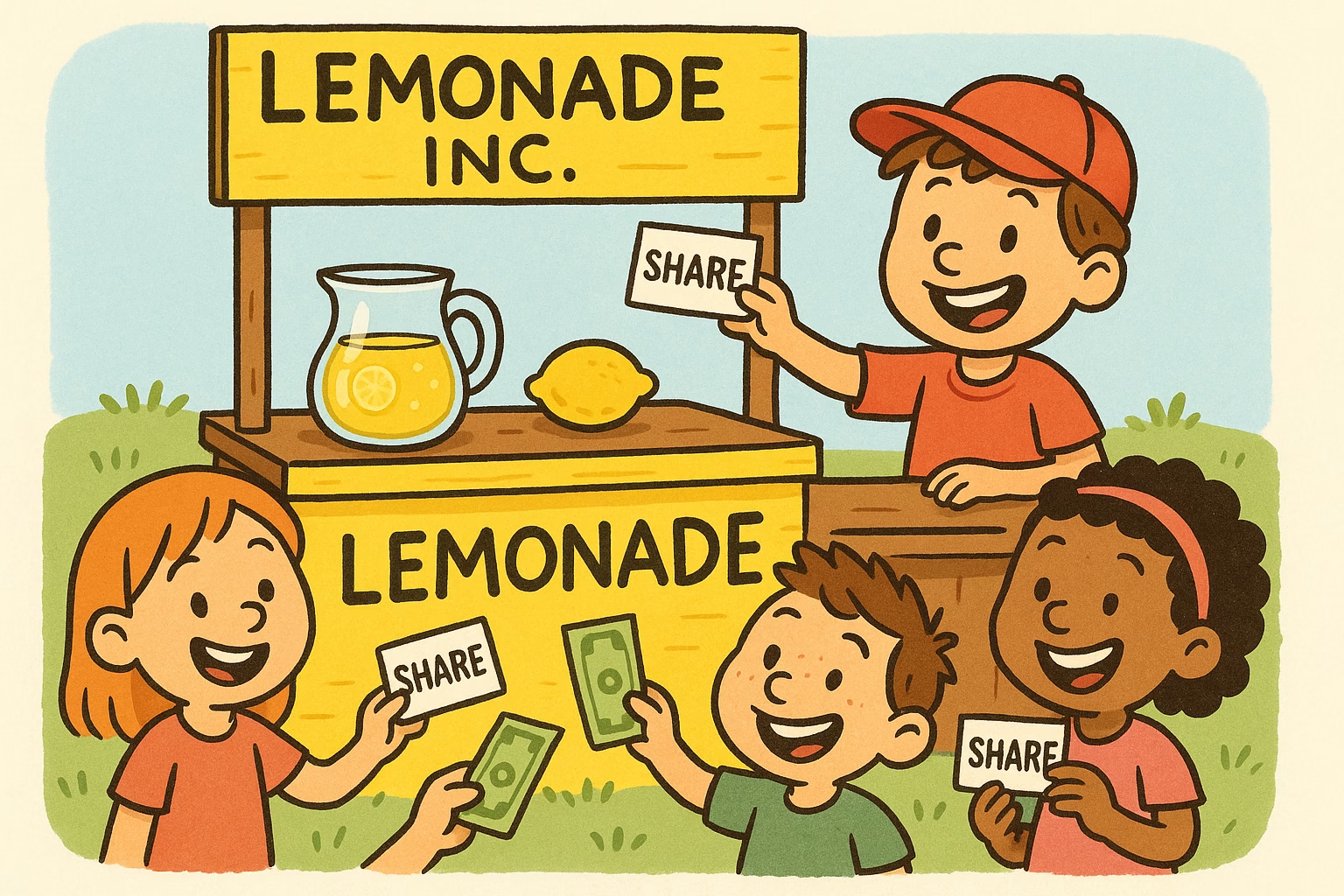
When you own a share of a company, you share in the company’s success. If the company makes a big profit (imagine your lemonade stand selling lots of lemonade on a hot day), the value of your share might go up. Sometimes companies even share profits by paying dividends (like giving a free cup of lemonade to each friend who invested).
But remember, owning a share also means sharing in the risk. If the company isn’t doing well (rainy days with no lemonade sales), the value of your share can go down. This idea of rewards and risks is important – it’s like planting a seed: it might grow into a fruit tree (reward 🍋) or sometimes it might not sprout at all (risk).
What Is a Stock Exchange? A Marketplace for Shares
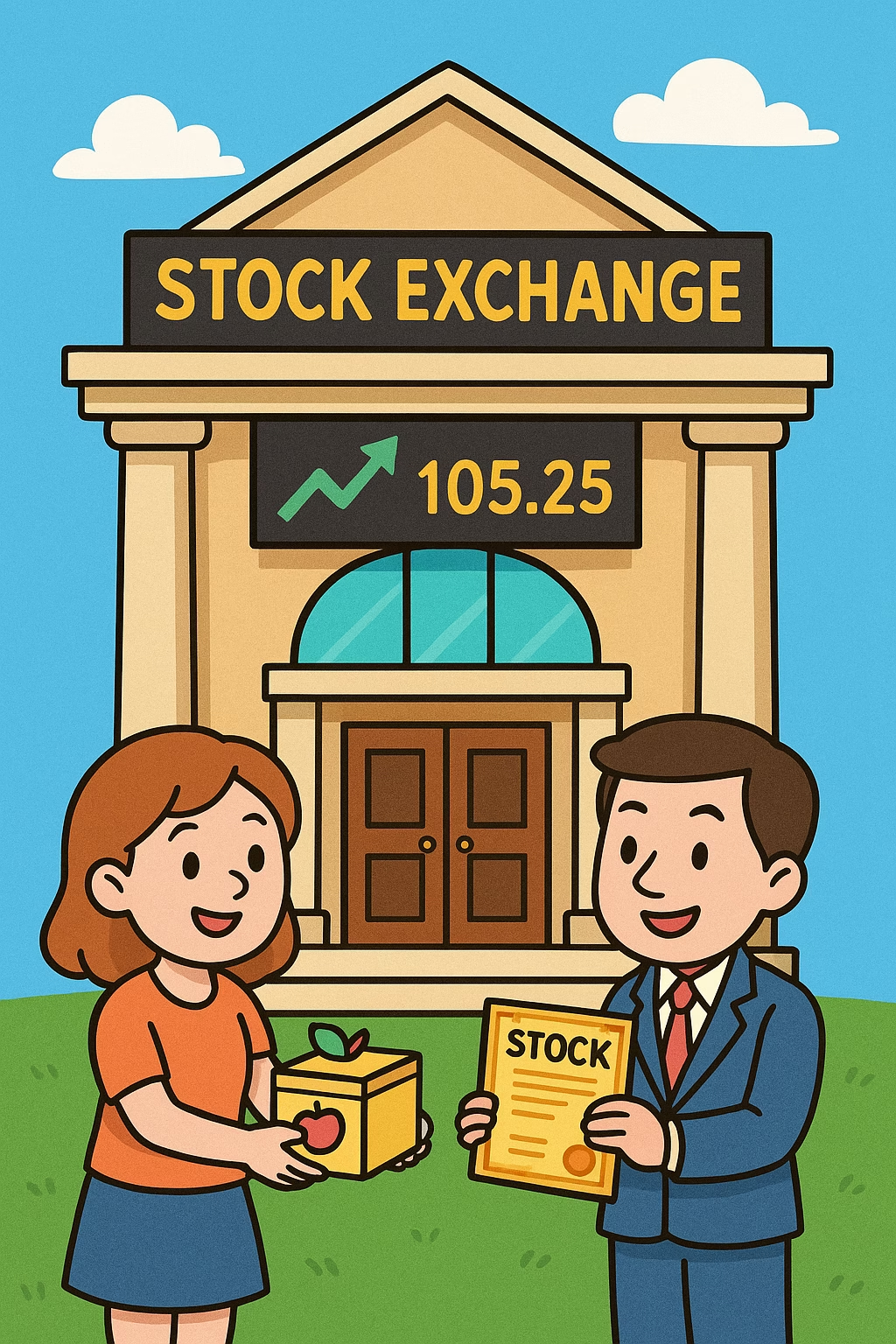
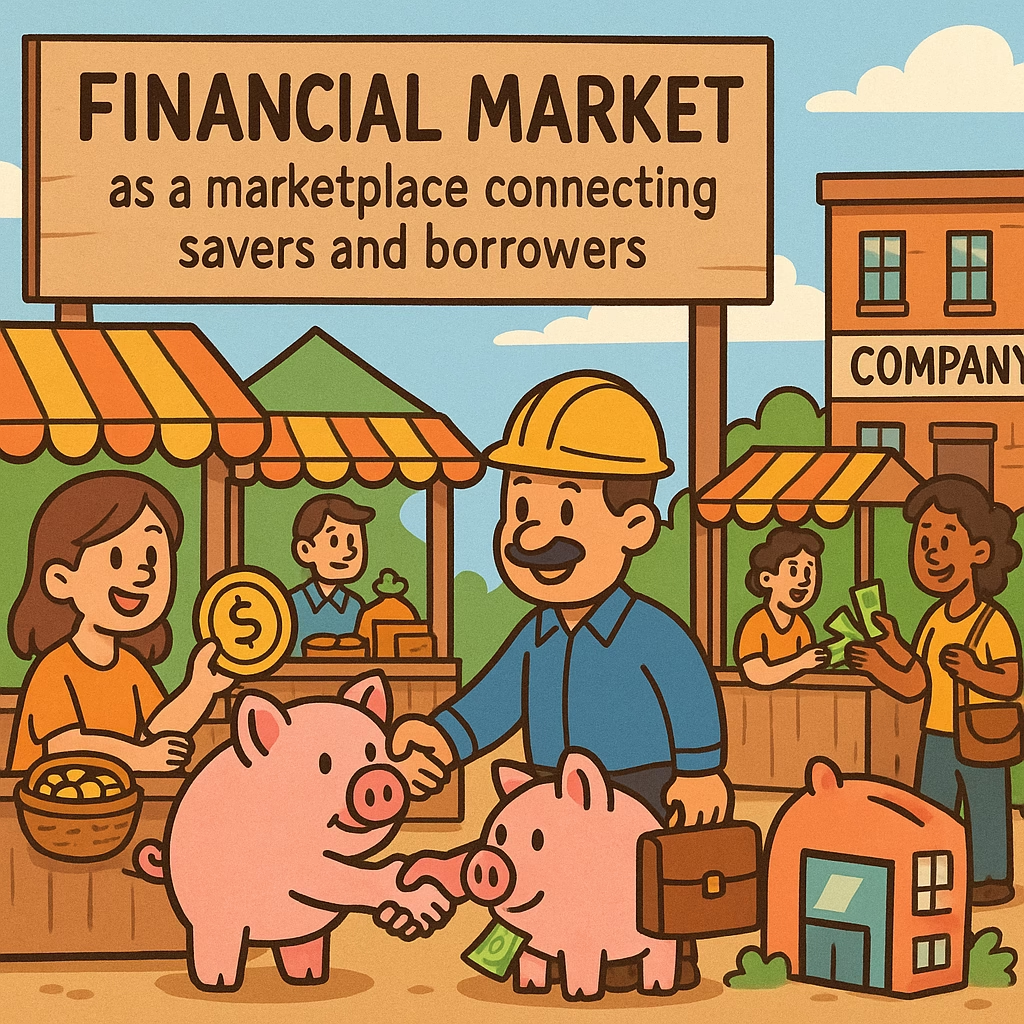
Now that you know what a share is, where do people buy or sell these shares? Welcome to the stock exchange! A stock exchange is a special marketplace where people buy and sell shares of companies.
Think of it like a big shopping mall or a fair, but instead of toys or candies, people are trading pieces of companies. If you have a share of a company and want to sell it, and someone else wants to buy it, the stock exchange is the place where you two can make the trade.
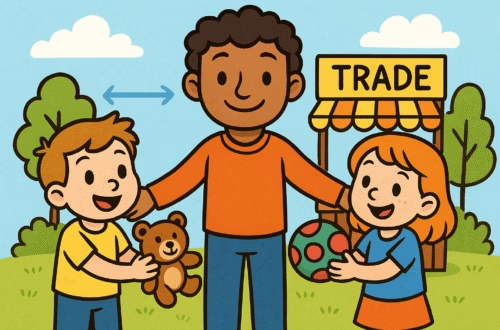
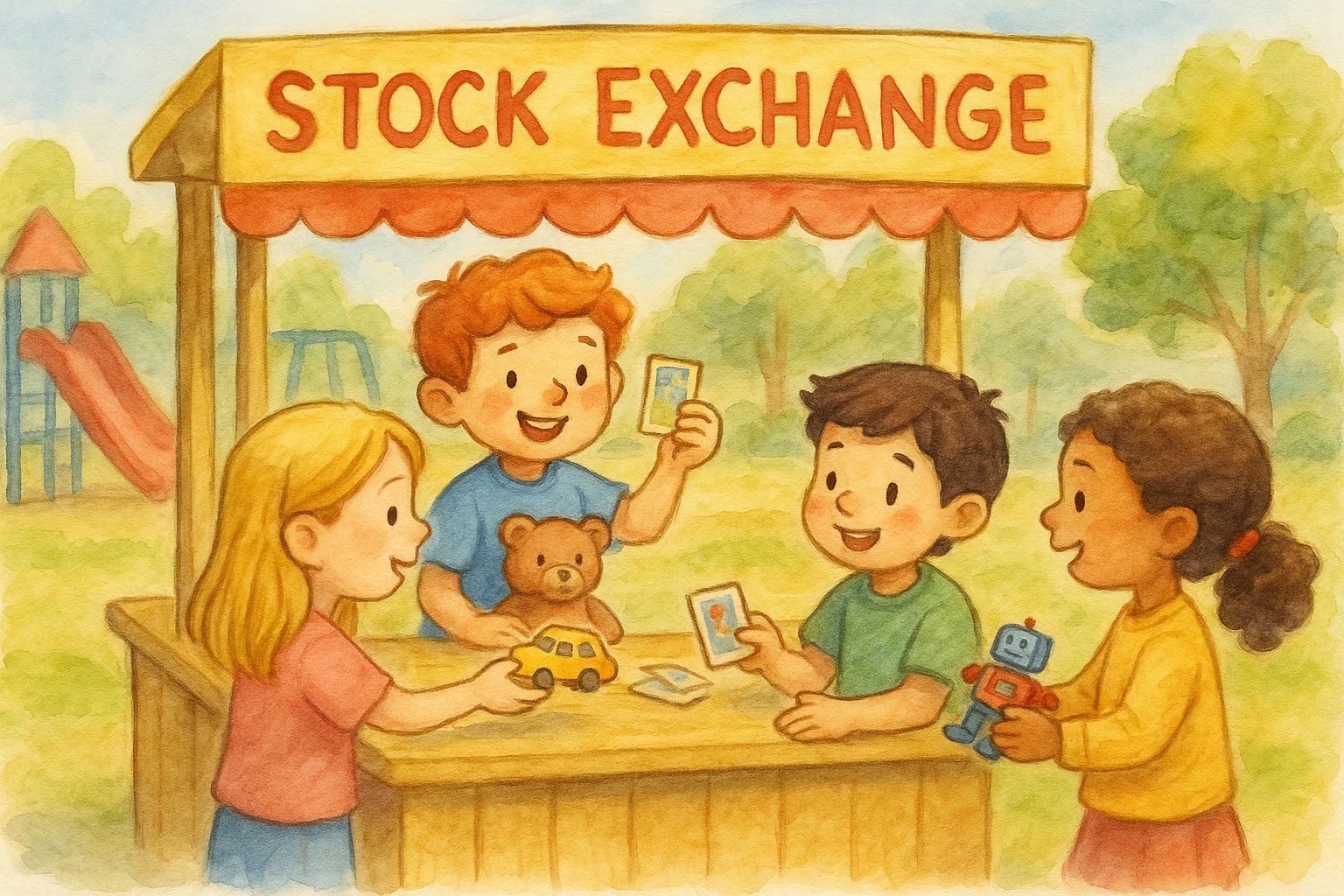
Let’s use a fun example: imagine a “Toy Trading Fair” at school. All the kids come to one big room to trade toys and cards under the teacher’s supervision. One table might be for trading Pokémon cards, another for action figures.
Similarly, a stock exchange is like a giant fair for stocks – there are many company shares being traded in one place, with rules to keep things fair. Some stock exchanges are real physical places, like a big building where people used to shout buy and sell orders, and others are entirely online, like a website or computer network kids.kiddle.co. But no matter what, the idea is the same: it’s a central hub where trading happens.
At a stock exchange, there are buyers and sellers. A buyer is someone who wants to own a share of a company (maybe they believe the company will do well), and a seller is someone who already has a share and wants to trade it for money.
But how do they find each other?
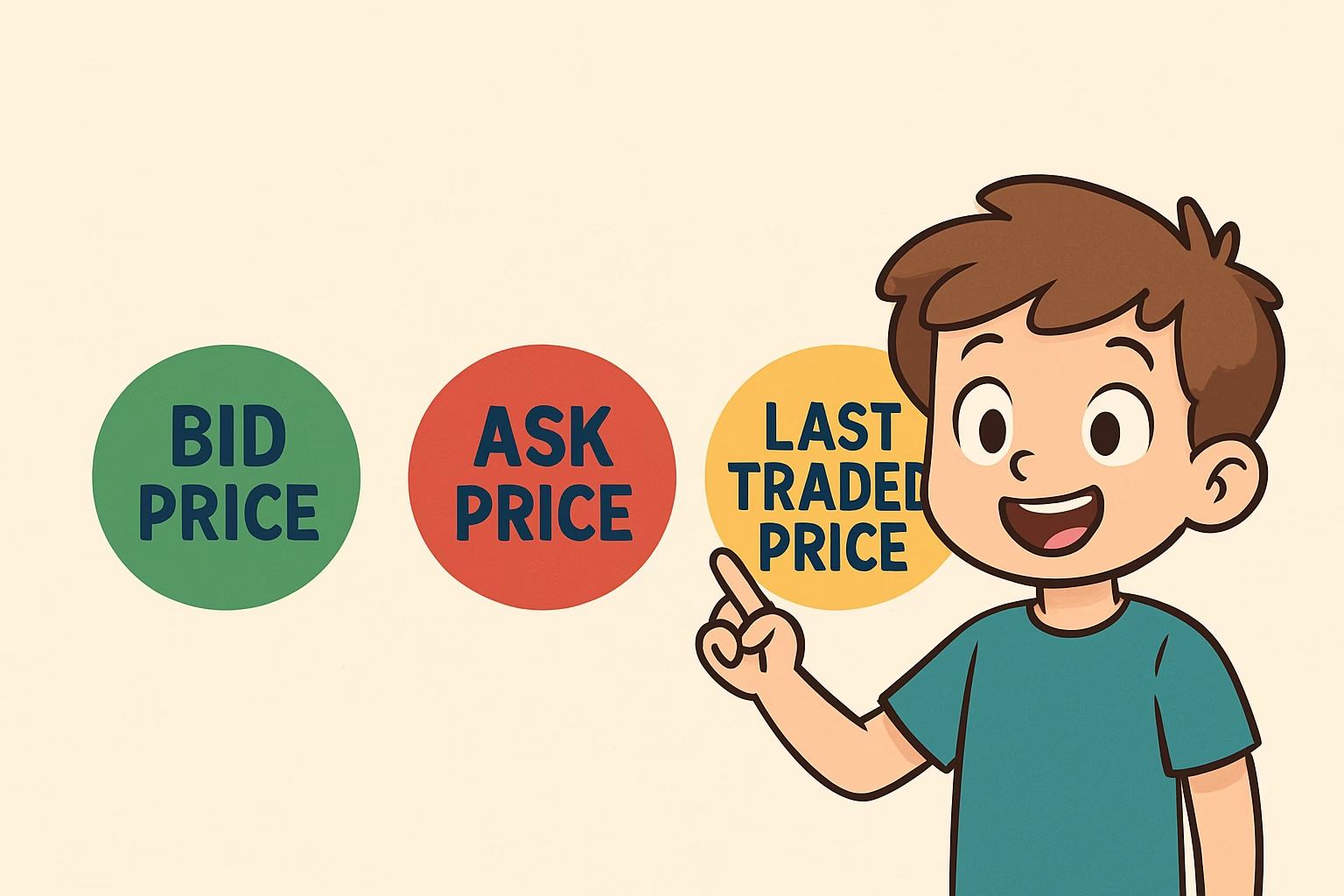
They don’t just walk around yelling “Who wants my share?!” – that would be confusing! Instead, the stock exchange works kind of like a matchmaker. It keeps track of people who want to buy and people who want to sell, and it matches them up at a price they both agree on. This matching happens very fast, often in seconds or less!
How Does Trading Work? (Buyers, Sellers, and Brokers)
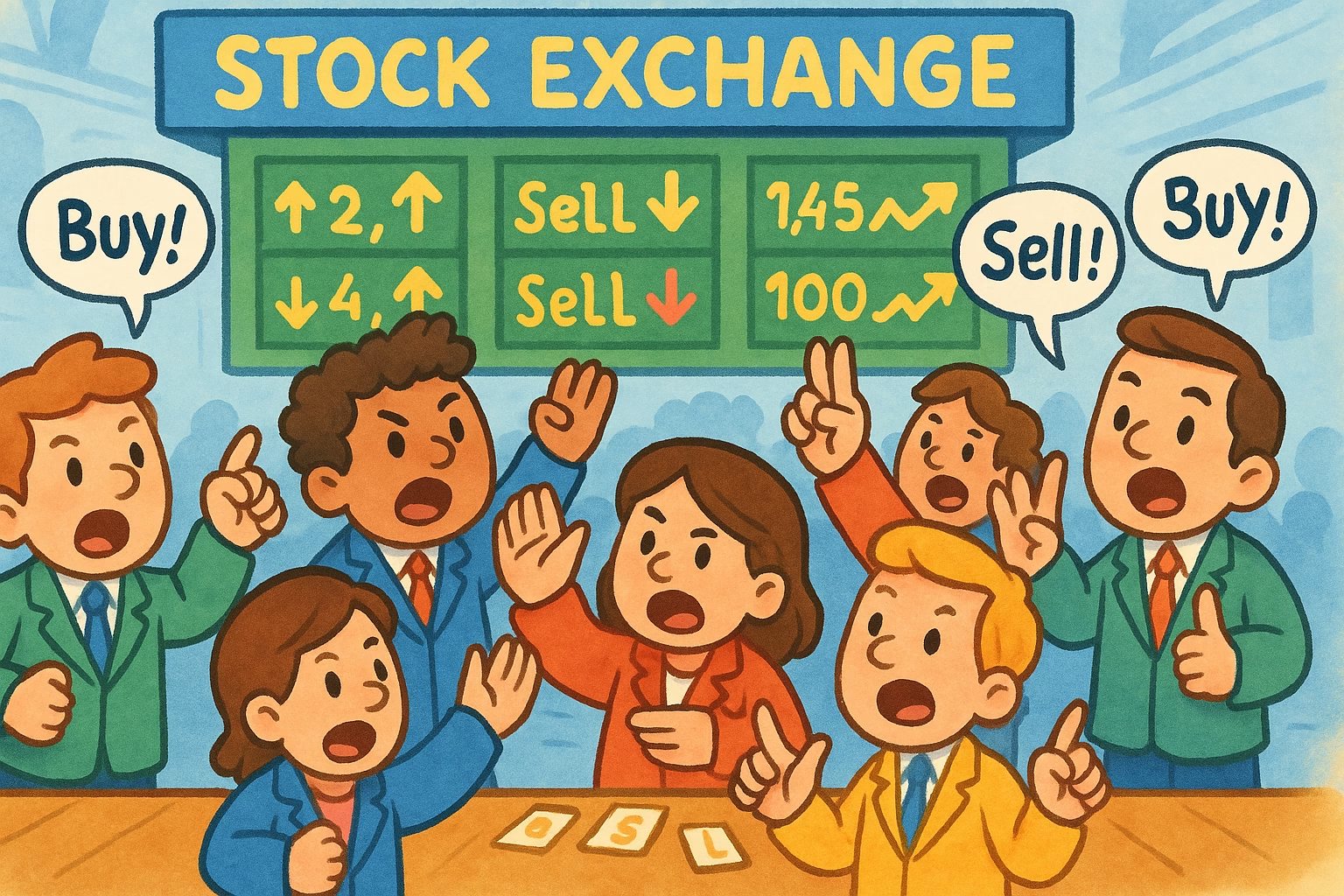
You might be wondering, can just anyone walk into a stock exchange and start trading? Not exactly – there are helpers called brokers who do the trading for you. A broker is like a messenger or a middleman: imagine you want a rare toy from the fair, but you’re too busy in class, so you give your friend some money and ask them to get the toy for you.
In the stock world, investors (people who want to buy or sell stocks) use brokers to carry out their orders on the exchange kids.kiddle.co. The broker could be a person or an online app/platform. They make sure your request to buy or sell reaches the exchange and gets done. In return, brokers usually charge a small fee for helping, just like a friend might ask for a piece of candy as thanks for doing you a favor.
So, let’s walk through a simple trade: You decide you want to buy one share of “Cool Toys Company” because you love their games. You tell your broker (through a website or phone call), “I want to buy one share of Cool Toys.” Your broker goes to the stock exchange (electronically) and finds someone who wants to sell a share of Cool Toys. If the price is, say, ₹100 (100 rupees) or $100 (100 dollars) and both agree, the trade happens.
Money goes from you to the seller, and the share goes from the seller’s account to your account. Congratulations, you now own a part of Cool Toys Company! 🎉 Similarly, if you wanted to sell, the broker would find a buyer willing to pay the price, and swap the share for money. The stock exchange keeps things orderly so that trades are fair and everyone knows the price.
Now, in the olden days, trading looked a bit different. In some exchanges like the New York Stock Exchange, traders would gather on a busy trading floor, waving their hands, shouting prices, and using hand signals to communicate.
It was noisy and exciting, like a crowded market! Today, many exchanges use computers to do trades in a blink of an eye, but a few still have people on the floor for tradition and important moments. Whether it’s people shouting or computers matching orders, the goal is the same: connect buyers and sellers.
Why Do Stock Prices Go Up and Down?
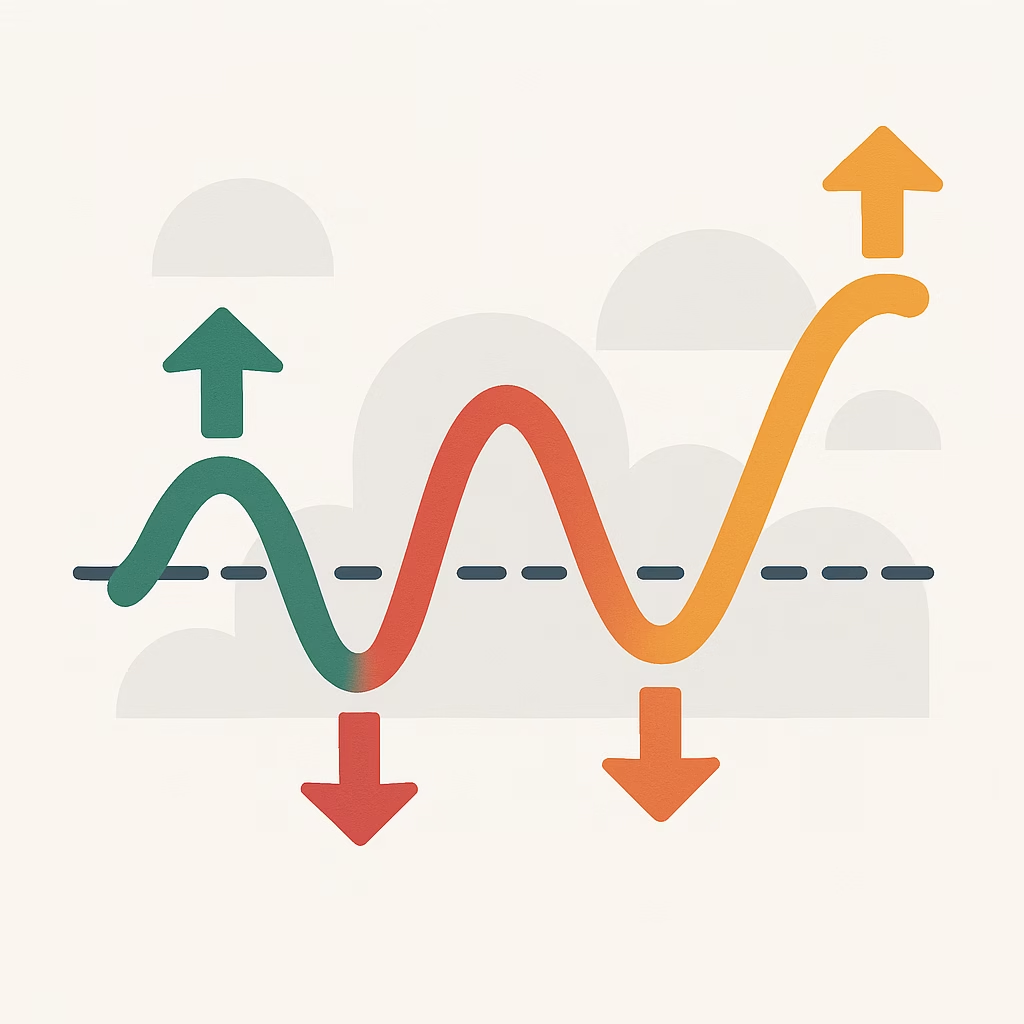
Stocks prices can change every day, even every second! It’s a bit like the playground popularity of a new toy – one week everyone might want fidget spinners, and the next week they don’t. Stock prices move because of supply and demand (how many people want to buy versus sell).
If a lot of investors think a company is doing great (for example, your lemonade stand just got featured in the news as the best lemonade in town), more people want to buy its stock. But there might not be many people who want to sell – why sell a winning lemonade stand share, right? So buyers start offering a higher price to convince someone to sell. This competition can make the price go up, up, up 📈.
On the other hand, if a company is facing problems (imagine your lemonade stand ran out of lemons and had to close for a week), many people might want to sell the stock and very few want to buy. The sellers might start accepting lower prices just to find a buyer, and the price goes down 📉. It’s a bit like if a certain toy isn’t cool anymore – kids will only trade it for a lower value item because demand is low.
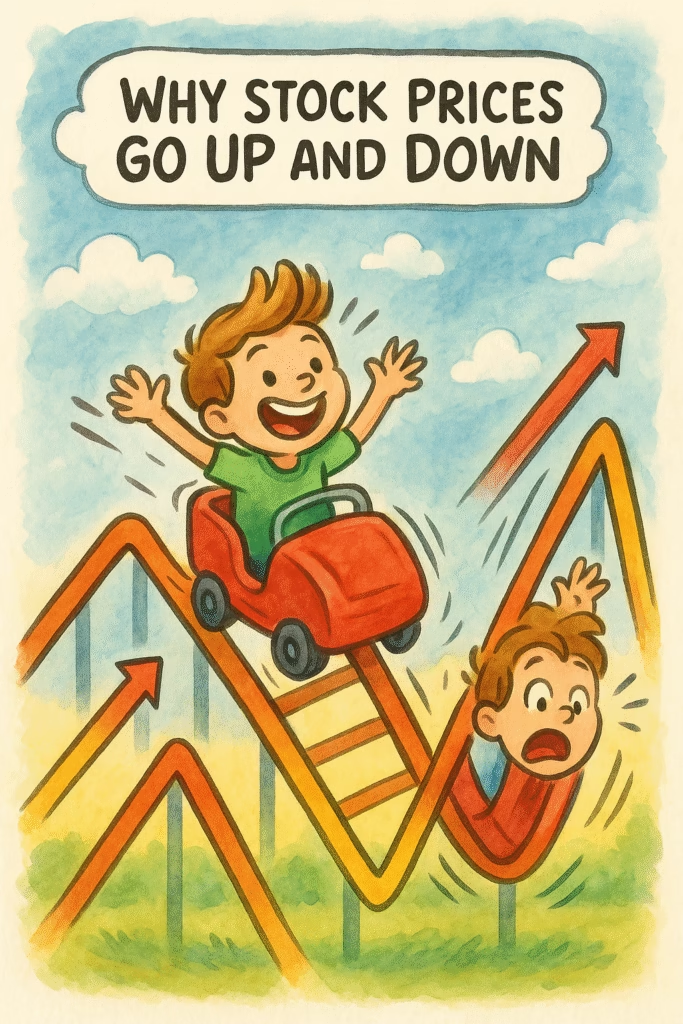
Sometimes, stock prices can change a lot very quickly – this is called volatility, but you can think of it as the stock market’s mood swings. It can feel like a roller coaster ride: exciting but a little scary with its ups and downs. The important thing to know is that these changes are normal. Over time, good companies tend to grow and their stock prices go up, but there can always be bumps along the way.
Meet Four Famous Stock Exchanges Around the World
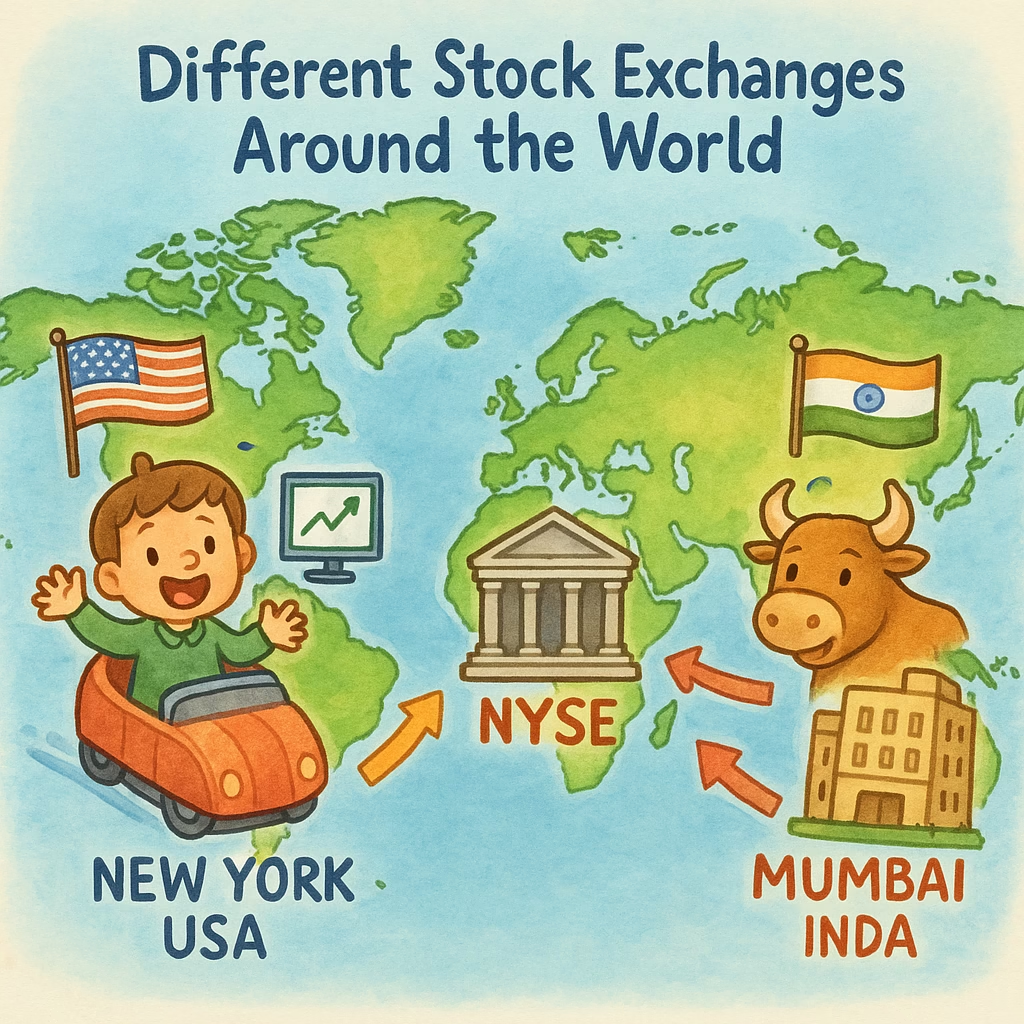
There are many stock exchanges across different countries – basically wherever companies need to raise money and investors want to trade. Let’s meet four of the most famous stock exchanges. Two of them are in India (where you might be, since we mentioned rupees ₹!), and two are in the United States. Each exchange is like a different marketplace, but they all serve the same purpose: connecting investors with opportunities.
National Stock Exchange (NSE) – India’s Modern Marketplace
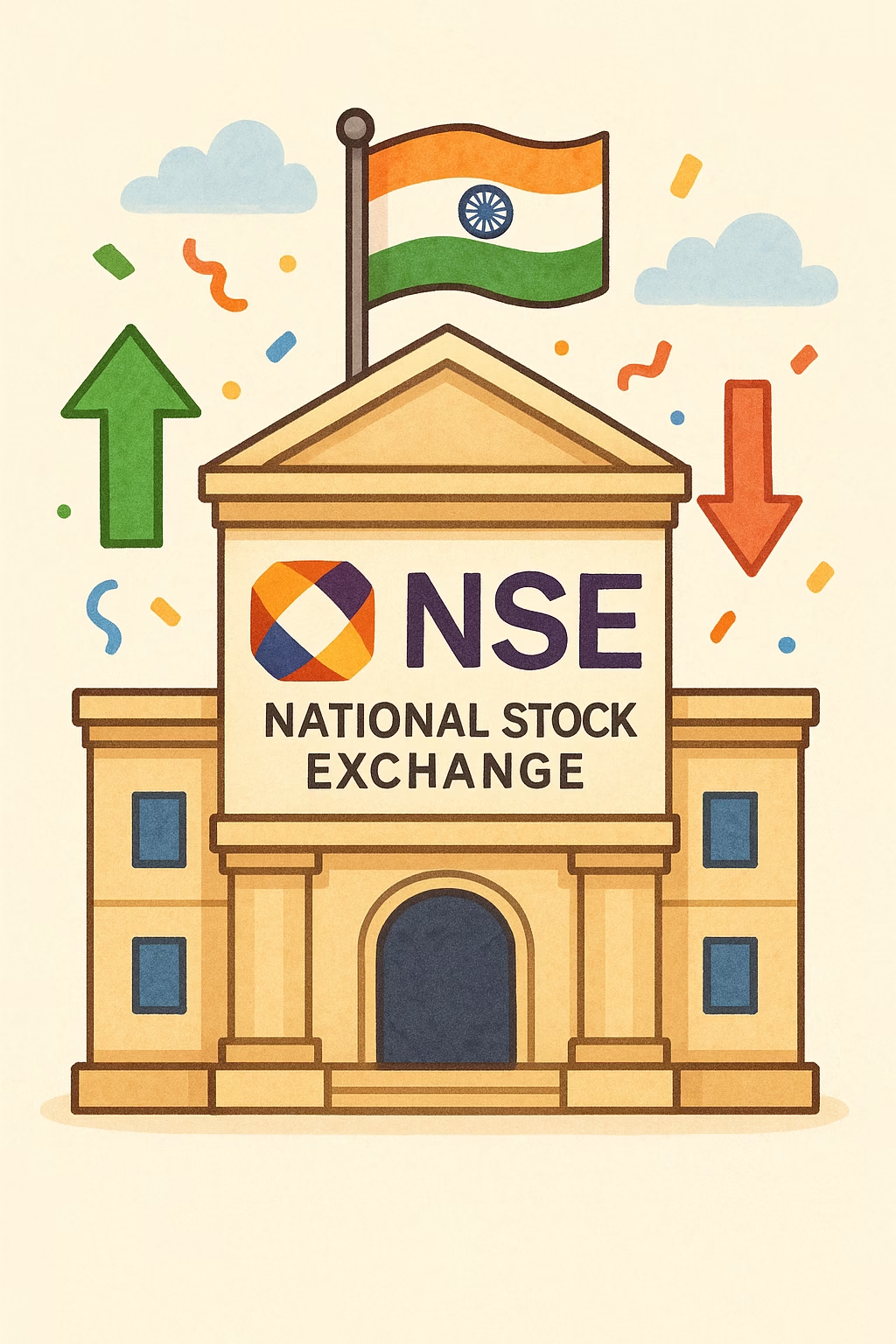
The National Stock Exchange (NSE) is one of India’s biggest and most important stock exchanges. It’s located in Mumbai, India’s financial hub. NSE is actually pretty young – it was founded in 1992, which means even your parents might be older than the NSE! It was created to bring modern, computerized trading to India.
In fact, NSE was the first exchange in India to use a fully electronic trading system, meaning trades happened through computers and not by people shouting on a floor. This made trading fast, efficient, and accessible to more people.
NSE is huge in terms of the money and stocks traded. By late 2024, the total value of all companies listed on NSE was around $5.13 trillion (that’s 5.1 followed by 12 zeros in rupees!). Many of India’s biggest companies – think of companies that make cars, run banks, or sell phones – are listed on the NSE. About 2,700 companies are listed here for people to invest in.
One cool thing is that NSE’s main stock index is called the NIFTY 50, which tracks the top 50 company stocks. If you hear on the news “Nifty is up” or “Nifty is down,” they’re talking about this group of companies as a score of how the market is doing.
How is NSE different or special? One big difference is that it’s entirely electronic – there’s no traditional trading pit with people waving papers. This is like trading in a high-tech video game lobby instead of an in-person market.
NSE also introduced more competition and fairness in India. Before NSE started, stock trading in India was mostly on another exchange and could be slower or less transparent. NSE changed that by being super transparent and fast, helping to modernize India’s markets.
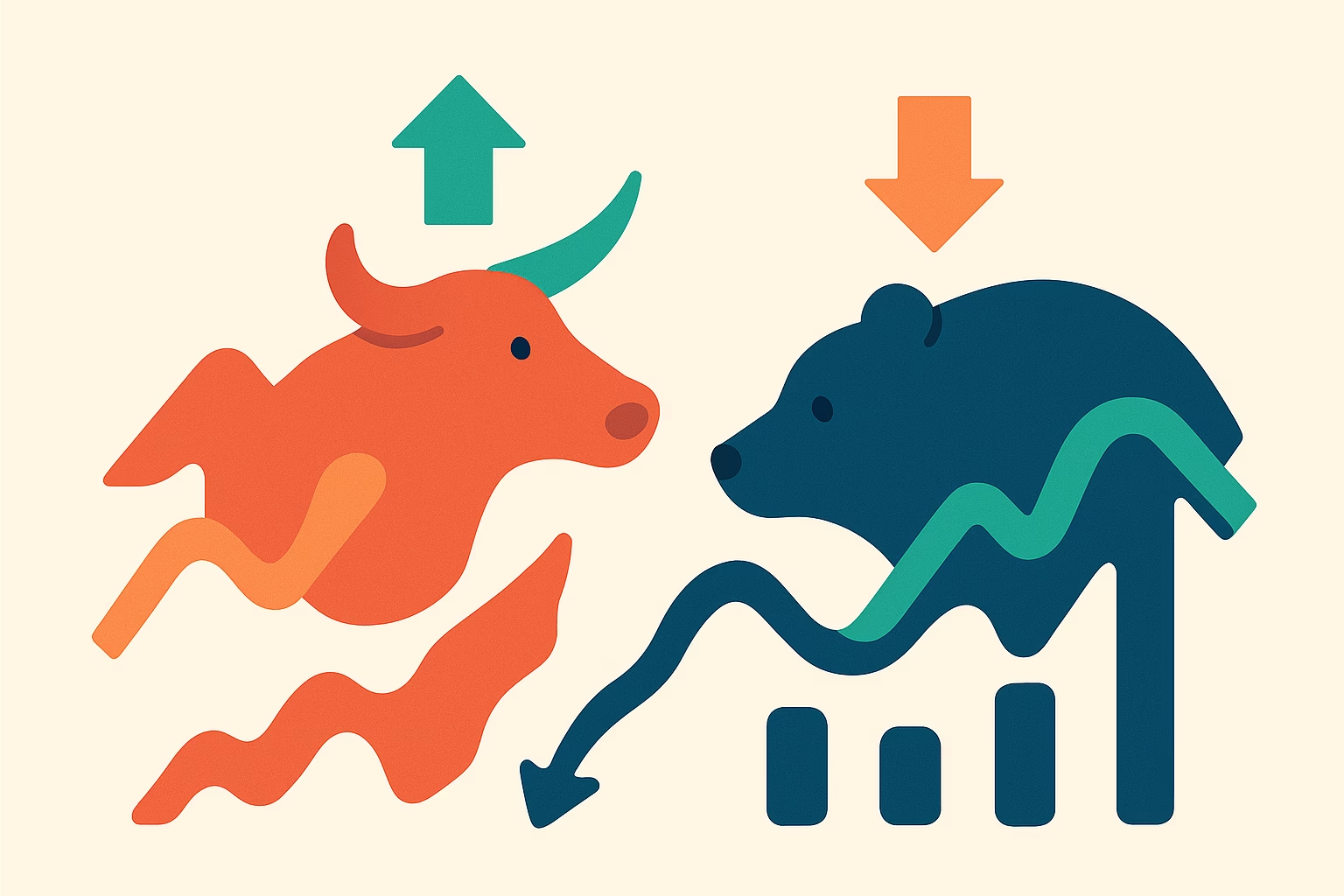
A fun fact for you: NSE has a large bull statue at its headquarters in Mumbai, which is a symbol of a “bull market” (a time when prices are rising and investors feel confident). Bulls are a traditional symbol of strong markets, because a bull attacks by thrusting its horns upward – just like a rising market!
Bombay Stock Exchange (BSE) – India’s Oldest Stock Exchange
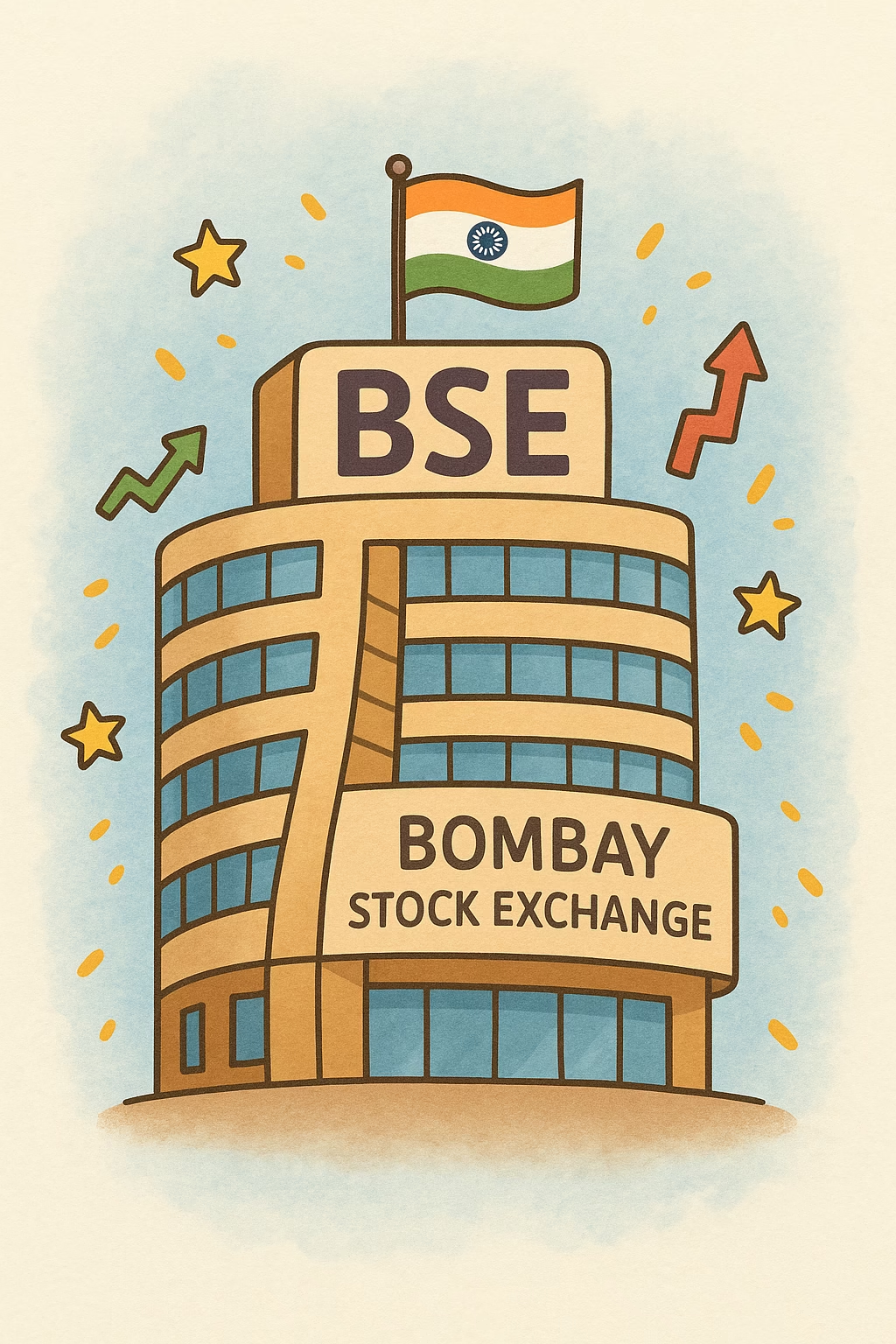
Now let’s talk about BSE, which stands for Bombay Stock Exchange (Bombay is the old name for Mumbai). If NSE is the young whiz kid, BSE is the wise grandparent of stock exchanges in India. Founded in 1875, BSE is the oldest stock exchange in Asia – over 150 years old!
In fact, it’s one of the ten oldest exchanges in the world. BSE has its home on a famous street in Mumbai called Dalal Street, which is kind of like India’s version of Wall Street. The exchange’s iconic building is well-known, and just like NSE, the BSE also has a big bull statue at its entrance as a lucky symbol of booming markets.
The story of how BSE began is really interesting. Long before computers (or even telephones), stock brokers in Bombay started trading under a banyan tree! In the 1850s, a small group of brokers would meet under a huge banyan tree in front of the town hall to buy and sell stocks kids.kiddle.co.
Can you imagine? No fancy building, just the shade of a tree and chalkboards to write prices. As more people joined in over the years, this group had to move to bigger areas (always under trees at first). Finally, in 1874 they found a permanent spot, and in 1875 they officially organized as “The Native Share & Stock Brokers’ Association” – that became the BSE we know today kids.kiddle.co. It’s amazing to think that something so big started with just a few people under a tree, trading shares of companies like cotton mills or railways with pen and paper.
Today, the BSE is enormous. It lists around 5,000+ companies – more than almost any other exchange in the world. Big Indian companies can be on BSE, and it’s famous for an index called the SENSEX (short for Sensitive Index), which tracks 30 major companies.
When people say “the Sensex went up 100 points today,” they’re talking about the BSE’s score of market health. BSE’s total market value is also in the trillions of dollars, similar to NSE’s. Despite being competitors in a way, NSE and BSE are quite similar: both are in Mumbai, both trade stocks of Indian companies, and both are now fully electronic.
One difference is history: BSE has the rich legacy and is slightly smaller in daily trading volume compared to NSE (which often has more trades per day). A fun fact: BSE turned 150 years old in 2025 indiatoday.in and there were celebrations of its long journey from the banyan tree days to the modern era. Few institutions in the financial world have been around that long!
New York Stock Exchange (NYSE) – The Big Board on Wall Street
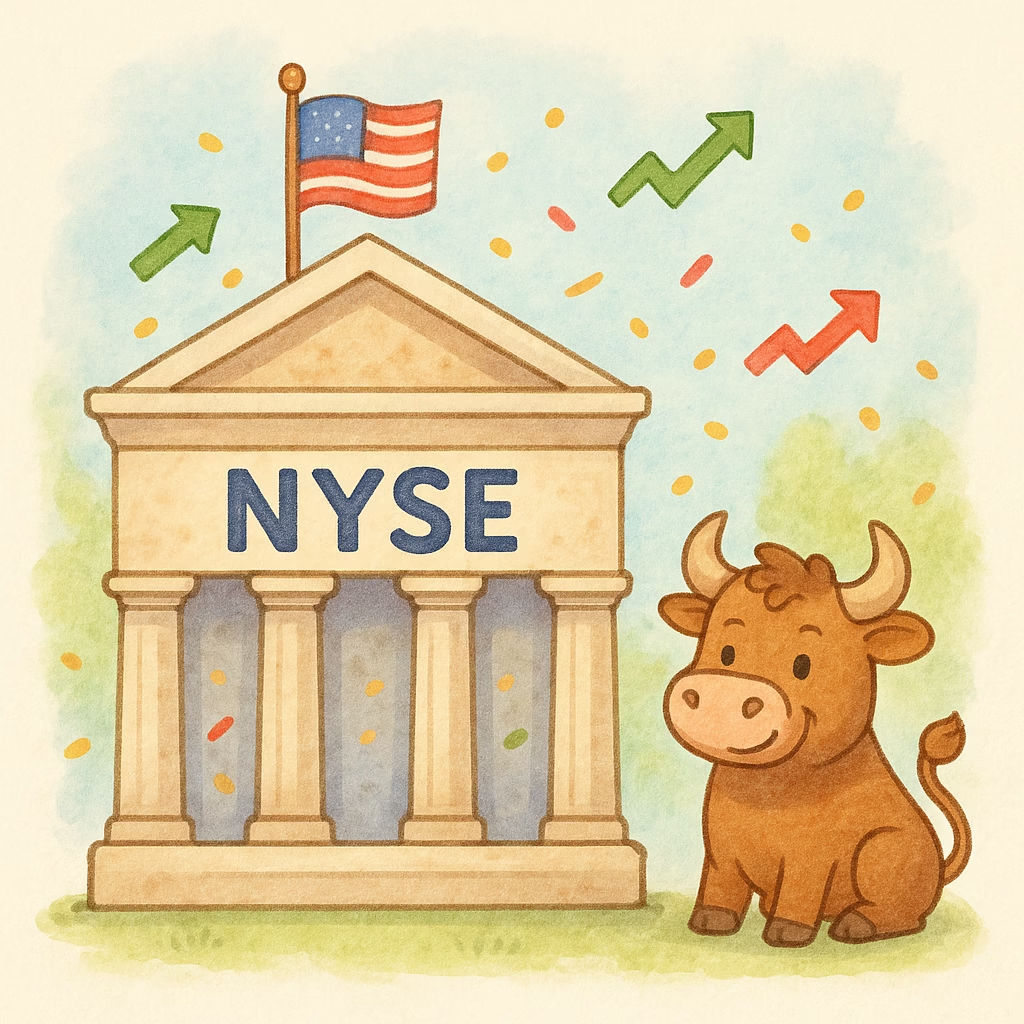
Crossing the ocean to the United States, meet the New York Stock Exchange, often called the NYSE (or nicknamed “The Big Board”). If BSE is Asia’s old grandfather exchange, the NYSE is like the old but super energetic uncle in the U.S.
The NYSE is the largest stock exchange in the world by the total value of the companies listed on it – in July 2024, those companies were worth over $25 trillion in total! (Trillion is a million millions – a number so big it’s hard to imagine. That’s like 25,000 billion – wow! 💰) The NYSE is located on Wall Street in New York City, which is why people often use “Wall Street” to refer to the stock market. It has a grand building with tall columns and a big American flag hanging outside.
The NYSE has a fascinating history. It was founded way back in 1792 – over 230 years ago. And guess what? Just like BSE, it started under a tree as well! In NYSE’s case, it was under a buttonwood tree in New York, where 24 stockbrokers gathered and signed the Buttonwood Agreement, agreeing to trade with each other and set rules kids.kiddle.co.
This was the humble beginning of what would become the world’s biggest exchange. Over the centuries, the NYSE grew and moved into buildings, eventually settling at its current address on Wall Street in the late 1860s. It became the place where many famous companies – from Disney to McDonald’s to Coca-Cola – listed their shares for the public to buy.
One thing the NYSE is famous for is its trading floor and the tradition of the opening and closing bells. Every weekday, a loud bell rings at 9:30 AM to start the trading day, and another bell rings at 4:00 PM to end it.
This bell isn’t rung by a clock or robot; it’s often rung by special guests. Many business leaders ring it when their companies have big news, but also famous people and even fictional characters have rung the NYSE bell!
For example, Mickey Mouse, the Pink Panther, Mr. Potato Head, and even Darth Vader have had a turn ringing the bell. How cool is that? It’s a big celebration and a moment of pride for companies to be on that balcony ringing the bell while traders cheer on the floor.
Speaking of the trading floor, the NYSE still has one of the most active physical trading floors in the world. If you peek in, you’d see traders in colored jackets, big electronic screens showing stock prices, and a lot of energy.
It’s not as noisy as decades ago because much trading is electronic now, but during exciting times, it can be buzzing. The NYSE is known for an auction-style trading system where designated market makers help keep trading smooth. For a 10-year-old, what’s interesting is that it’s like a big club – for a long time, people had to buy a seat on the exchange (which could cost millions of dollars) to be able to trade on that floor. Nowadays it’s more open, but the tradition remains.
In summary, NYSE is similar to NSE and BSE in function – it’s a place to buy/sell shares – but it’s different in style. It’s very large, very old, and has kept some old-school traditions (like the bell and floor traders) even as it uses modern technology. It’s the home of many globally famous companies. If you ever visit New York City, you can actually go see the building from outside – it’s a piece of financial history!
NASDAQ – High-Tech Trading from New York
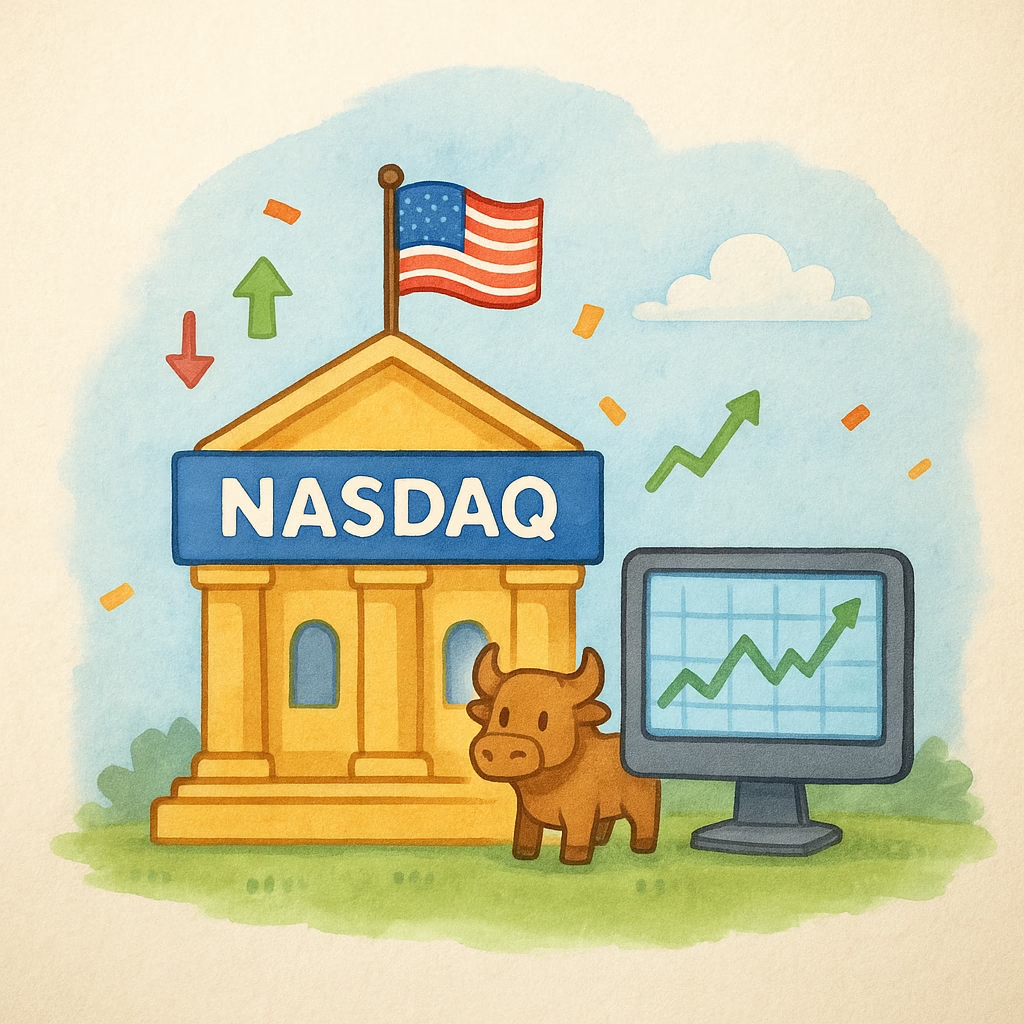
Finally, let’s meet NASDAQ (pronounced NAZ-dak). NASDAQ is another giant U.S. stock exchange, also based in New York City, but it’s quite different from the NYSE. First off, NASDAQ is actually an acronym (each letter stands for something).
It originally stood for National Association of Securities Dealers Automated Quotations – phew, what a mouthful! No wonder everyone just says NASDAQ. NASDAQ began in 1971, making it much younger than the NYSE.
And from day one, NASDAQ was electronic – it was the world’s first electronic stock market. That means there’s no physical trading floor with shouting brokers for NASDAQ. Instead, it’s all done via computers and networks spread around the world. Think of NASDAQ as a virtual marketplace – kind of like how you can have friends online and hangout in a virtual game, even if you’re not in the same room.
NASDAQ is famous for being the exchange where a lot of technology companies are listed kids.kiddle.co. If you love computers, games, or gadgets, many of those companies (like Apple, Microsoft, Google, and more) trade on NASDAQ.
Because so many tech companies are on NASDAQ, people often watch an index called the NASDAQ Composite or the NASDAQ-100, which track the performance of those tech-heavy groups of stocks. In fact, NASDAQ is the second-largest stock exchange in the world by total value of companies (after the NYSE).
As of late 2024, companies on NASDAQ were worth over $30 trillion combined, even more than the companies on NYSE – but NYSE is still #1 in size because it has some larger individual companies. NASDAQ also typically has more companies listed (almost 4,000!) and often more trades in a day than the NYSE.
What makes NASDAQ special? It’s completely electronic and was designed that way from the start. So if NYSE is like a traditional market or a big in-person party, NASDAQ is like a high-tech online platform or a big group chat for trading.
This was innovative back in the 1970s – NASDAQ showed stock quotes on computer screens, which was new then. Over time, NASDAQ became known as the place for fast-growing companies, especially during the tech boom of the 1980s and 1990s. A fun fact: NASDAQ was the first U.S. stock market to allow online trading in 1998.
Nowadays, all exchanges have electronic trading, but NASDAQ led the way. Also, NASDAQ has a famous headquarters in Times Square, New York, called the NASDAQ MarketSite – you might have seen on TV a big curved digital billboard that shows stock prices and news. Companies sometimes go there to celebrate when they “go public” (start selling shares) on NASDAQ, and their CEOs might press a button to ring a virtual bell. It’s very flashy and modern, just like the companies it lists!
In terms of how it’s similar or different: NASDAQ and NYSE are big rivals in the U.S., but they actually complement each other. Both are in New York, both allow people to trade stocks, and both are regulated to ensure fairness.
But NASDAQ’s identity is high-tech, distributed trading (no central floor), whereas NYSE mixes old-school floor trading with technology. For an investor, the experience of buying a stock on NASDAQ vs NYSE is pretty much the same (click a button on your app!). But behind the scenes, the systems are a bit different.
Conclusion: Stocks and Exchanges – Fun and Important!
Learning about stocks and stock exchanges can feel like learning a new game. At first, the rules seem complicated, but we can break it down with simple examples. Remember these key points: A stock is just a tiny piece of a company that you can own.
A stock exchange is a place (physical or online) where people buy and sell those pieces. Companies sell shares to raise money to grow, and investors buy shares hoping to share in the company’s success. Prices go up and down based on what people think and want – kind of like trends among your friends.
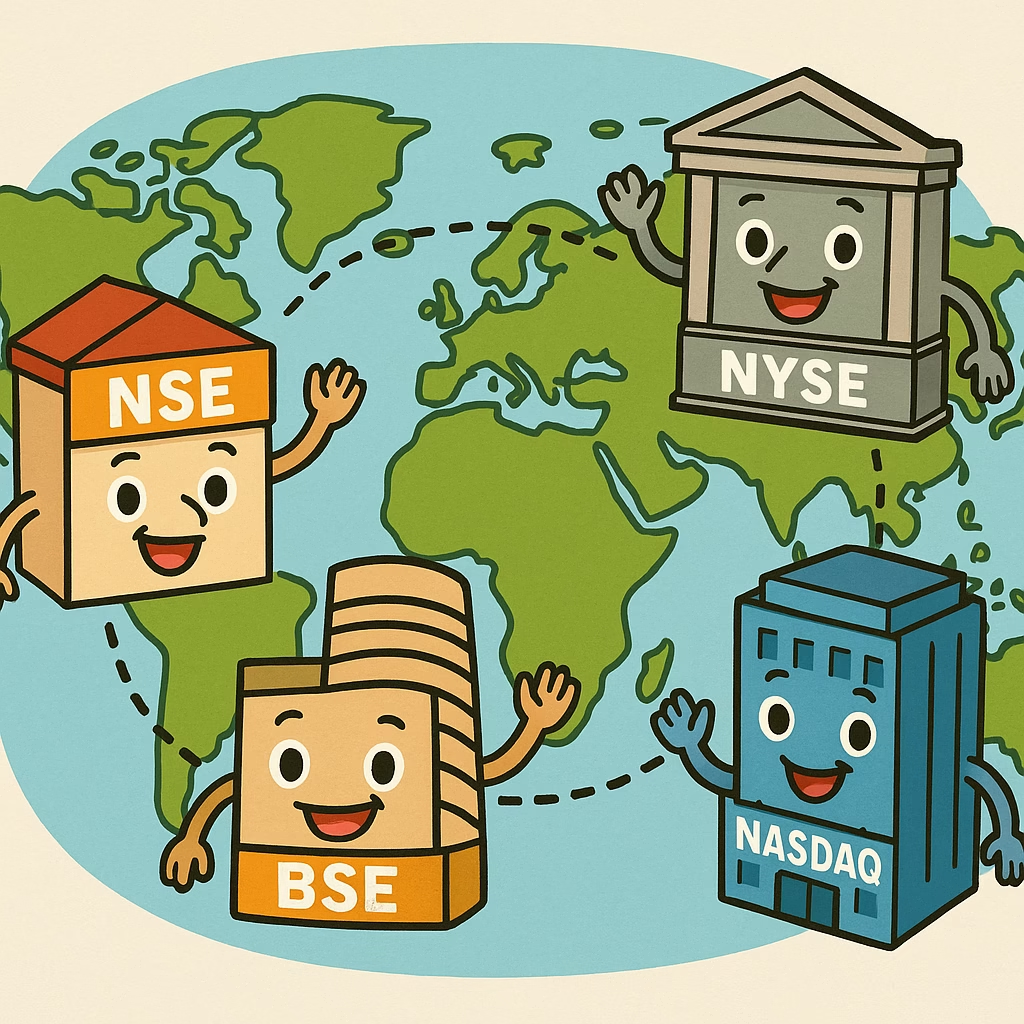
We talked about four big exchanges: NSE and BSE in India, and NYSE and NASDAQ in the US. Each has its own story – from meeting under banyan trees or buttonwood trees centuries ago, to ringing bells with Mickey Mouse, to electronic screens connecting the world.
They might be far away and deal with big numbers, but at their heart, they connect people who have ideas with people who have savings. Maybe one day, you’ll save up money and invest in a company you believe in, or even start your own company and sell shares!
Stocks and exchanges are like a giant team sport in the economy – everyone plays a part. The goal is that businesses get the money they need to create cool products (like new toys, apps, or yummy food) and in return, investors get to own a slice and possibly profit if those businesses do well.
It’s okay if it still sounds a bit confusing – even many adults find the stock market tricky. But you’ve taken the first step by learning the basics in a fun way. Keep asking questions, stay curious, and who knows – you might be ringing the bell at an exchange or starting the next big company in the future!
If You Liked This Article, Then You Might Also Like This –
What Are Different Types of Financial Markets: Primary vs. Secondary ?