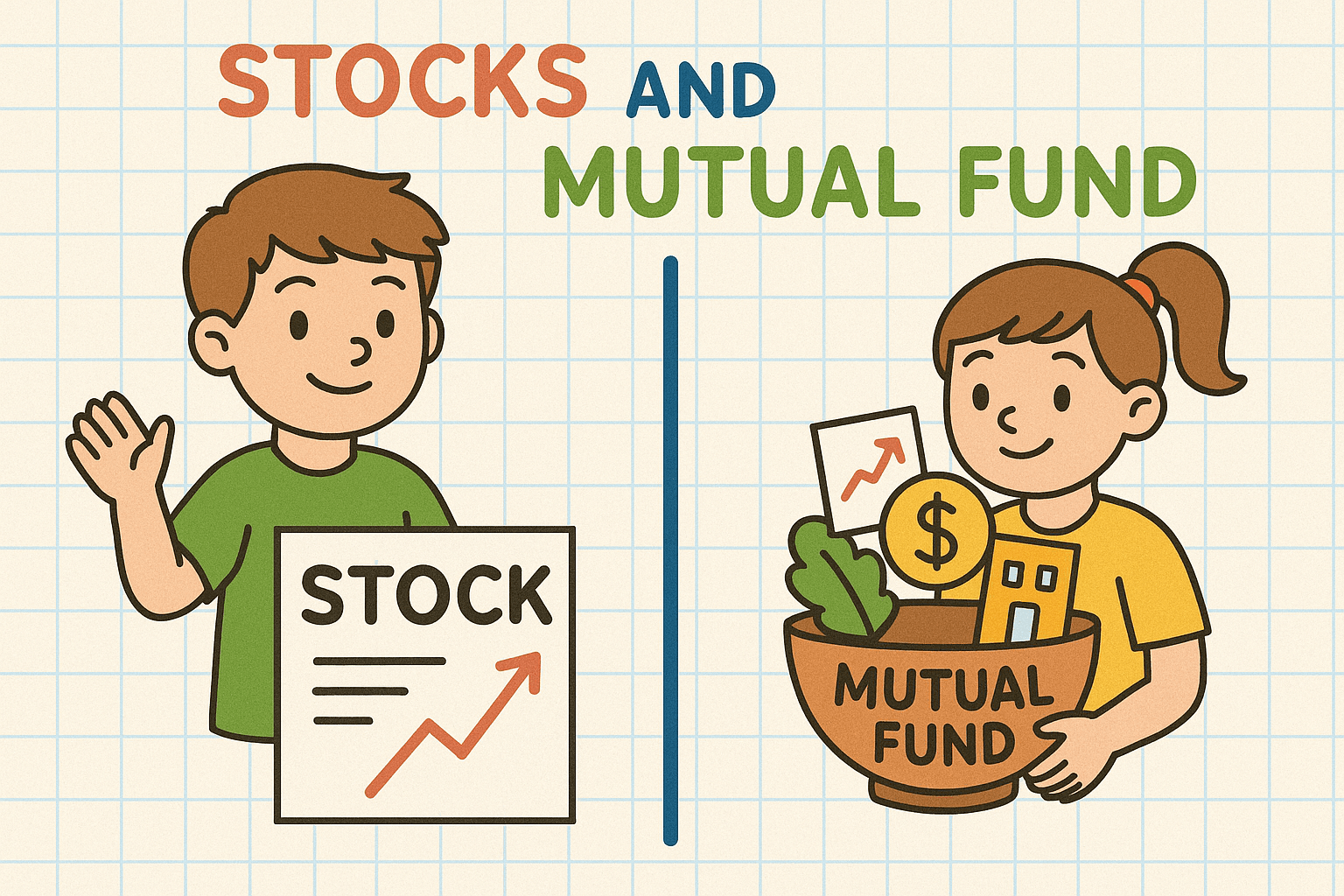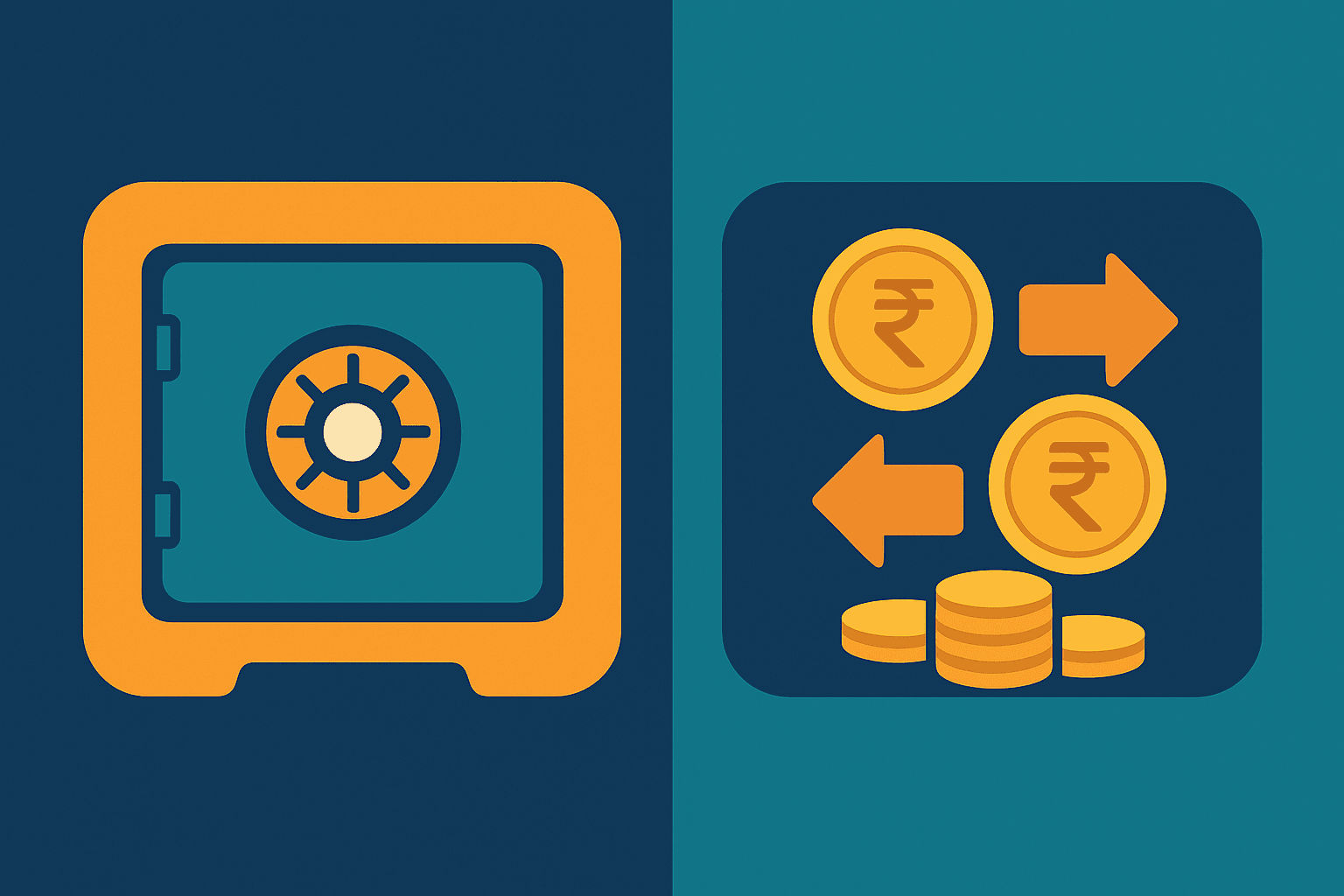
Investing in India’s stock market may sound like a grown‑up job, but it can be explained using familiar stories. Imagine that you have some pocket money that you want to save and grow, just like planting a seed to see it become a tree. To plant this “investment seed,” you need two special accounts: a Demat account and a trading account. This guide walks you through what they are, why they matter and how to open them, with simple explanations and pictures so that even a 10‑year‑old can understand.
1. What is a Demat Account?
Demat is short for “dematerialised”. Long ago, people held share certificates printed on paper when they bought a company’s stock. Now, those paper certificates have been turned into digital files that live in a secure online locker. A Demat account is that locker. It safely stores your shares, bonds, mutual funds, and exchange-traded funds (ETFs) in electronic form, ensuring they do not get lost or damaged.
Think of a Demat account like a digital piggy bank – but instead of holding coins, it holds tiny pieces of companies. You cannot buy or sell using this piggy bank; it only stores what you own. Official sources explain that a Demat account is a digital account that holds financial instruments such as shares, mutual funds and bonds in electronic form, just like a bank account holds money.

Why is a Demat account important?
- Safety and convenience: Your shares are protected from theft or physical damage, and you do not have to keep track of paper certificates.
- Paper‑less investing: Everything is stored electronically so you can access it from anywhere.
- Easy transfer of securities: When companies pay dividends or issue bonus shares, they go straight into your Demat account.
- Faster settlement: Trades settle in T+1 or T+2 days, meaning you receive your shares or money within one or two working days.
2. What is a Trading Account?
A trading account is like the remote control you use to place orders in the stock market. It connects your bank account and your Demat account. When you buy shares, money moves from your bank account through the trading account, and the shares land in your Demat account. When you sell, the shares leave your Demat account and money goes back to your bank account via the trading account.
Official guidance explains that a trading account facilitates buying and selling on the stock exchange and acts as an intermediary between your bank account and Demat account. Without a trading account, you cannot place orders even if you have a Demat account. Most brokers bundle both accounts together as a package.
3. Demat vs. Trading Account – Key Differences
Although the two accounts work together, their roles are different. The table below summarizes the key differences based on a respected financial institution’s comparison:
| Aspect | Demat account | Trading account |
|---|---|---|
| Purpose | Holds shares and other securities electronically | Facilitates the buying and selling of securities |
| Provider | Opened through a Depository Participant (DP) registered with NSDL or CDSL | Provided by a SEBI‑registered stockbroker |
| Unique ID | Has a 16‑digit Demat number | Assigned a trading ID by the broker |
| Fees | May involve account opening and annual maintenance charges (AMC) | Typically no AMC; brokerage charges apply per trade |
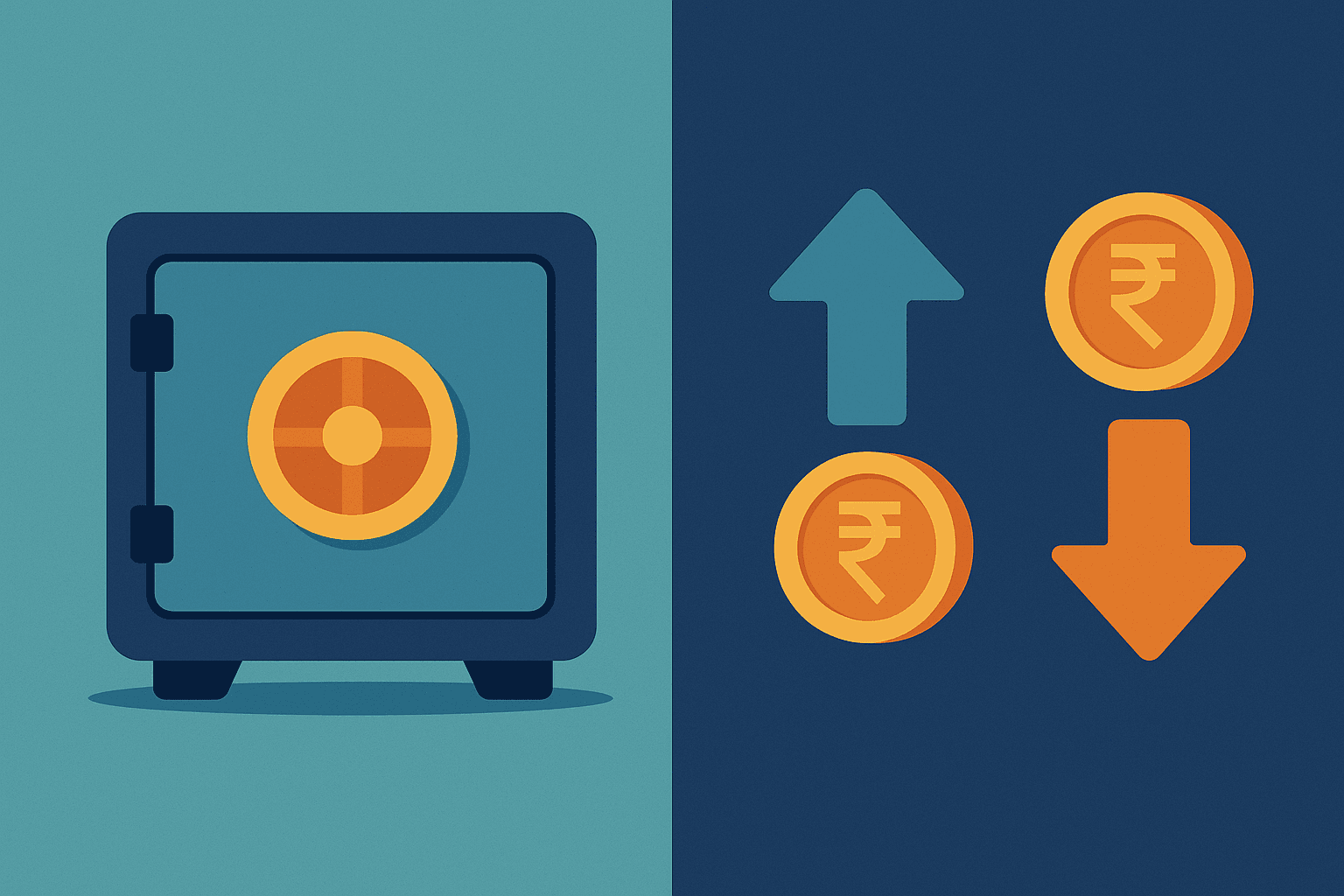
In simple terms, the Demat account is like a safe where your shares are kept, and the trading account is like a shopping cart that lets you buy or sell. You need both to participate in the stock market.
4. Steps to Open a Demat and Trading Account
Opening these accounts is not scary; it’s a guided process similar to signing up for an online game. The steps below follow the online method recommended by HDFC Mutual Fund’s step‑by‑step guide.
1. Choose a Depository Participant (DP)
A Depository Participant is the company or bank through which you open your Demat account. It could be a full‑service bank (like HDFC Bank, ICICI Bank or SBI) or a discount broker (like Zerodha, Angel One or Upstox). Ensure that the DP is registered with SEBI (Securities and Exchange Board of India) to guarantee that it follows regulations.
Checklist:
- Compare the fees (account opening, AMC, brokerage).
- Check the user friendliness of their mobile app/website.
- Look at customer support reviews.
- Ensure they offer the products you want (stocks, mutual funds, IPOs, etc.).
2. Visit the DP’s Website or App
Once you pick a DP, go to its official website or download its app. Look for the “Open Demat Account” or “Sign up” button. Click it to start your application.
3. Fill the Application Form
The form asks for basic information: your full name, mobile number, email address, PAN (Permanent Account Number), Aadhaar number, and bank details. Make sure the phone number you enter matches the one linked with your Aadhaar card because you will receive a one‑time password (OTP) on this number during verification.
4. Upload Your Documents
You must submit scanned copies or photos of certain documents. According to HDFC’s guide and Zerodha’s account‑opening page, the typical documents include:
- PAN card – mandatory proof of identity.
- Address proof – Aadhaar card, driver’s licence, voter ID or passport.
- Bank proof – a cancelled cheque or recent bank statement to link your bank account.
- Signature – sign on white paper and upload a clear photograph.
- Passport‑size photograph – some brokers require a photo.
- Income proof (only for F&O trading) – such as salary slips or income tax returns.

These documents verify who you are and ensure you follow Know Your Customer (KYC) rules set by SEBI. Here is a visual representation of the documents you may need:
5. Complete e‑KYC and In‑Person Verification (IPV)
Most DPs provide electronic KYC. You may be asked to record a short video call or submit a selfie while showing your documents. This step confirms you are the genuine applicant. Minors will need a guardian (parent or legal guardian) to complete this process on their behalf.
6. E‑Sign the Agreement via Aadhaar OTP

After KYC, you will be prompted to sign an agreement with your DP. By using your Aadhaar number and the OTP sent to your registered mobile number, you can digitally sign the form. If you do not have Aadhaar or do not want to use OTP, some DPs allow offline signing by physically visiting a branch.
7. Wait for Account Activation
Once your documents are verified, the DP will open your Demat and trading accounts. According to HDFC, the login credentials are usually emailed to you within 24–48 hours. For NSDL accounts, the DP will give you a DP ID, client ID, a copy of the Client Master Report, tariff sheet, and a document listing your rights and obligations as an investor. Keep this information safe.
8. Link Your Bank Account and Add Funds

To start investing, add money to your trading account. Some DPs allow UPI (Unified Payments Interface) for instant transfer; others may require a bank transfer. Remember, you cannot open a Demat account without linking a bank account zerodha.com.
9. Start Investing!
After activation, you can log into your trading platform and place your first order. Begin with small investments to learn how buying and selling works. Many brokers offer educational resources to help you understand the stock market.
5. Offline Procedure
If you prefer face‑to‑face interaction or do not have reliable internet access, you can open the accounts offline. The steps are similar but take place at the DP’s branch:
- Visit the DP’s office and collect the account‑opening form.
- Fill in your details and attach photocopies of required documents.
- Provide passport‑size photographs and complete the physical in‑person verification (IPV) with original documents.
- Sign the agreement manually and submit the form.
- After processing, the DP provides your Client ID and account details.
Offline opening may take a few extra days, but it is helpful for those who are not comfortable with digital processes.
6. Eligibility and Types of Demat Accounts
Who can open a Demat account?
- Residents of India – must have a PAN card and valid address proof hdfcfund.com.
- Non‑Resident Indians (NRIs) – can open NRI Demat accounts (NRE or NRO) with necessary permissions from the Reserve Bank of India hdfcfund.com.
- Minors – can open an account under the guardianship of a parent or legal guardian hdfcfund.comhdfcfund.com.
- Joint holders and corporate entities – two or more people can hold a joint Demat account; companies can open accounts to hold shares hdfcfund.com.
Types of Demat accounts
- Regular Demat Account: For most resident investors.
- Basic Services Demat Account (BSDA): Introduced by SEBI to reduce costs for small investors. From 1 September 2024, your account will automatically be classified as BSDA if you have only one Demat account linked to your PAN and your holdings are less than ₹10 lakh. Under the new rules, AMC charges are ₹0 for holdings up to ₹4 lakh, ₹25 per quarter for ₹4–10 lakh, and ₹75 per quarter for holdings above ₹10 lakh.
- Repatriable (NRE) and Non‑Repatriable (NRO) Accounts: For NRIs to invest using foreign income (NRE) or Indian income (NRO). These accounts follow RBI guidelines.
- Corporate or HUF (Hindu Undivided Family) Accounts: For businesses and family trusts.
- Minor Demat Account: For children under 18; a guardian operates it until the child becomes an adult.
7. Required Documents Explained
Here is a closer look at the documents you need, why they matter and how to prepare them:
| Document | Purpose | Tips |
|---|---|---|
| PAN card | Mandatory ID to link all investments and tax records | Ensure the card is clear and shows your name and number. |
| Aadhaar card or other address proof | Confirms your address; used for e‑KYC | Keep your Aadhaar linked with your phone for OTP verification. |
| Bank proof (cancelled cheque or statement) | Links your bank account to the trading account | The cheque should have your name printed; if not, use a bank statement. |
| Signature on white paper | For verifying signatures | Sign using a dark ink pen and take a well‑lit photo. |
| Passport‑size photograph | Some DPs require it as part of the form | Use a recent photo with a plain background. |
| Income proof (for Futures & Options) | Required only if you want to trade derivatives | Provide salary slips or Income Tax returns if requested. |
8. Understanding Account Charges
Before opening your accounts, it’s wise to know the costs involved. Charges vary between brokers, but typical fees include:
- Account Opening Fees: Many DPs waive the opening fee; some may charge a small amount.
- Annual Maintenance Charges (AMC): This is like paying rent for your Demat locker. Regular accounts may charge between ₹300–₹600 per year. Basic Services Demat Accounts offer zero AMC up to holdings of ₹4 lakh and ₹25 per quarter for holdings up to ₹10 lakh.
- Transaction Charges: Each buy or sell order attracts a small fee that varies by broker.
- Brokerage Fees: Full‑service brokers may charge a percentage of the trade value, while discount brokers charge a flat fee per order.
- Demat/Remat Charges: Fees for converting physical shares to electronic form and vice versa.
- Off‑market Transfer Fees: Charged when transferring shares between two Demat accounts without going through the stock exchange.
Ask your DP for a detailed tariff sheet before signing up so you understand all potential costs.
9. Trading Account Fees
Unlike the Demat account, most trading accounts do not have maintenance charges. However, brokers charge brokerage every time you buy or sell. This may be a percentage of the trade value (for full‑service brokers) or a flat rate (e.g., ₹20 per order for discount brokers). Taxes such as Securities Transaction Tax (STT), GST, stamp duty and exchange transaction charges are also added to each trade. Be aware of these costs, especially if you plan to trade frequently.
10. Tips for Choosing the Right Broker
- Compare Charges: Look at account opening fees, AMC, brokerage and other hidden charges.
- Check User Experience: A clean, intuitive platform helps you learn faster.
- Customer Support: Good support can resolve issues quickly.
- Research Tools: Does the broker provide educational content, market research and charts?
- Product Range: If you plan to invest in mutual funds or bonds, ensure the broker offers those products.
11. Starting Small – Building Confidence

Investing is like learning to ride a bicycle – you start with training wheels. Begin by buying a small number of shares or a low‑cost mutual fund. Many brokers allow fractional investments in mutual funds or exchange‑traded funds. Track your investments regularly using your DP’s mobile app. Over time, you will understand concepts like dividends, capital gains and market volatility.
12. Safety and Best Practices
Keeping your accounts safe is crucial. Here are some rules to follow:
- Keep login credentials private. When you open a Demat account, your DP provides a DP ID, client ID and login password. Angel One’s guide reminds investors to keep these credentials confidential to prevent unauthorised access.
- Update your mobile and email. Always keep your contact details updated so you receive OTPs and transaction alerts directly from the depository.
- Beware of unsolicited tips. SEBI repeatedly warns investors not to fall for promises of guaranteed returns; genuine brokers never ask for your password or trade on your behalf without authorisation.
- Monitor account statements. Check your monthly consolidated account statement (CAS) from NSDL/CDSL to ensure all transactions are accurate.
- Use BSDA wisely. If your holdings are modest, the new BSDA limits after 1 September 2024 can save you money.
13. Frequently Asked Questions (FAQs)
Q1. Is there a minimum amount required to open a Demat account? There is no minimum balance requirement; you can open the account with zero holdings
Q2. Can I open more than one Demat account? Yes. You can hold multiple Demat accounts with different DPs, but each must be linked to your PAN.
Q3. Do I need a trading account to hold shares? Technically, you can open a Demat account without a trading account, but it serves no purpose if you cannot buy or sell. Most brokers offer both accounts together.
Q4. How long does it take to open the accounts? Online account opening generally takes 24–48 hours after successful verification.
Q5. Can minors open a Demat account? Yes. Minors can open a Demat account with a guardian; the guardian manages it until the child becomes an adult.
Q6. Are NRIs allowed to invest? Yes. NRIs can open NRI Demat and trading accounts through NRE or NRO bank accounts.
Q7. What happens if my holdings exceed ₹10 lakh in a BSDA? Once your holdings cross ₹10 lakh, your account will no longer qualify for the BSDA slab and will attract higher AMCs (₹75 per quarter + GST).
14. Investing and Growing Your Wealth
Opening a Demat and trading account is the first step towards building wealth. But investing wisely is equally important. Here are some simple ideas:
- Start with mutual funds or ETFs. These allow you to own a basket of stocks, reducing risk. Many DPs let you invest in mutual funds through the same platform.
- Diversify. Don’t put all your money into one company. Spread your investment across different sectors.
- Think long term. Shares can go up and down in the short run, but staying invested for several years can produce growth.
- Learn continuously. Read books or watch videos about the stock market. Practice with virtual trading games before investing large sums.
15. Conclusion – Your Journey Begins Here

Opening a Demat and trading account in India is now a simple, mostly online process. You choose a reliable broker, complete your KYC using your PAN and Aadhaar, e‑sign the agreement and start investing – often within two days. A Demat account acts as a digital locker for your securities, while a trading account is the gateway through which you buy and sell. Understanding the difference helps you appreciate why both accounts are needed.
The new Basic Services Demat Account rules, effective 1 September 2024, reduce costs for small investors by offering lower or zero maintenance charges when holdings remain under specific limits. Whether you are a child learning about money or an adult ready to invest, take the first step confidently. Start small, stay curious and watch your tiny seeds of investment grow into a flourishing money tree.