Table of Contents
Investing in the stock market can seem like a big, grown‑up idea, but at its heart it is a lot like planting a seed. You put something small in the ground and wait, hoping it will grow into a tree full of fruit. You can also decide to keep your seed safe in your pocket.
The seed won’t grow into a tree there, but there’s no chance of it being eaten by a bird or blown away by the wind. This trade‑off between growth (reward) and safety (risk) is what the stock market is all about. In this article we’ll explore how risk and reward work together, why people choose to take risks, and how even young investors can make smart choices.
What Does “Risk vs Reward” Mean?
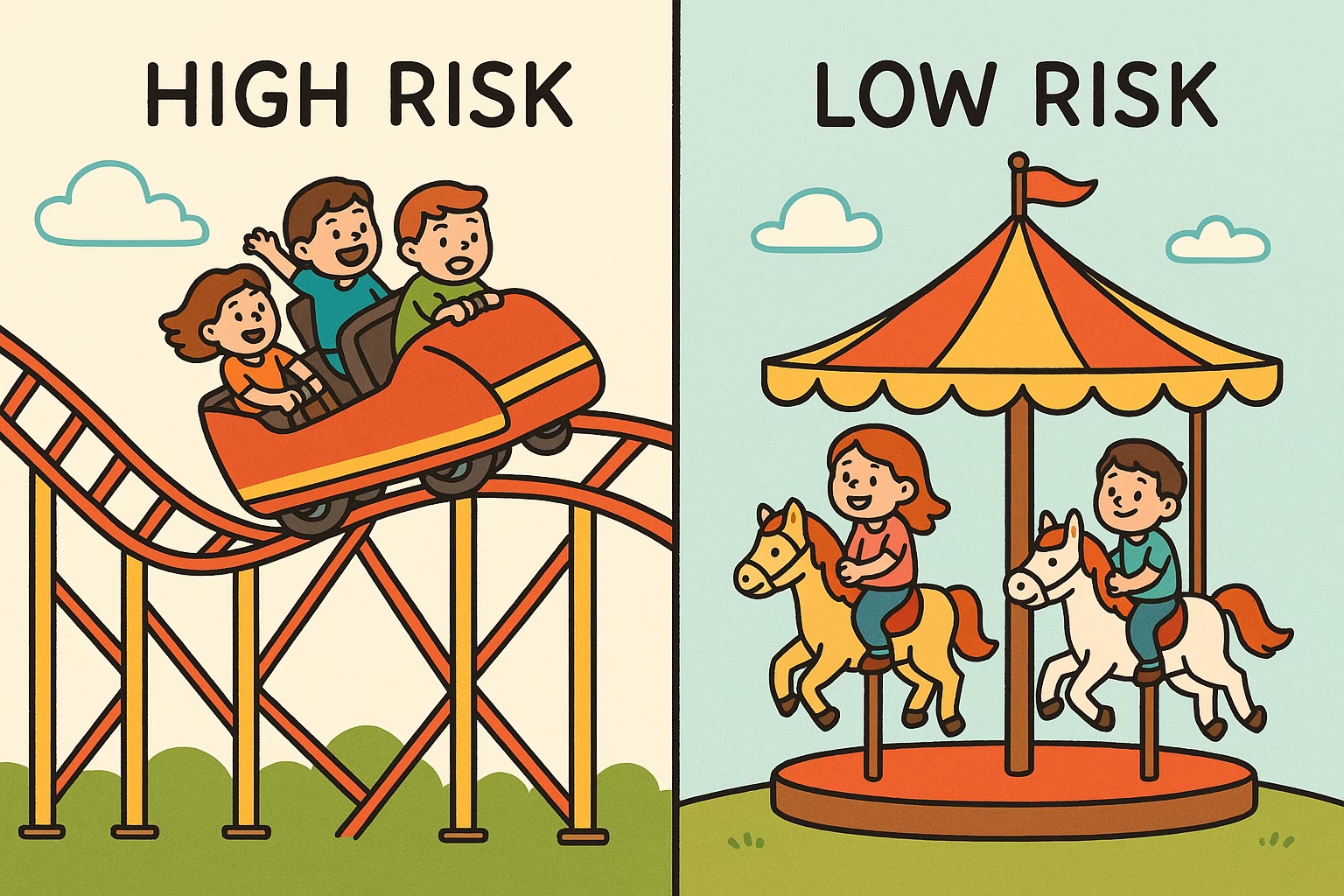
Think about going to an amusement park. There are two rides: a roller coaster and a merry‑go‑round. The roller coaster goes high and fast with lots of twists and turns.
It’s exciting, but it can make your stomach flip and even scare you. The merry‑go‑round goes slowly in a circle. It doesn’t go high and there are no sudden drops. You probably won’t scream, but you also won’t get as big of a thrill.
Risk is the chance of losing money or seeing big ups and downs in value. In the stock market, it means your investment might go down instead of up.
Reward is the possibility of earning more money over time. Many experts explain that there is a link between these two ideas: low‑risk investments usually earn lower returns, while high‑risk investments offer the potential for higher returns but might lose money investopedia.com. This is like the roller coaster giving you a bigger thrill but also making you queasy.
Measuring risk and reward
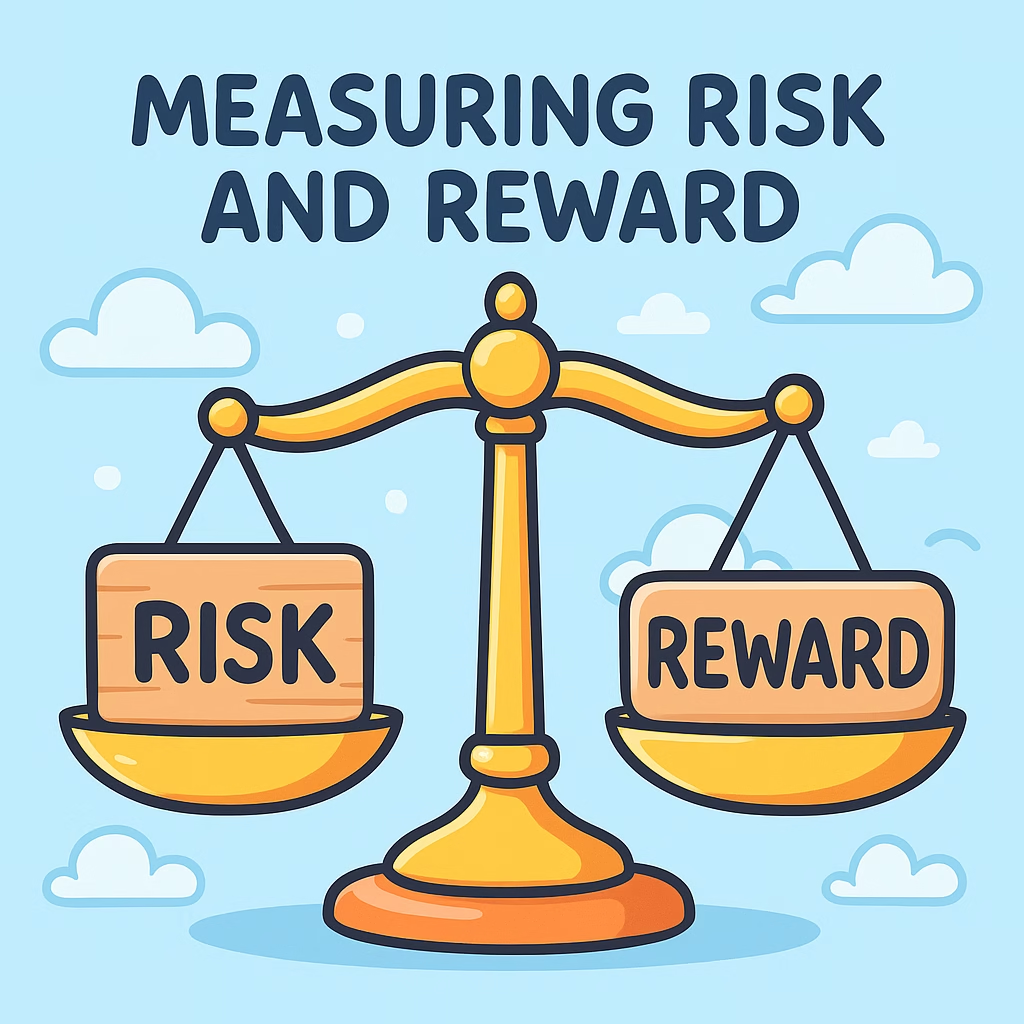
Financial researchers use different tools to measure risk. One common measure is called beta, which tells how much a stock swings compared with the overall market.
A beta above 1.0 means the stock is more volatile than the market, and a beta below 1.0 means it moves less investopedia.com. For the purpose of this article we won’t delve deeply into the math, but it’s helpful to know that adults have ways to estimate how bumpy the ride might be.
The important idea is that no investment can give you big returns without some bumps along the way. Understanding this helps you make choices that match your comfort level.
High‑Risk vs Low‑Risk Investments
Just as some rides are scarier than others, some investments are riskier than others. Knowing the difference helps you decide how to balance safety and growth.
High‑risk investments
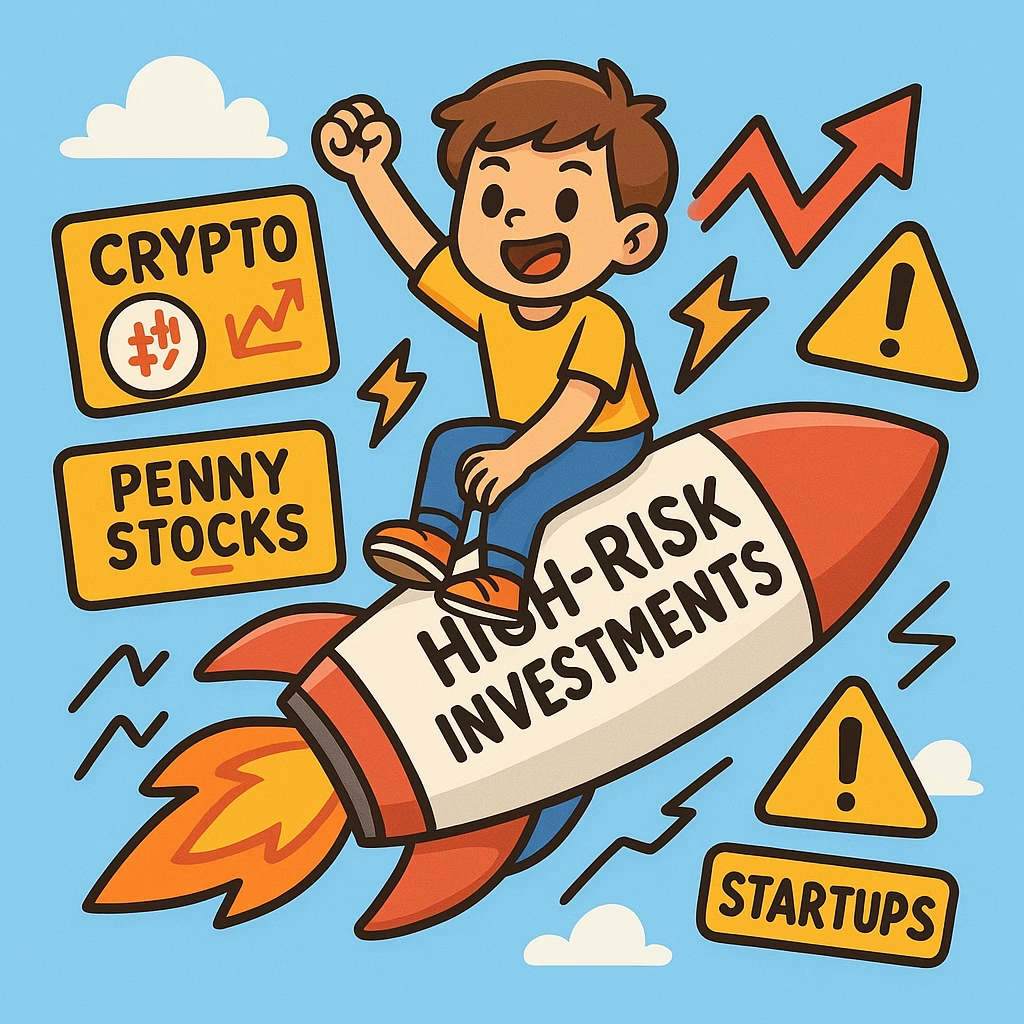
A high‑risk investment is something that has a bigger chance of losing value or not performing well, but could also grow a lot. According to financial educators, examples include cryptocurrencies, certain biotech stocks and high‑yield “junk” bonds.
These things can swing wildly in price. For example, a tech company’s share might soar if it creates an amazing gadget, but if the project fails, the share price can plunge. Investing in only one of these is like riding the roller coaster with no seat belt – thrilling but very dangerous.
Low‑risk investments
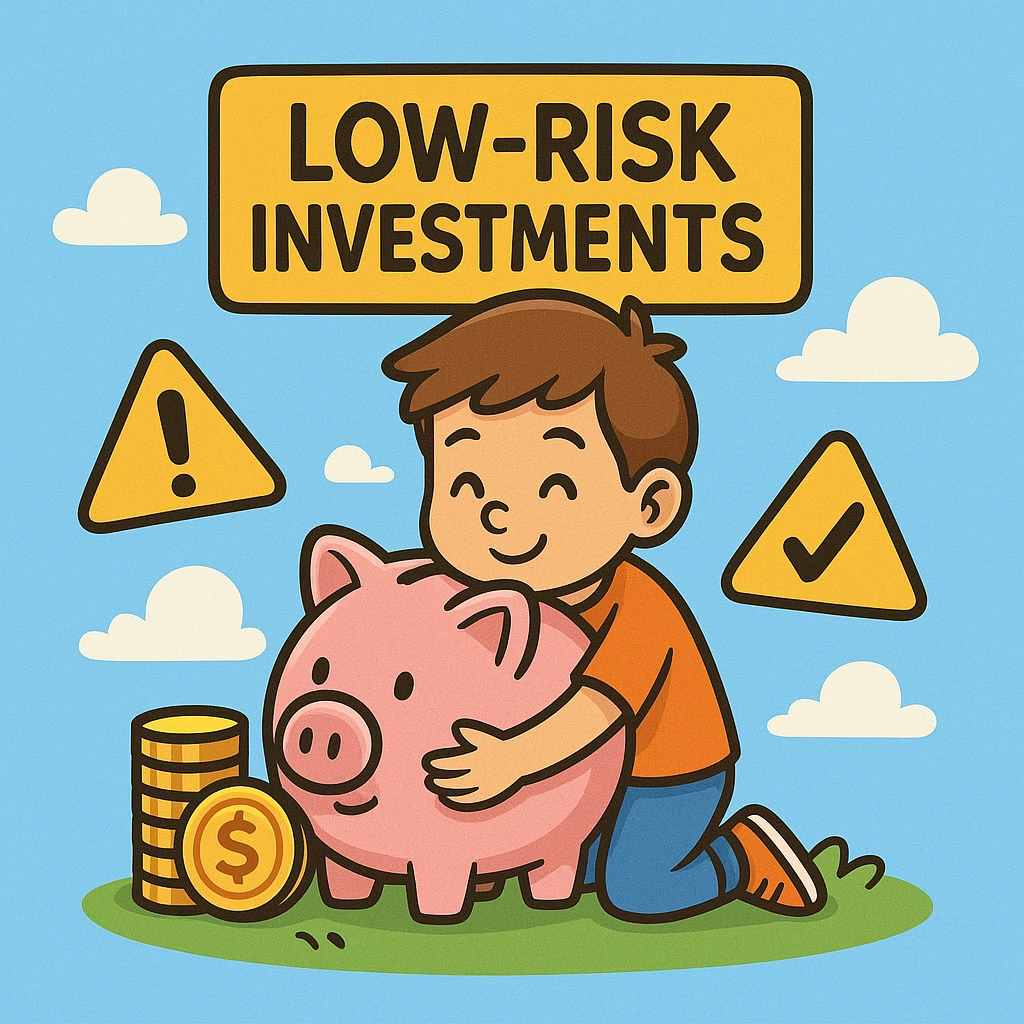
A low‑risk investment is more stable. It’s less likely to lose a lot of value, but it also won’t make you rich overnight. Government bonds, Fixed deposit (FDs) and savings accounts are examples of low‑risk investments.
The U.S. Securities and Exchange Commission explains that bonds generally provide higher returns than savings accounts but lower returns than stocks. Bonds promise to repay principal and interest, making them less risky than stocks.
If the company or government does well, you get your money back plus a bit extra. If it fails, bondholders are paid before stockholders. It’s like riding the merry‑go‑round—steady and predictable.
Another type of low‑risk investment is a mutual fund that holds many different stocks or bonds. The risk of the fund depends on what’s inside it, but because it’s diversified it doesn’t rely on the success of just one company investor.gov.
The link between risk and reward
Teachers often remind students that the greater the potential return, the greater the risk. This means if you want a chance at earning more money, you have to be willing to accept bigger ups and downs. The challenge is finding the right balance so you don’t lose sleep worrying about your money.
How Do You Get Reward from Stocks?
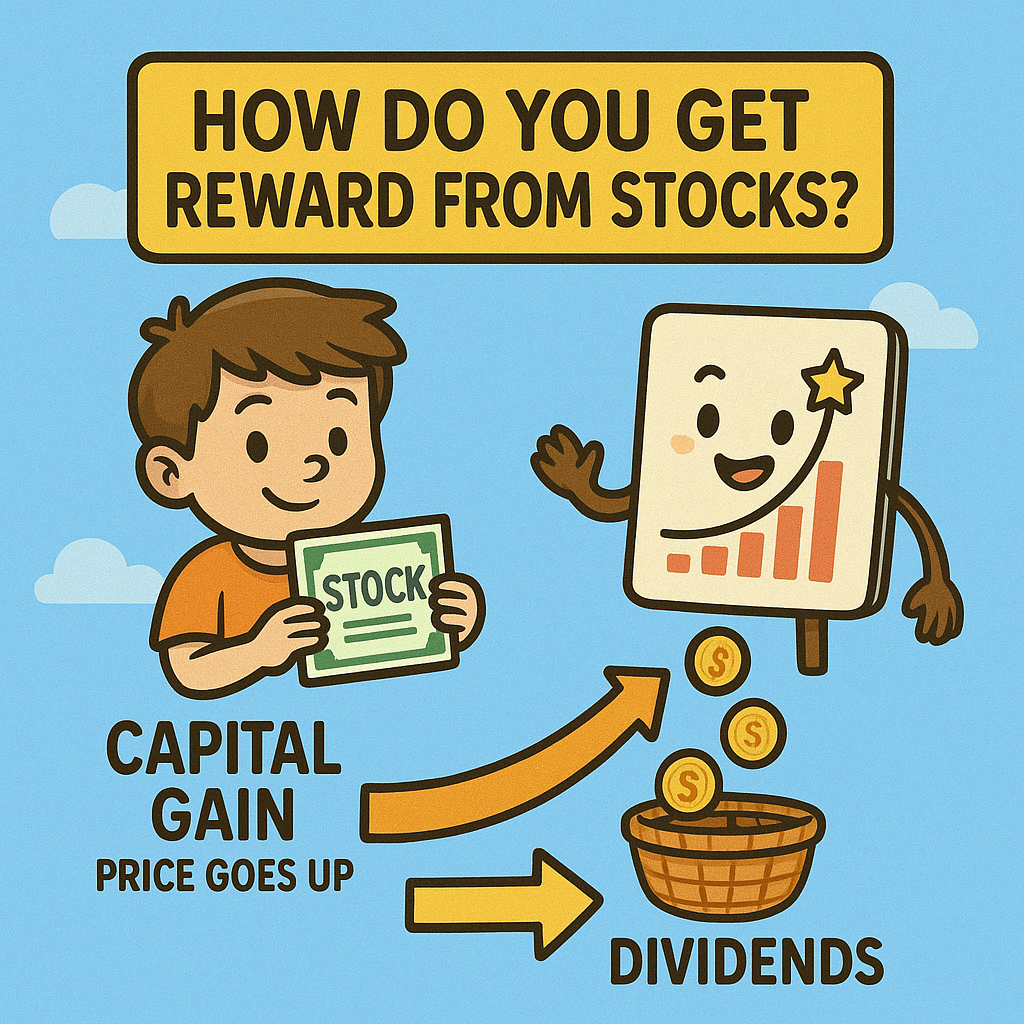
Investing isn’t magic; it’s a way of using your money so it can earn more money. There are two main ways to earn a reward from owning stock:
- Capital gains (growth) – If a company does well, other investors want to buy its stock. This demand pushes the price up. When you sell your stock for a higher price than you paid, you earn a capital gain. An official SEC teaching resource notes that over many decades, stocks have provided the highest average rate of return compared with other investment products. However, there are no guarantees, and stock prices can fall.
- Dividends (income) – Some companies share part of their profits with shareholders. These payments are called dividends. They are like little thank‑you gifts for owning the stock. Not all companies pay dividends, but those that do can provide a steady stream of income.
Rewards can also come from interest on bonds or from the profits of mutual funds. Remember, though, that every type of reward has an associated level of risk.
Why Do People Take Risks?

If there is a chance you could lose money, why do people invest at all? The answer is simple: growth. Inflation makes the cost of goods and services increase over time. If you leave your money under a mattress, it won’t grow. In fact, it will be able to buy less stuff in the future because prices tend to rise. By investing, you give your money a chance to outpace inflation and grow.
The SEC’s education website stresses that time can be a protector against risk investor.gov. Over any single day the stock market can go up or down, and sometimes it goes down for months or years. But over long periods, investors who simply buy and hold—meaning they keep their investments through ups and downs—tend to end up ahead. Young people have the benefit of time; they can wait out the bad days and enjoy the rewards of the good days.
Taking risk doesn’t mean being careless. It means deciding how much of your money you are willing to expose to ups and downs. Higher returns can help you reach big goals like college or buying a house. Understanding risk helps you choose appropriate vehicles to get there.
Balancing Act: Risk Tolerance and Goals

Everyone has a different level of comfort with risk. Some people enjoy the thrill of a roller coaster, while others prefer to watch from the ground.
Risk tolerance is a personal feeling about how much risk you can handle without feeling anxious. Financial educators suggest that understanding your goals and time horizon can help you find the right balance between low‑ and high‑risk investments. If you need the money soon, choosing safer investments makes sense. If you are investing for something many years away, you can afford to ride a few bumps.
Here are some questions you can ask yourself (or ask an adult to help you answer):
- What is the goal of this money? Are you saving for something like a bike next year or for college in ten years? Short‑term goals usually need safer investments.
- How would I feel if the value goes down? If seeing a loss will make you panic and sell, you might choose lower‑risk options.
- Do I need the money back soon? Money needed for daily spending should not be in high‑risk investments. Investing is for money you can leave untouched for years.
Answering these questions helps create a plan that matches your risk tolerance. Having a plan keeps you focused when the market goes up and down.
Don’t Put All Your Eggs in One Basket: Diversification

Have you ever heard the saying, “Don’t put all your eggs in one basket”? If the basket falls, all the eggs might break. In investing, diversification means spreading your money across different kinds of investments.
The Investopedia guide notes that diversifying among assets and in the right amounts is an essential part of keeping a modern portfolio investopedia.com. When one investment falls, another might rise, helping to smooth out the ride.
Here’s how diversification works for young investors:
- Different companies – Instead of buying shares of only one company, you can own a small piece of many companies through a mutual fund or an exchange‑traded fund (ETF). If one company does poorly, the others may do better.
- Different types of investments – You can mix stocks (higher risk), bonds (moderate risk) and cash or savings accounts (low risk). Each behaves differently when the economy changes.
- Different industries – Technology, healthcare, energy and food companies might not all move the same way. Owning a mix helps protect you from ups and downs in one industry.
Diversification doesn’t remove risk entirely, but it reduces the impact of any single investment’s poor performance. It is like having both a roller coaster and a merry‑go‑round ticket—you experience some thrills while still enjoying a steady ride.
The Power of Time: Start Early and Be Patient
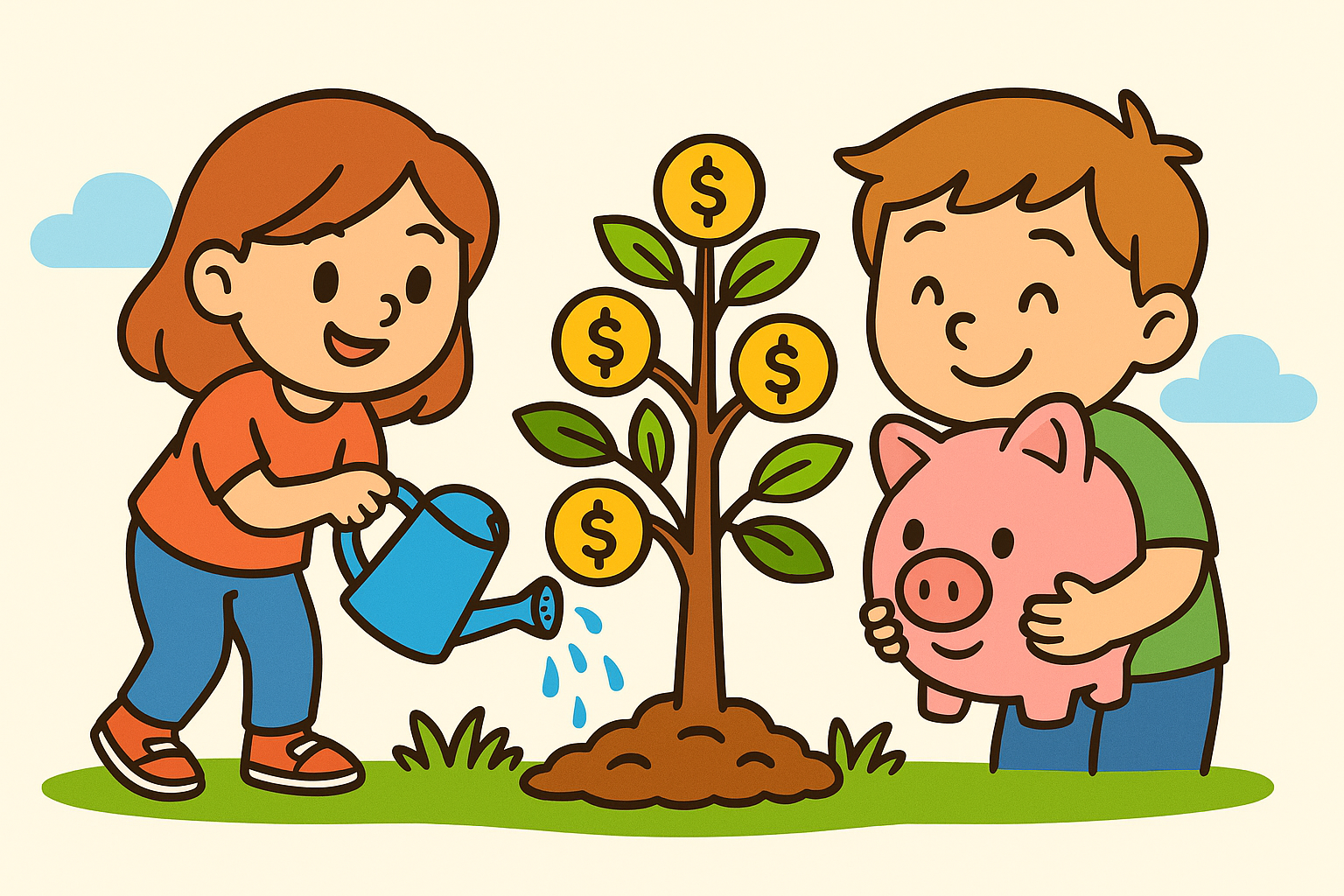
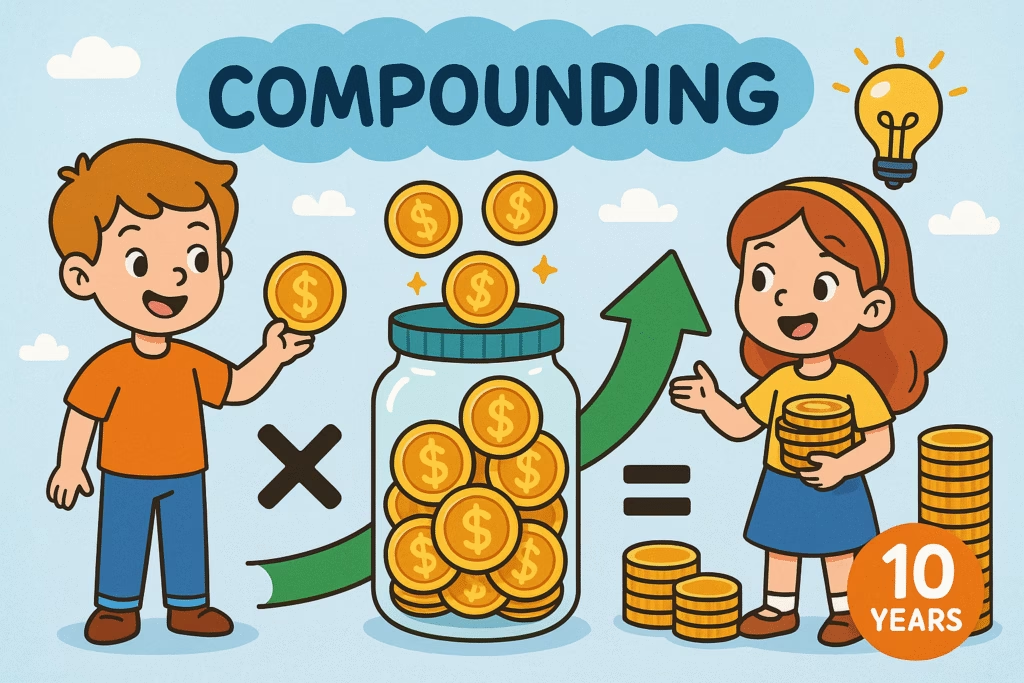
Time is a powerful friend when it comes to investing. Because you have many years before you need your money, you can let it grow slowly and calmly. The concept of compound growth means that your money earns money, and then that money earns even more money. This snowball effect needs time to work its magic.
The SEC’s teaching materials emphasize that one way to protect against risk is to stay invested over the long term investor.gov. Trying to guess when the market will go up or down—called market timing—is very difficult. People who jump in and out of the market often miss the best days. By staying invested and being patient, you allow the natural growth of the economy and the companies you invest in to benefit you.
To see how time helps, imagine that you put ₹1,000 into a stock market fund at age ten. If that investment grows by an average of 8% each year (not guaranteed but historically possible), it could become nearly ₹4,700 by the time you are 30. If you wait until you are 20 to invest the same ₹1,000 at 8% per year, it would grow to only about ₹2,200 by age 30. Starting early doubles the reward because your money has more time to grow.
Tips for Young Investors
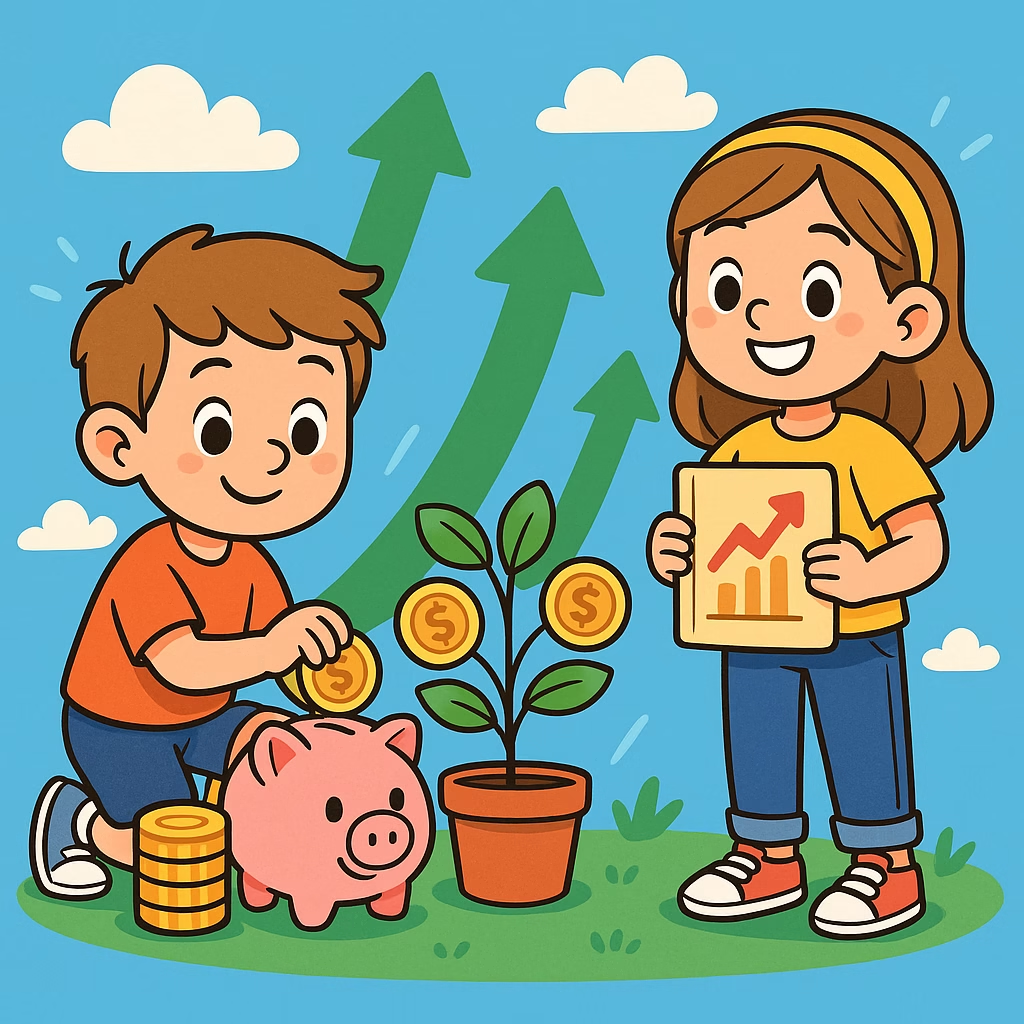
Investing can feel overwhelming, but simple steps make it easier and safer. Here are some kid‑friendly tips:
- Learn before you leap. Read books, watch videos and ask questions. Understanding the basics of how saving and investing work will help you make smarter choices. Your parents or teachers can explain words like stock, bond and fund.
- Start with savings. Before investing, make sure you have an emergency fund—money for unexpected needs. A savings account earns a little interest and keeps your money safe.
- Use a piggy bank or digital jar. Set aside part of any money you receive—from allowance, gifts or chores—for future goals. Saving teaches discipline and patience.
- Diversify. Instead of putting all your money into one company you like, consider buying a mutual fund or ETF that holds many companies. This follows the diversification rule.
- Be patient. Don’t panic if your investment goes down one day and up the next. Remember that market ups and downs are normal. Focus on long‑term goals.
- Set realistic goals. Think about what you are saving for—maybe a toy, a bicycle, or college. Matching your investment choices to your goals helps you stay motivated.
- Avoid hot trends. Just because something like cryptocurrency is popular doesn’t mean it’s right for you. High‑risk investments come with a higher chance of losses. It’s okay to miss out on a fad if it means keeping your money safer.
These habits lay a strong foundation for healthy financial behavior later in life.
Conclusion: Riding Smart in the Investment Park
Understanding risk and reward in the stock market is a bit like choosing between rides at an amusement park. High‑risk investments offer the thrill of potentially high returns, like a roller coaster, but they can also make your stomach drop. Low‑risk investments are calmer, like a merry‑go‑round, but their rewards are smaller. Most investors try to find a comfortable middle ground by combining different kinds of investments and by giving their money time to grow.
Remember the key lessons:
- Higher potential rewards come with higher risks; lower risks often mean lower rewards.
- Stocks have provided the highest average returns over long periods but can be very volatile.
- Diversification—spreading your money across different investments—helps reduce risk.
- Time is your friend. Stay invested and let compound growth work for you.
- Know your goals and risk tolerance to decide how much risk is right for you.
Investing doesn’t have to be scary. With knowledge, patience and smart planning, you can enjoy the ride and reach your destination safely. Always remember to talk to trusted adults before making investing decisions and keep learning as you grow. That way, when you’re ready to plant your own financial seeds, you’ll know exactly how to help them bloom.
If You Liked This Article, Then You Might Also Like –
Compounding: The Eighth Wonder of the World