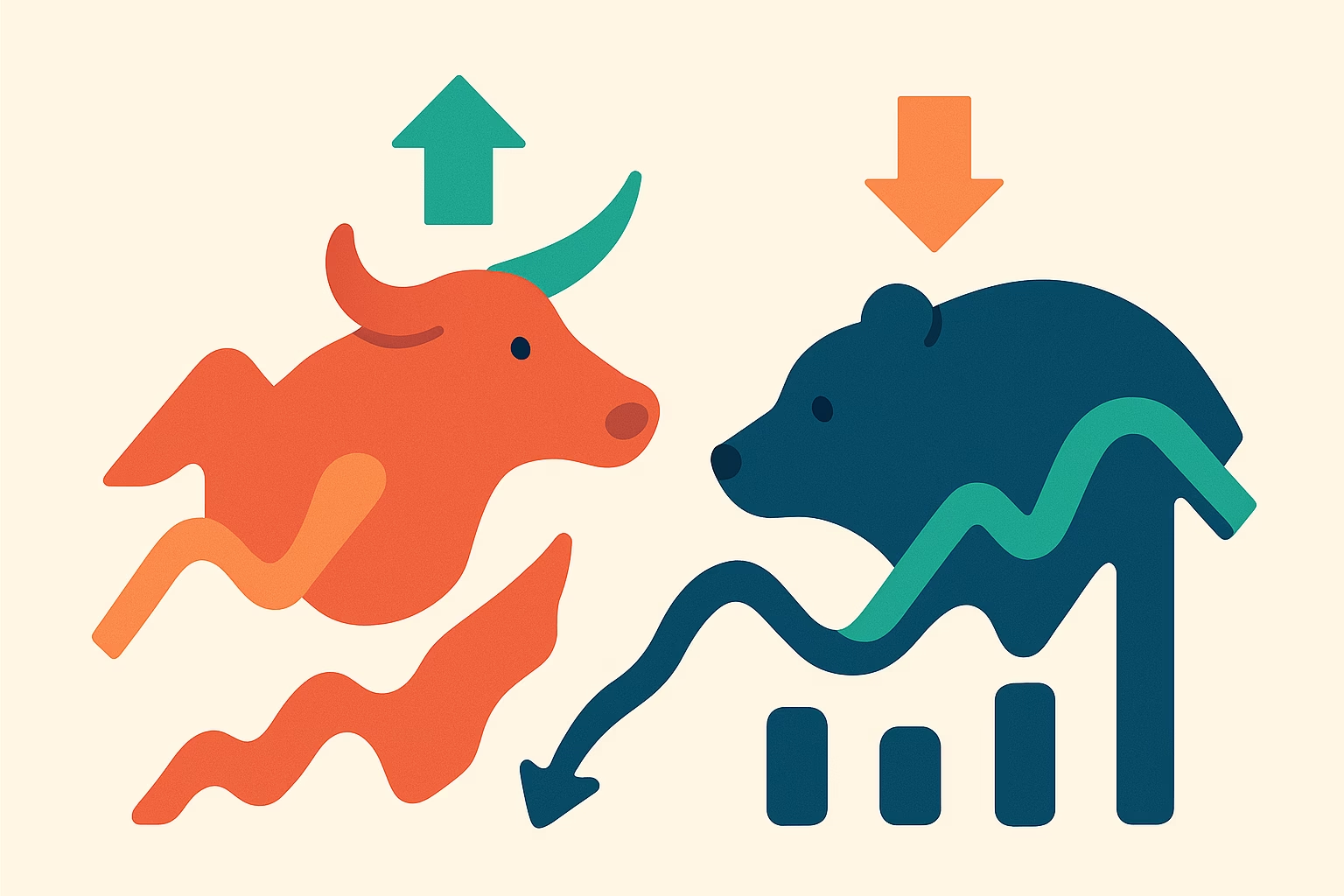
Investing in the stock market can be exciting – a bit like planting seeds and watching them grow into big trees over many years. But if you jump in without learning the basics, it’s just as easy to make mistakes that could cost you your hard‑earned money. This guide uses simple examples and pictures to explain ten common mistakes people make when they start investing. Each section includes a short story or metaphor that even a 10‑year‑old can understand.
1. Not Having a Plan

Imagine going on a treasure hunt without a map or any idea where the treasure is. You might wander around aimlessly and get frustrated. Trading or investing without a plan is just like that. Experienced traders start each trade knowing exactly when they will buy, when they will sell and how much money they are willing to risk. New investors often skip this step and end up changing their minds when prices go up or down unexpectedly. Without a plan, it’s easy to buy a stock because everyone else is buying it, then sell it when the price dips slightly, only to watch it rise later.
How to avoid it:
- Think about why you are investing: Is it for something big in the future like college or buying a house? Decide how long you want to keep your money invested.
- Write down your rules for buying and selling. This might include the price range you’re comfortable paying, when you will sell (for example, if the price drops by 10 %), and how much of your money you will put into one company.
- Stick to your plan even when the market gets noisy. If you find it hard to make a plan, talk to a knowledgeable adult or a financial advisor investopedia.com.
2. Letting Emotions Control Decisions
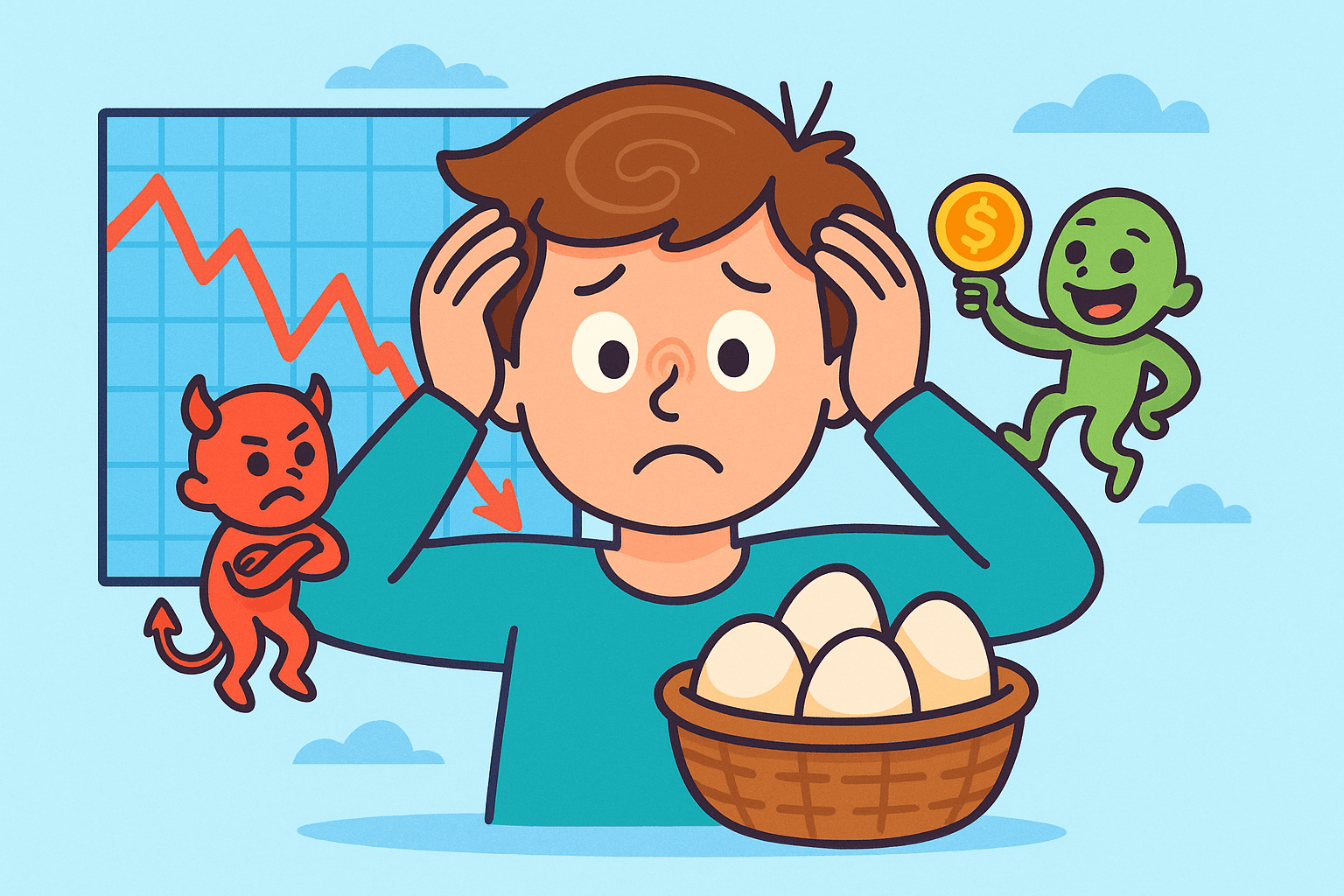
Have you ever felt scared or overly excited while playing a game? Those emotions can make you act quickly without thinking. The stock market can feel like that too. Fear and greed can lead to impulsive decisions, like selling when prices are low because you panic, or buying at very high prices because everyone says the stock will “go to the moon.” Experts warn that letting emotions rule decisions is one of the biggest investing mistakes. The GameStop frenzy in 2021 is a good example; people who bought because of fear of missing out (FOMO) often lost money when prices fell later.
Emotions also feed confirmation bias, where you only pay attention to news that supports your opinion and ignore warning signs. Revenge trading – taking bigger risks to recover previous losses – is another emotional trap.
How to avoid it:
- Create clear rules for when to buy or sell before you invest so you don’t make impulsive choices.
- Use a stop‑loss order (explained in mistake 9) to limit how much you can lose.
- Keep a journal of your trades and write down how you felt at the time. Looking back at your notes can help you learn from your past behavior and see patterns in your decision‑making.
3. Not Understanding What You’re Buying
Would you buy a toy without knowing what it does? Investing in a company you don’t understand is just as risky. One of the world’s most famous investors, Warren Buffett, warns against buying into companies whose business you don’t understand. If you don’t know how a company makes money, you might panic at normal ups and downs.
Many beginners follow tips from friends or social media without doing their own research. They may also fall in love with a company because the stock has done well recently and forget that their main goal is to make money, not to cheer for one company forever. When the company’s earnings or the economy change, it might be smart to sell and invest elsewhere, but “fans” often hold on too long.
How to avoid it:
- Before you buy, read about what the company does. If you can’t explain the business to a friend, don’t invest.
- Diversify using exchange‑traded funds (ETFs) or mutual funds if researching individual companies feels difficult.
- Remember that you’re investing to grow your money. If the reasons you liked a company disappear, be willing to sell.
4. Being Impatient

Investing is like planting a seed. Seeds need time, sunlight and water to grow. Pulling the seed out of the soil every day to see if it’s growing will only kill it. In the same way, expecting your investments to make you rich quickly is unrealistic. A slow and steady approach typically leads to better long‑term results. Jumping in and out of stocks because you get impatient often results in buying high and selling low.
Why patience matters
- Portfolio growth takes time. Experts note that expecting a portfolio to do something other than what it’s designed to do is a recipe for disappointment. Stocks might go up and down in the short term, but historically patient investors tend to earn positive returns.
- Time horizon influences risk. When you know how long you want to invest, you can choose investments that match your needs. Saving for college in 15 years, for example, is different from saving for a holiday next summer.
How to avoid it:
- Set realistic goals for how long you’ll invest your money and what returns you expect.
- Avoid constantly checking prices. Instead, review your investments a few times a year or when something major changes in your life.
- Don’t compare your progress to others’. Everyone’s journey and timeline are different.
5. Trading Too Often (Overtrading)
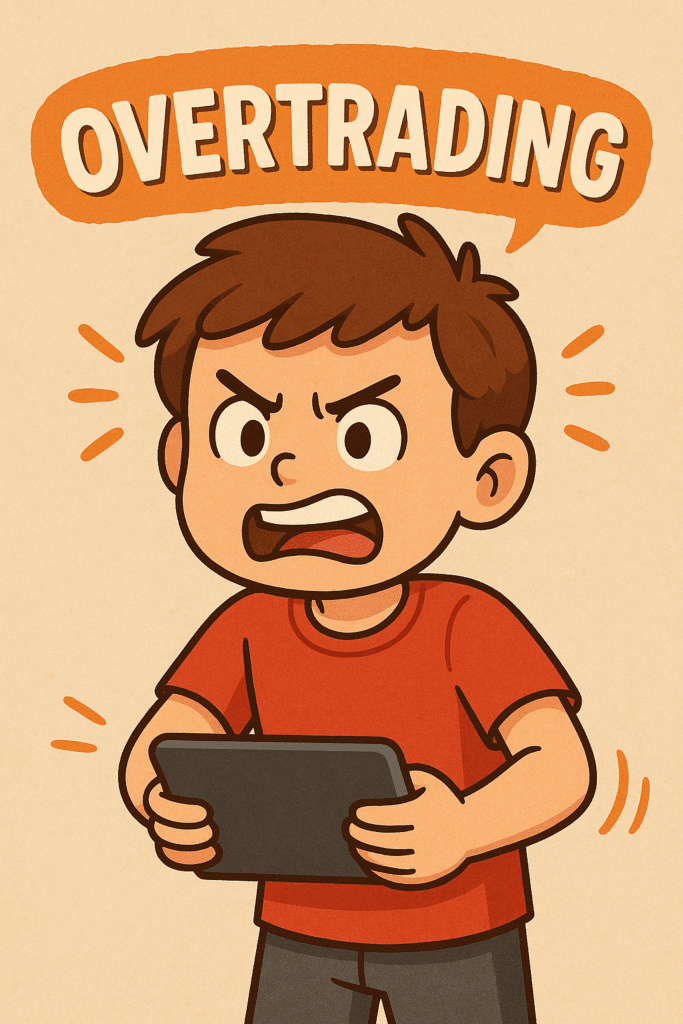
Placing lots of trades might feel like you’re doing something productive, but it often hurts more than it helps. Studies show that frequently jumping in and out of positions is a “return killer” because transaction fees, taxes and missing out on long‑term gains reduce your profits. Even if your brokerage offers free trades, hidden costs like bid‑ask spreads add up.
Retail investors who trade often usually underperform the market. Overtrading is often triggered by a desire to always be doing something or by chasing small profits. Unfortunately, this behaviour can quickly drain your account, just like spending your entire allowance on candy every day without saving any.
How to avoid it:
- Follow a disciplined strategy rather than acting on every market movement. Sometimes the best action is to wait.
- Keep track of transaction costs and taxes. They eat into your returns.
- If you enjoy trading, use only a small portion of your portfolio (for example, 5 %–10 %) for short‑term trades and leave the rest invested for the long term.
6. Trying to Time the Market or Following the Crowd

Buying at the lowest price and selling at the highest price sounds great, but even professionals rarely succeed at timing the market. Research shows that asset allocation (how you divide your money among stocks, bonds and cash) explains most of your long‑term return, not perfectly timing when to enter and exit investopedia.com.
Another related mistake is chasing trends or buying stocks just because they’re popular. When everyone rushes into a “hot” stock, prices often get inflated. By the time you hear about the opportunity, the potential gains may already be gone. For example, during the meme‑stock craze, many investors bought at sky‑high prices and then faced big losses when the excitement faded.
How to avoid it:
- Focus on the quality of businesses rather than hype. Do your own research and build a diversified portfolio.
- Understand that nobody can predict short‑term market movements. Trying to do so often results in missed opportunities and increased stress.
- When a stock becomes very popular, ask yourself whether the price already reflects the good news. Instead of following the crowd, look for companies trading below their true value.
7. Putting All Your Eggs in One Basket (Lack of Diversification)

If you carry all your eggs in one basket and you drop it, you might lose them all. In investing, putting most of your money in a single stock or sector is just as risky. Professionals sometimes make concentrated bets, but most of us should diversify across different industries and asset types.
Investopedia notes that typical investors shouldn’t put more than 5 % to 10 % of their money into any one investment. Diversification can involve buying mutual funds or exchange‑traded funds (ETFs) to get exposure to many companies at once. The Predictive Investor article explains that concentration risk – whether in one stock, a single sector or one region – magnifies losses when things go wrong. For example, investors heavily focused on technology stocks during the dot‑com bubble faced severe losses when the bubble burst.
How to avoid it:
- Spread your investments across different industries (technology, healthcare, consumer goods) and asset types (stocks, bonds, real estate).
- Consider broad market funds that cover hundreds of companies, reducing the risk if one fails.
- Don’t invest too much in the company you work for. If your salary and investments both depend on the same company, a downturn could hurt both income and savings.
8. Ignoring Risk Management
Risk is like the weather – sometimes it’s sunny and sometimes it storms. You can’t control the weather, but you can carry an umbrella. In the stock market, risk management is your umbrella. Many beginners focus only on possible profits and forget about what could go wrong. They might put too much money into one stock or skip protective tools like stop‑loss orders.
Every investor has a different risk tolerance. Some people can handle big ups and downs; others need more stability. Investopedia advises low‑risk investors to stick with established firms or safer investments like Treasury bonds, while those who can tolerate more risk may choose growth stocks investopedia.com. You should never invest money you can’t afford to lose investopedia.com.
How to avoid it:
- Decide how much of your portfolio you’re willing to risk on one investment. A common rule is not to risk more than 1 %–2 % of your total account on a single trade.
- Use stop‑loss orders – instructions to sell your stock if it falls to a certain price – to limit potential losses.
- Reassess your risk tolerance regularly. As you get older or your goals change, you may want to adjust how much risk you take.
9. Not Cutting Losses Quickly (Letting Losses Grow)
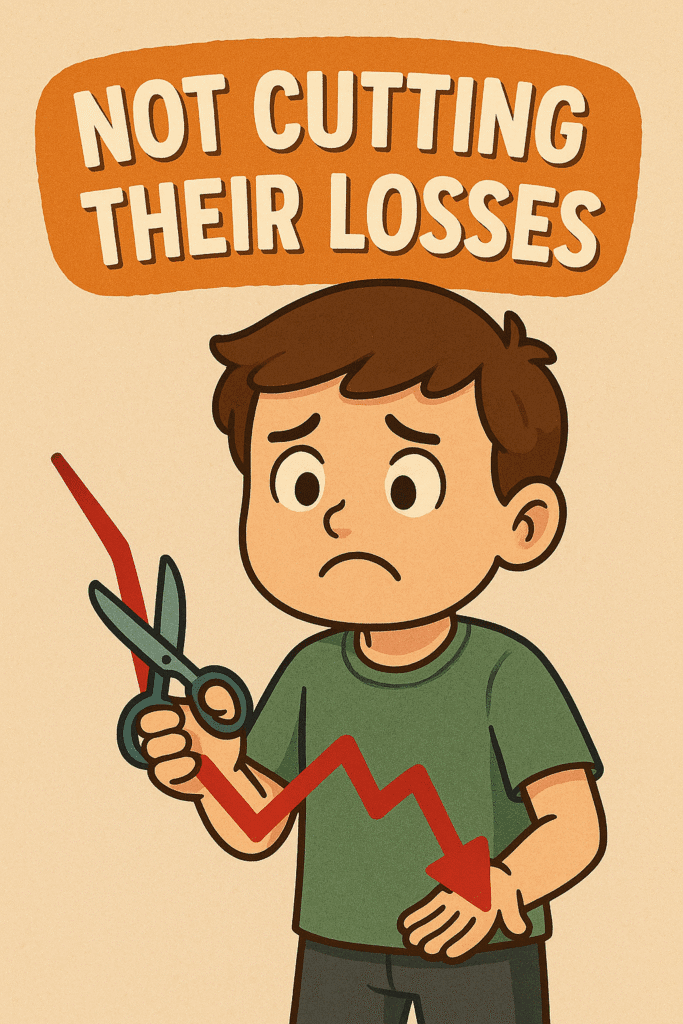
Sometimes, when a plant starts to die, it’s better to remove it quickly rather than hope it will magically recover. Similarly, holding onto a losing investment in the hope that it will bounce back can tie up your money and cause bigger losses. Successful investors are willing to take a small loss quickly and move on. Unsuccessful traders often become paralyzed and keep adding to a losing position, hoping for a turnaround.
How to avoid it:
- Set a maximum loss limit for each investment before you buy. Use stop‑loss orders to automatically sell if the price drops beyond that point.
- Avoid averaging down – buying more of a stock that’s falling – unless you have a strong, well‑researched reason to believe in its long‑term value.
- Accept that making mistakes is normal. Cutting losses is a sign of discipline, not failure.
10. Neglecting Fees, Taxes and Portfolio Maintenance
Just like tiny leaks can empty a big bucket over time, small costs can significantly reduce your investing returns. Beginners often forget about transaction fees, fund management fees, and taxes. The Predictive Investor article warns that excessive trading can trigger higher taxes and hidden costs.
Another neglected area is portfolio rebalancing – adjusting your investments back to your target mix. Over time, market movements can cause your portfolio to lean too much toward one type of investment. If you ignore rebalancing, you might accidentally take on more risk than you intended.
Lastly, skipping research by blindly following tips from friends or social media can lead to poor choices. Investing without due diligence increases the chance of losses.
How to avoid it:
- Choose low‑cost funds and brokerages. Compare fees before you invest.
- Keep records of your purchases and sales so you can estimate taxes. In some countries, long‑term investments are taxed less than short‑term trades.
- Rebalance your portfolio regularly by selling parts that have grown too large and buying more of the ones that are below your target.
- Do your own research. Read company reports and news from reliable sources before buying a stock. If something sounds too good to be true, it probably is.
Conclusion

Investing in the stock market doesn’t have to be scary. By learning about these common mistakes and using simple strategies to avoid them, you can grow your money in a steady, thoughtful way. Remember to make a plan, manage your emotions, learn about what you buy, be patient, avoid overtrading, ignore the crowd, diversify, manage risk, cut losses early and pay attention to fees and maintenance. With discipline and knowledge, you’ll be better prepared for the ups and downs of the market — and your seeds of investment can grow into a forest.