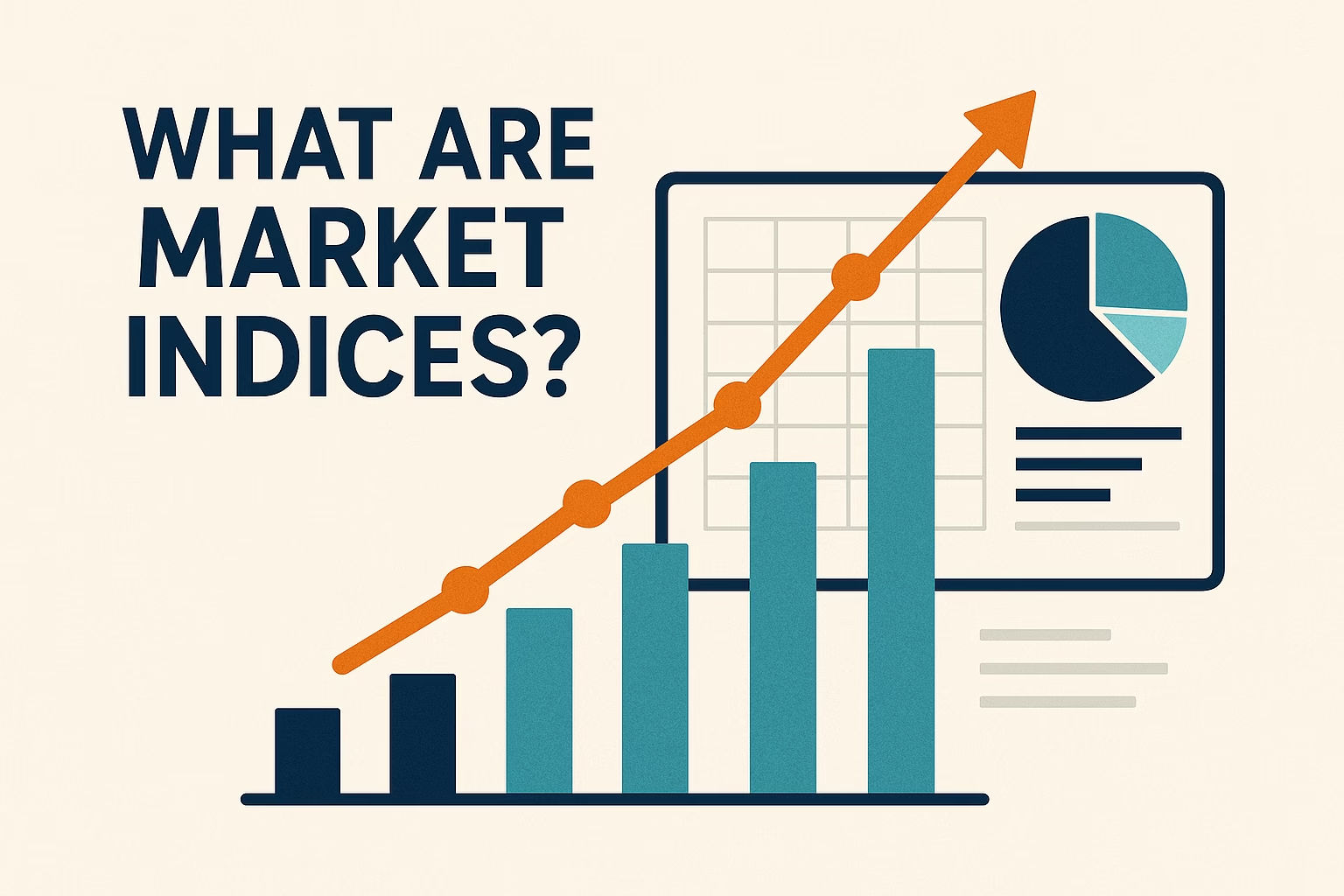
What is a Market Index?
So, What are Market Indices. Think of a market index as a giant scoreboard for stocks. Just like a scoreboard shows how a sports team is doing in a game, a market index shows how a group of stocks is doing in the market. It’s basically a special number that goes up or down.
If the index “score” goes up, it means those stocks (companies) are doing well. If it goes down, things might not be so great. In other words, an index is “like a special score that shows the health of some of the biggest companies” in a market.
Example: Imagine all your favorite companies (like ones making cool phones, toys, or chocolates) were on one team. The market index is the team’s score. Instead of points from goals or runs, the points come from stock prices.
When most of those company stocks go up in price, the index score goes up. When they go down, the index score drops. This gives everyone a quick way to see how that “team” of companies is performing without checking each company one by one.
How Does It Work? (A School Report Card Analogy)
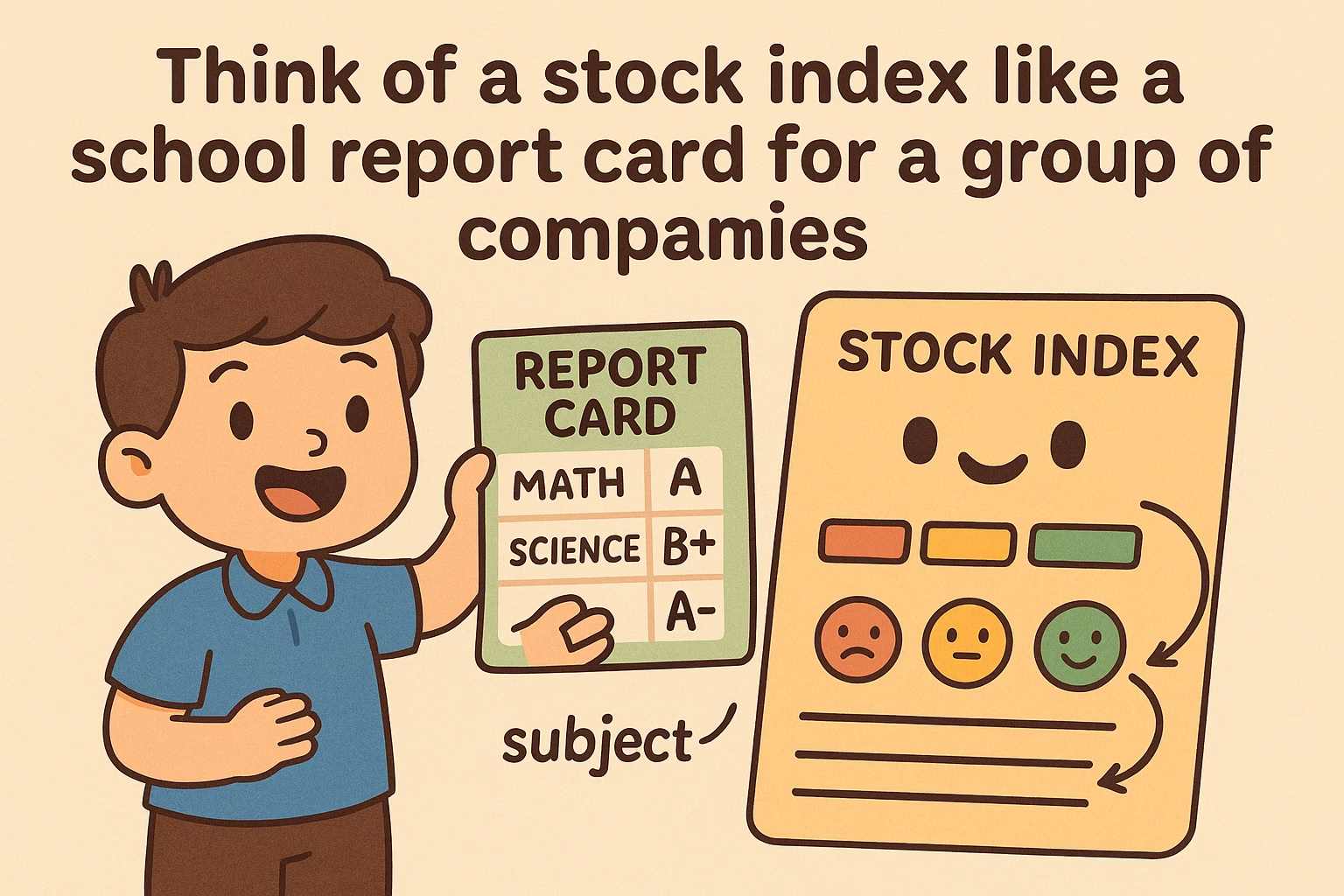
Think of a stock index like a school report card for a group of companies. In school, you get a report card that shows your grades in different subjects (math, science, etc.). Similarly, a stock index is like a report card that shows how a bunch of companies are doing. Each company is like a “subject” on that report card.
Now, how do we make one score out of many? In class, the teacher might calculate the class average – a single number that tells how the whole class did. A stock index works the same way: it takes the prices of many stocks and combines them into one overall score.
Some indices use a simple average, while others give more weight to bigger companies (so big companies affect the score more than small ones). It’s like if math is a very important subject, it might count more toward your average grade than gym class.
In index terms, a company’s size (measured by something called market capitalization) can make its stock influence the index more kids.kiddle.co. But don’t worry about the big words – the key idea is that the index sums up everything into one easy-to-read number.
In short: A stock index turns a lot of information (many company prices) into a single number, just like a report card turns many grades into one overall result. It’s an at-a-glance report on how that group of companies is doing kids.kiddle.co.
Examples of Indices: Sensex, Nifty, Dow Jones, and Others
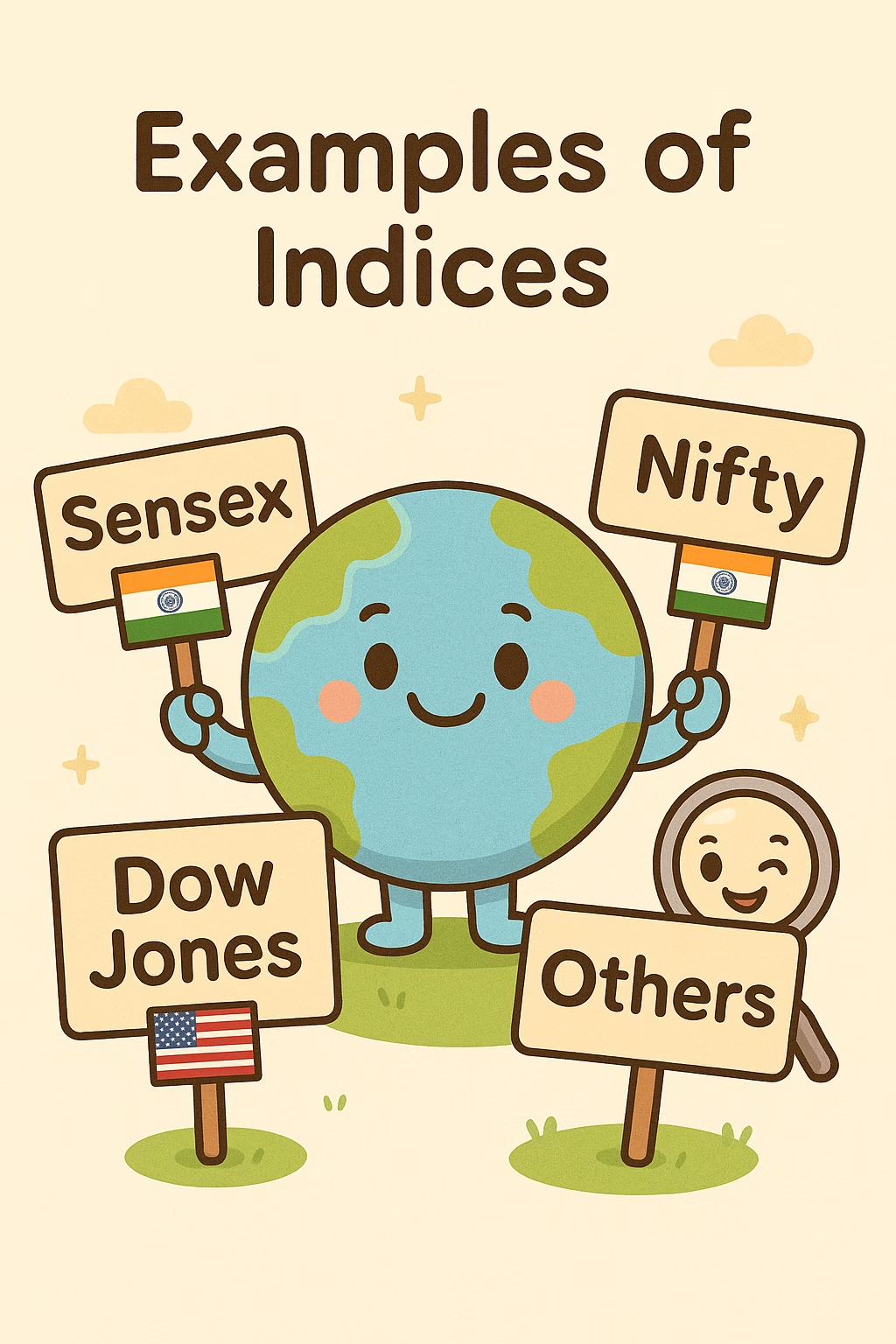
Different countries have their own “team scoreboards” (indices) for their stock markets. Here are some famous examples from around the world:
- Sensex (India): This is India’s Bombay Stock Exchange index. It tracks the top 30 companies in India by value. Think of it as the 30 heavyweight champions of the Indian stock market all on one team. When people say “the Sensex went up,” they mean these 30 big companies on average did well. (Fun fact: Sensex stands for Sensitive Index, and it’s been around since 1986!) investopedia.com
- Nifty 50 (India): Another Indian index, for the National Stock Exchange (NSE). It’s like Sensex’s cousin. The Nifty 50 tracks the top 50 companies in India. So it’s a slightly bigger team – 50 star companies. If the Nifty “score” rises, those 50 companies generally had a good day.
- Dow Jones Industrial Average (USA): Often just called “the Dow,” this is a very famous U.S. index. It’s made up of 30 large American companies – companies you’ve probably heard of, like Disney or Coca-Cola. The Dow is like a special score showing how these big companies are doing, and by extension, how the U.S. market is doing. When news says “the Dow fell 100 points,” it’s like saying the team of 30 big companies lost some points that day. All 30 companies are from the USA and together give an idea of the overall economy kids.kiddle.co.
- S&P 500 (USA): This one’s a team of 500 companies in the U.S. – much bigger! It includes a wide mix of big companies and is often used to see how the overall U.S. market is performing. If the S&P 500 is up, it means a broad range of companies are doing well.
- FTSE 100 (UK): In the United Kingdom, the main index is the FTSE 100. It tracks 100 of the biggest companies on the London Stock Exchange investopedia.com. So, 100 British companies’ performance rolled into one number.
- Nikkei 225 (Japan): Japan’s famous index tracks 225 large companies. It’s like a snapshot of Japan’s economy in one index number.
These are just a few examples. Essentially, every major stock market has an index (or a few) acting as its scoreboard. Some even have funny names or acronyms, but all serve the same purpose: to tell us quickly how that market’s key companies are doing.
Why Do People Follow These Indices?

Why do people care about these index “scores”? For a few fun reasons:
- Quick Health Check: Indices give a quick snapshot of market health. Just like you might check the weather in the morning, many adults check indices. If the indices are up, it’s like sunshine – the economy might be doing well. If they’re down, it’s like a cloudy day – time to be cautious. It’s “like checking the temperature of the market”.
- Saves Time: There are thousands of stocks out there! An index lets people see overall trends without checking each stock. It’s similar to a teacher looking at the class average instead of every single test paper. One index number can tell if most stocks are climbing (good) or falling (not so good).
- Investment Guide: Investors use indices as guides or benchmarks. For example, if the Nifty or Sensex is rising steadily, an investor might feel confident about the Indian market. Some even invest in index funds, which are special funds that contain all the stocks in an index. By doing so, they effectively invest in the entire market that index represents. This is a simple way to invest without picking individual stocks – you ride along with the index’s performance kids.kiddle.co.
- News and Confidence: Indices are always mentioned in news (“Sensex hits a record high” or “Dow drops 200 points”). People follow them kind of like how sports fans follow scores. It can even affect confidence – if the market scores are up for days, people feel optimistic about the economy; if they crash, everyone gets worried. It’s emotional, like cheering for your team when the score is up, or feeling down when it’s low.
In short, people follow indices because those numbers tell a story about the market. They’re like the pulse or heartbeat of the stock market – one quick glance at the index and you get a feel for the market’s mood.
Comparing Indices – Like Cricket vs. Baseball Scoreboards
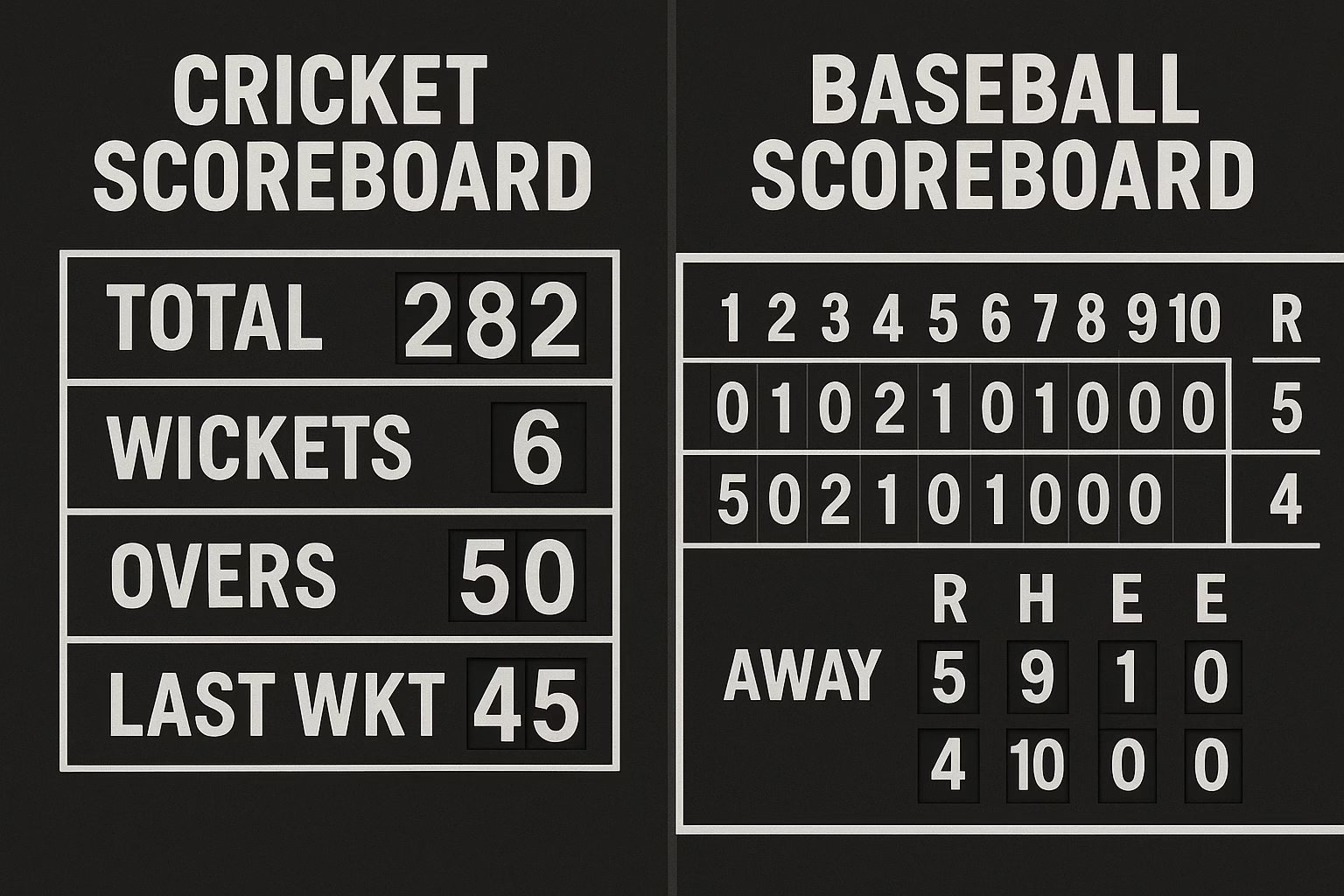
Here’s a cool analogy: Comparing different country’s indices is like comparing cricket scores to baseball scores! In cricket, a team might score 300 runs, while in baseball a team might score 5 runs. Does that mean the cricket team is “better”? Not really – they’re just different games with different scoring systems. You can’t directly compare the numbers because the rules and scales are different.
Similarly, each stock index has its own scale and number. For instance, India’s Sensex is around tens of thousands of points (it even crossed 65,000 points in 2023 investopedia.com), whereas the Dow in the US might be around 35,000 points, and the UK’s FTSE 100 around 7,000.
These numbers are different due to how the indices are calculated and what they contain – not because one country’s market is 10 times better than another. It’s just like cricket vs baseball scoring: context matters.
What really matters is how much the index moves, not the absolute number. If Sensex goes from 60,000 to 61,000, that’s a positive move (like a team hitting a bunch of runs). If the Dow goes from 35,000 to 35,500, that’s also a positive move.
Each index is best compared to itself over time, not to other indices. So, we watch percentages and trends. For example, an index rising 5% is good news whether it’s the Nifty or the Dow.
Also, different indices have different numbers of companies: Sensex has 30, Nifty 50, Dow 30, S&P 500 has 500, Nikkei 225 has 225, etc. So their “scoreboards” naturally use different scales. This is why people don’t say one index number is better just because it’s higher. It’s the trend and change that count – just like a thrilling close game is about how the score changes, not just the final tally.
Bottom line: All indices are scoreboards, but each plays its own “game.” Whether it’s cricket or baseball (or Sensex vs Dow), you look at how the score changes in each game, rather than comparing the raw scores directly. That way, you understand how each team – or market – is really doing.
Wrap-Up: Fun Takeaways
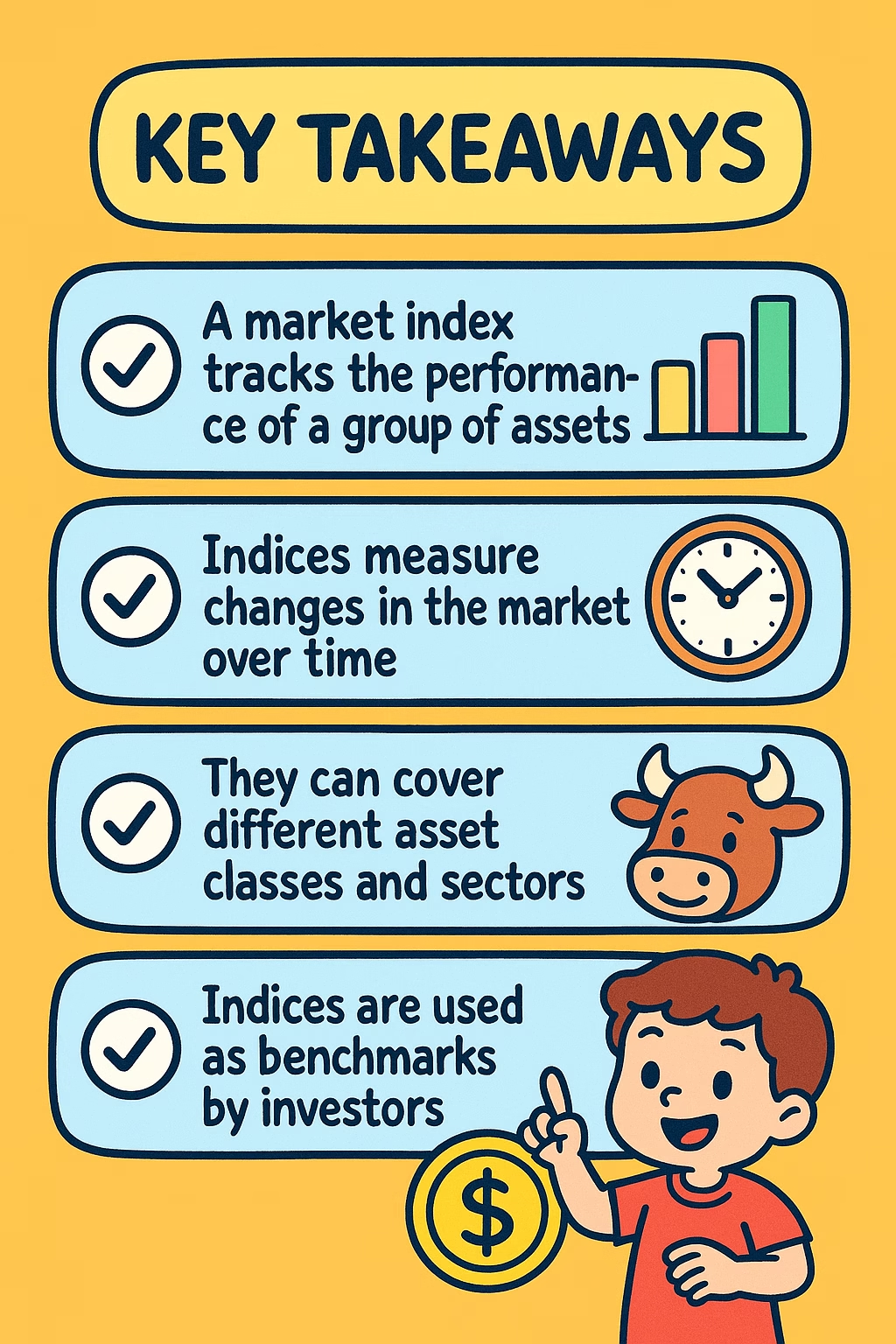
- A market index = a scoreboard or report card for a bunch of stocks. It gives a quick way to see how that group is performing.
- Sensex, Nifty, Dow Jones, etc. are famous index names – each tracking a set of top companies in a country (India, USA, and more). They’re like different leagues with their own teams and scores.
- People follow indices for a quick health check of the economy, just like checking a game score. It’s faster than tracking every stock, and it guides investment choices.
- Don’t confuse one index’s level with another – they’re all different games. Focus on the ups and downs (trends) in each index, not the absolute number, just like you wouldn’t directly compare runs in cricket to runs in baseball.
Hopefully, this explanation makes market indices as easy as checking your scores or your report card! Remember, behind those fancy terms like Sensex or Dow, it’s basically numbers telling a story – a story of how companies are doing, told in a fun, scoreboard-like way that even a 10-year-old can understand. Happy learning!
If You Liked This Article, Then You Might Also Like This –
What is Market Capitalization (Large-cap, Mid-cap and Small-cap Explained)