Imagine you have a toy that you buy and sell in the same day, like trading Pokémon cards at school during recess. Intraday trading is just like that, but with real stocks! In simple words, intraday trading means buying and then selling a stock (or other security) all within one market day.
You never keep the stock overnight – it’s like getting on a swing at the playground and jumping off before recess ends. Intraday trading focuses on the prices moving during the day (morning to afternoon), letting traders try to catch small gains as prices go up and down investopedia.com.
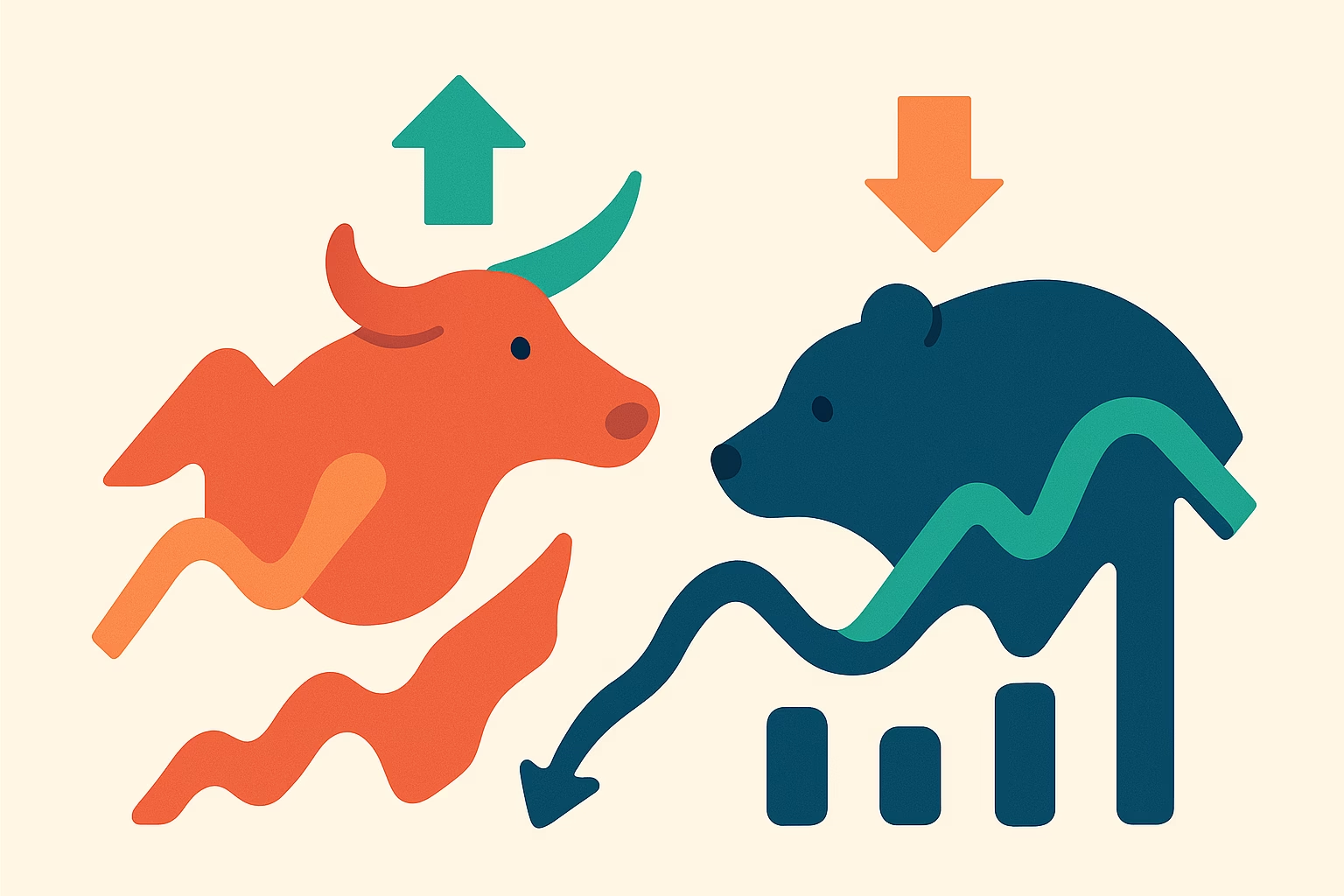
Investopedia explains that intraday trading means taking advantage of “short-term price fluctuations” within the same day investopedia.com. It’s like a friendly race: some days the market is a bull (charging ahead with rising prices), and other days a bear (slowly pushing prices down).
Whether it’s the New York Stock Exchange in the U.S. or the Bombay Stock Exchange in India, the idea is the same – ride the waves of price changes between the morning bell and the afternoon bell. In the U.S., for example, markets run from 9:30 AM to 4:00 PM Eastern Time on weekdays, and in India they run roughly from 9:15 AM to 3:30 PM IST.
How Intraday Trading Works

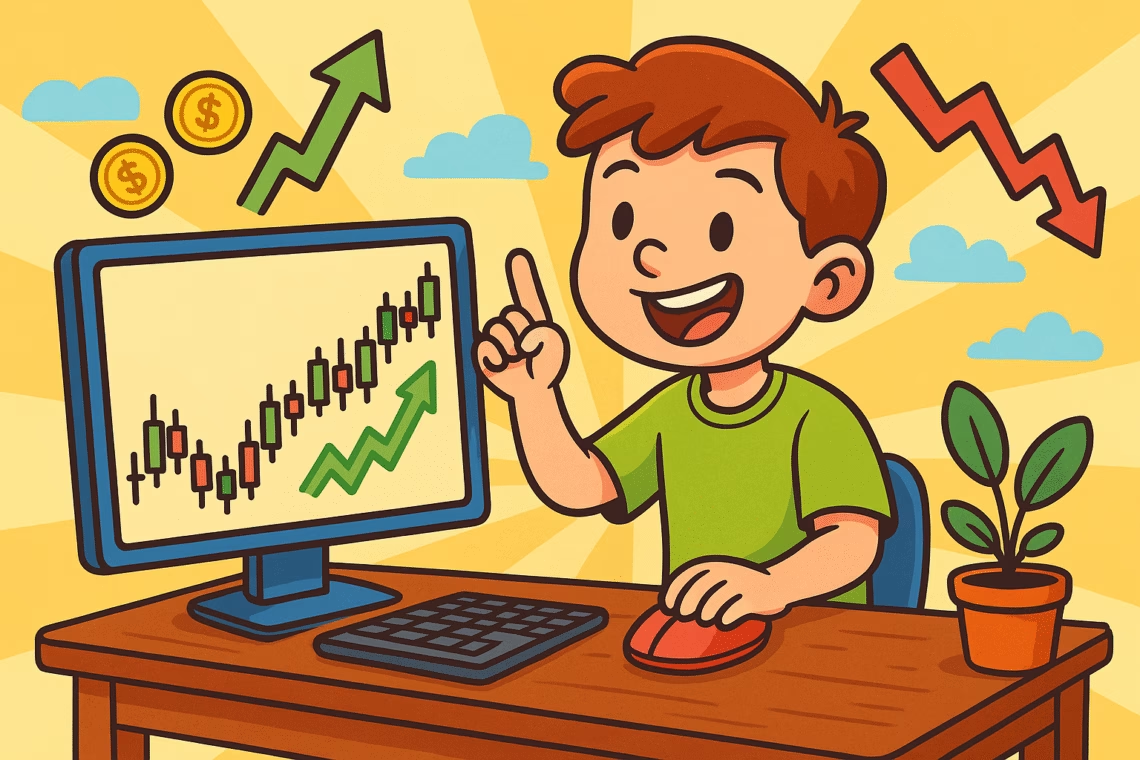
Stock prices bounce up and down all day, and intraday traders watch these moves. Think of a stock’s price chart like a rollercoaster track: it goes up, down, and loops around. Intraday traders look at these lines (often on colorful computer charts) to decide when to buy or sell.
For example, one day Apple’s stock might start at $174.57, dip to $174.44 mid-day, then jump up to $178.49 before closing at $178.44. An intraday trader tries to buy when it’s low (say $174.50) and sell when it’s a little higher (say $176) all in the same day. By doing lots of these quick trades, they hope to add up small profits.
- Stock Charts: Intraday traders use live charts that update by the minute. These charts might show lines or candlesticks moving up and down. It’s like watching the stock’s mood swings in real time. A rising green line means prices are climbing, and a falling red line means prices are dropping.
- Market Timing: Traders pay attention to when the market is busiest. Often, the first hour after the market opens and the last hour before it closes have the biggest price moves (and therefore the biggest chances to win or lose). In India, there’s even a short pre-market session from 9:00–9:15 AM to help set opening prices.
- Volatility: This is a fancy word that means how crazy the price swings are. High volatility means the price jumps a lot, like a kangaroo bouncing around. Low volatility means it moves gently, like a sleepy bear stretch. Intraday traders actually like volatility because it creates more trading opportunities (though it also brings more risk).
- Timing & Speed: In intraday trading, timing is everything. Traders make fast decisions and often use keyboard shortcuts or mobile apps. Many even set alerts so they know immediately if a stock hits a certain price. It’s a bit like playing a fast video game where you have to be quick to score points.
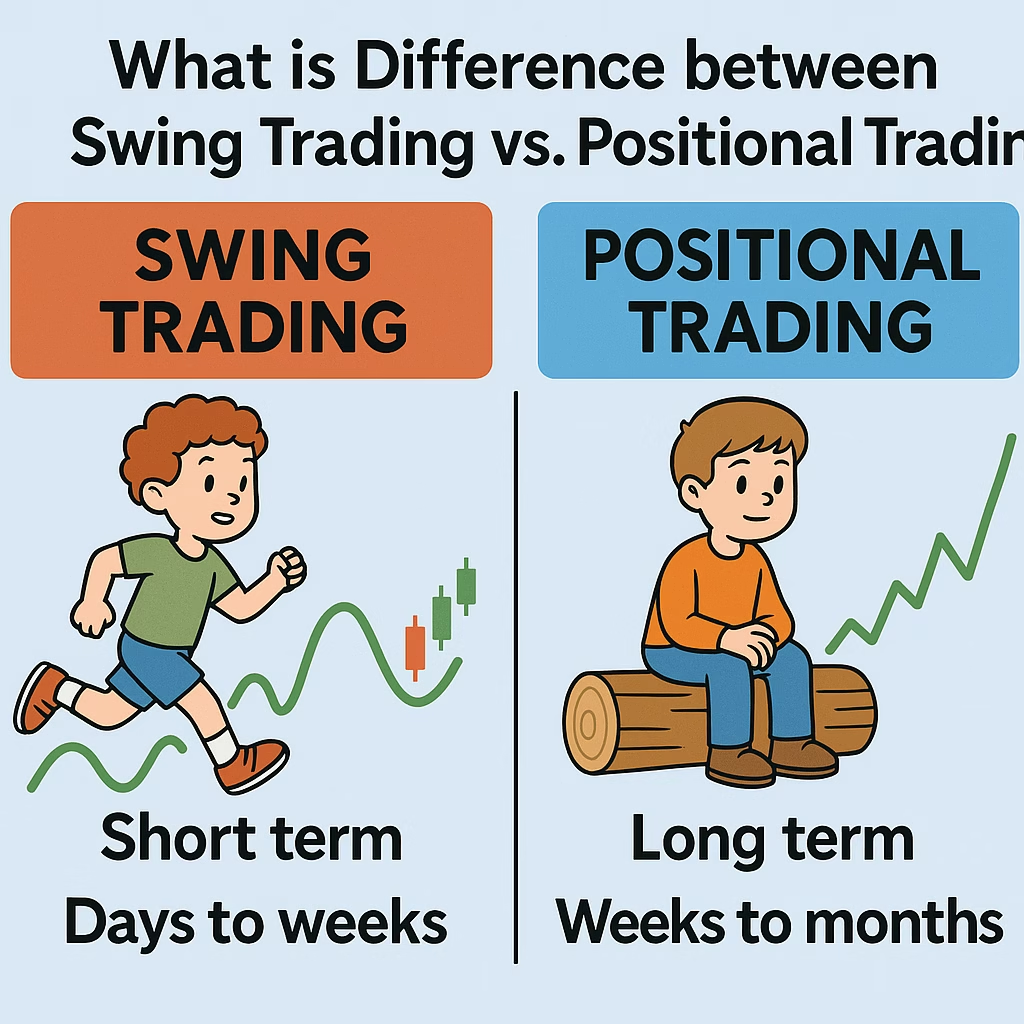
Both U.S. and Indian stock markets give examples of intraday swings. In the U.S., big companies like Apple (AAPL) or Tesla can move several dollars in a single day. In India, a company like Reliance Industries or Infosys might jump or fall on news about technology or oil prices. Remember, intraday trading is about short-term moves, not long-term holding. (Those who hold stocks for months or years are doing something else called investing, not intraday trading.)
Bull vs Bear: Market Moods

Picture a bull (a big bull with sharp horns). In stock markets, a “bull” market is when prices are rising. It’s like the market is feeling strong and happy, and bulls push prices up (imagine the bull’s horns lifting them). In its simplest definition, rising prices mean a bull market.
For example, if you buy a toy for $10 and by noon it’s selling for $12 because everyone suddenly loves it, that’s a little bull run for your toy. Bull markets make trading exciting because traders often find lots of good chances to buy then sell higher within the day.
Now picture a bear with its big heavy paws. When prices are falling, we say it’s a “bear market.” The bear swipes prices down (like pushing them lower). If a stock goes from $10 down to $8 in a day, that’s a bearish move. In a bear mood, intraday traders can also find opportunities – for instance, by selling first and buying back cheaper (this is called short selling, but it’s an advanced step). Even if the market is bearish, quick traders might still catch little rebounds up or big drops down.
In one fun way to explain to kids: imagine a day when all your school friends suddenly really want the shiny stickers you trade. If everyone is offering to pay more and more for your sticker, that’s a bull market (prices rise).
If everyone is ignoring it or only gives you candy instead of more money, that’s a bear market (prices fall). Bull and bear markets can even change within a day. One minute the market might feel bullish (green arrows everywhere), and the next it swings bearish (red arrows buzzing).
Pros of Intraday Trading 🎉

- Quick Returns: The big plus of intraday trading is you can make money quickly. You don’t have to wait years for your stock to grow. If you see a rising trend early in the morning and sell at a higher price by midday, you’ve made an intraday profit. It’s like selling lemonade at recess; you can count your earnings right after school, rather than waiting until summer.
- No Overnight Risk: Since you close (sell) all your trades by the end of the day, you avoid overnight surprises. Imagine you sold your ice cream cart at 5 PM; you’re not around to deal with it if a surprise rainstorm comes in the night. Similarly, intraday traders don’t have to worry about overnight news (like earnings reports after the market close) suddenly making stock prices crash or skyrocket. Investopedia notes this benefit: positions avoid negative impacts from overnight news.
- Learning and Experience: Day trading is an intense learning game. You learn a lot, fast, because you see immediate results of your decisions. Some even say it’s the best way to learn how markets work because you’re watching and reacting to every little move. It’s like doing tons of quick math problems instead of just reading the answers.
- Low Capital Needed: In many places, you can trade with relatively small amounts of money because brokers often let you use margin (a kind of loan). This means you can do intraday trades even if you start with a few dollars. However, remember margin is a double-edged sword: it can amplify gains and losses.
- Exciting and Fun: For people who like action, intraday trading can feel fun and game-like. Watching the price wiggle and making a lightning-fast decision can give you a thrill similar to winning a quick video game. Of course, it’s not just a game – it’s real money – but the excitement is a pro if you enjoy that high-energy environment.
Cons of Intraday Trading ⚠️
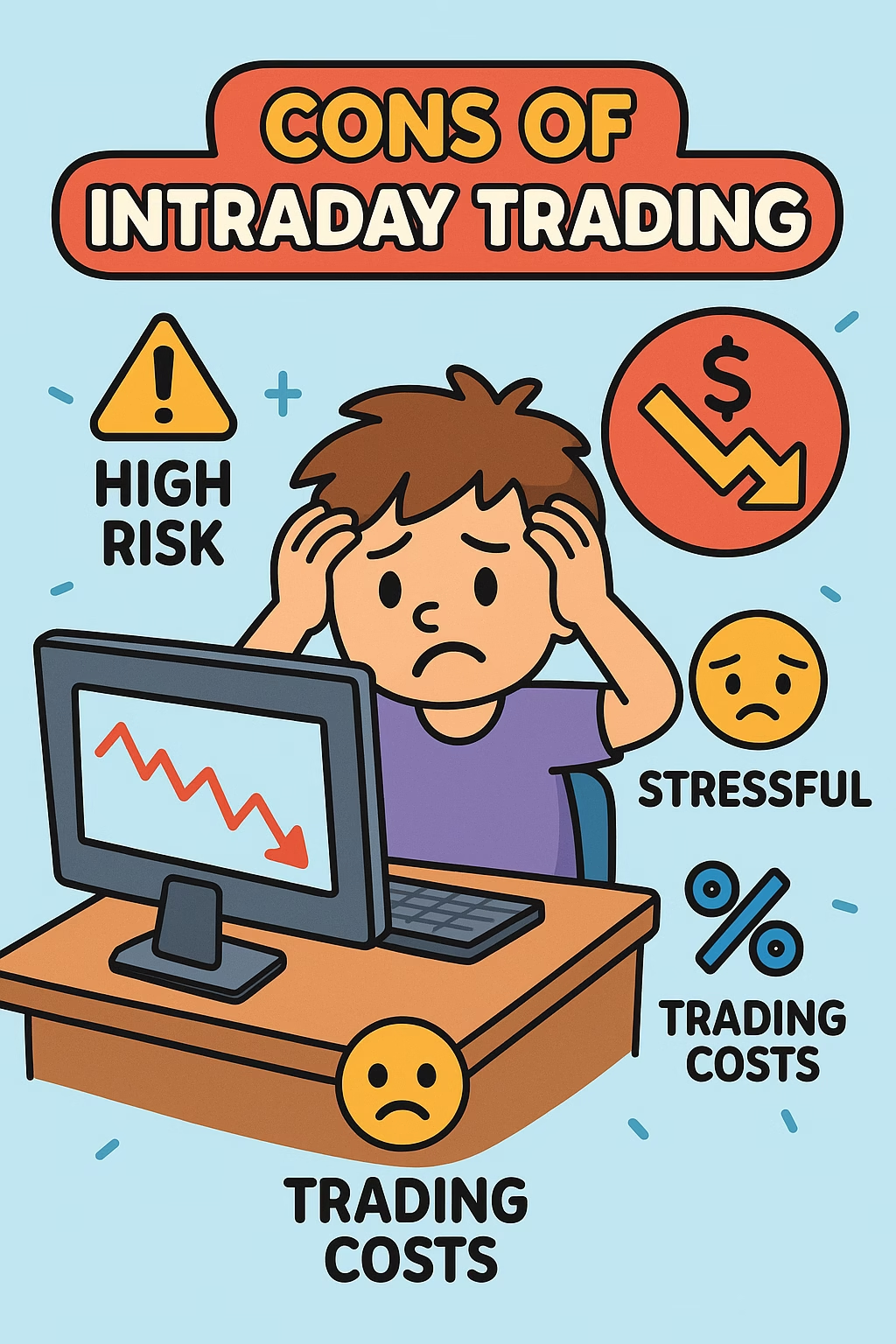
- High Risk of Losses: The flip side of quick gains is quick losses. If the market moves against you, you can lose money as fast as you could make it. Investopedia warns that losses can mount quickly, especially with margin. For example, if you bought a stock thinking it would go up, but instead it tumbles down, you could lose a lot in a short time. Kids might liken it to sliding down a water slide too fast and splashing into the pool (losing money) instead of gently easing down.
- Emotions and Stress: Watching prices all day can be stressful. It’s easy to get excited when things are going well, or scared and upset when they aren’t. Emotions can make traders do silly things (like panic-selling). A child-friendly warning: it’s like playing tag with really slippery friends – if you don’t keep your balance, you might fall. New traders often find this emotional rollercoaster a big challenge.
- Costs and Fees: Every time you buy or sell a stock, there are usually small fees (commissions) and taxes. If you trade a lot of times, these fees add up and eat into your profits. Imagine having to pay a candy buyer a little fee every time you trade a candy at recess – after lots of trades, your earnings shrink.
- Requires Time and Focus: Intraday trading isn’t a casual after-school activity; it needs full attention during market hours. You can’t just trade once and forget – you have to keep an eye on charts, news, and alerts all day. Missing a sudden price move can mean missing out on profits (or failing to prevent losses). It’s like babysitting – you have to watch constantly, because trouble (a stock price crash) can happen in a blink.
- Hard to “Win” Often: Many adults warn that only a small number of traders actually make money consistently from intraday trading. It’s very competitive. Some comparisons say it’s like being in a speeding car race where most racers crash. The potential to earn is there, but much of it depends on skill, luck, and strict discipline. If trading goes wrong, the losses can outweigh the gains investopedia.com.
Tips for New Intraday Traders 👍
- Start with a Demo Account: Before risking real money, practice on a virtual or paper trading simulator. These are like training wheels for trading. NerdWallet explains that simulators let you trade with fake money and try strategies without any real risk. Many apps (even Robinhood and Webull in the U.S. or Zerodha and Upstox in India) offer paper trading modes. Think of it like playing a stock market video game at home before playing for real at recess.
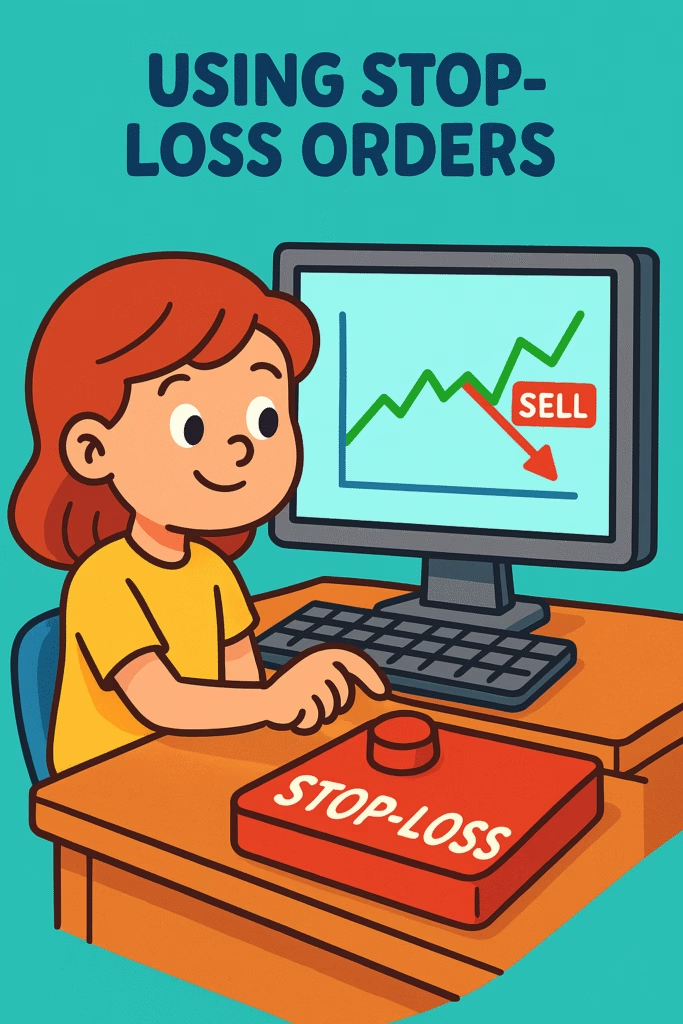
- Use Stop-Loss Orders: Always set a stop-loss for every trade. A stop-loss is like a built-in safety button. It tells your trading app, “If my stock price goes down to a certain point, automatically sell to cut losses.” It’s literally a “stop” sign for losses. For example, if you buy at ₹100 and set a stop-loss at ₹95, you limit your loss to ₹5 per share. As Saxo Bank explains, a stop-loss order is “an instruction to kill (end) a trade once a specific target is reached or exceeded”. In kid terms, imagine you have a secret rule: “If I lose 5 candies, I stop trading candy.” That way you don’t end up losing all your candy stash.
- Go Slow and Small: Start with small trades using a small portion of your money. Don’t put all your marbles on one trade! New traders should protect their money and not chase big wins right away. It’s like running a sprint – you need to pace yourself at first.
- Learn, Don’t Gamble: Intraday trading should be about thinking, not luck. Study charts, learn basic analysis (like “support” and “resistance” levels on a chart), and follow news that can move markets. The more you learn, the better decisions you make. Remember what it’s like to solve a puzzle or a math problem: you don’t guess the answer, you work through it. Try to think of trading the same way.
- Keep a Trading Journal: Write down every trade you make: why you made it, what happened, and what you learned. This habit helps you see patterns (good or bad) and avoid repeating mistakes. It’s like keeping a school notebook of your quiz scores to see which subjects you need to study more.
- Stay Calm and Have Fun: Treat it like learning a new game. If you make a mistake (lose money), that’s okay – try to learn from it. Don’t let one bad loss stop you. Just like a kid wouldn’t stop playing after one fall on the bike, a trader shouldn’t throw away the whole idea after one bad day. Keep a playful, curious attitude – maybe even imagine you’re a detective or a scientist exploring stock charts.
- Use Alerts and Tools: Most trading platforms let you set alerts and use charts or technical indicators. Learn to use simple tools (like moving averages or volume bars) in your app to guide your trades. It’s like using a speedometer or map when biking – these tools help you understand what’s happening.
- Limit Screen Time: It may sound odd, but taking breaks is important too. Eyes and brains get tired. After a few hours of trading, step back, stretch, drink water. A fresh mind makes better decisions.
Beginner-Friendly Trading Platforms

In India: Kid-friendly platforms are usually the ones that are easy to sign up and have simple apps:
- Zerodha Kite: A very popular platform. It has a fast interface and powerful charts, yet is famous for being easy to start. One blogger calls it “fast, easy-to-use”. (Tip: It also has a separate app called “Coin” for mutual funds if you ever want to try those.)
- Upstox: Known for its clean design and ease of use. It lets you customize watchlists and see live data quickly, which is great when you’re learning what to watch.
- Groww: This app is really simple, like playing a casual game. It started for mutual funds and stocks, so it’s very user-friendly. They boast of instant account opening and a “simple entry” to trading – perfect for beginners who want something straightforward.
- Angel One (Angel Broking): Another good choice with research tips and a smooth app. It even has a robo-adviser tool (ARQ) to suggest trades.
- Others: You might also hear about Paytm Money, 5Paisa, or bank apps like ICICI Direct. They offer one-click investing and education tools. Many of these are free to download and link easily with your bank account in India.
In the U.S.: There are many apps for beginners that are very easy to use. A couple of top names:

- Robinhood: Famous among beginners, Robinhood’s app is very simple and mobile-friendly. StockBrokers.com notes Robinhood is “built for first-time investors… Its app-based design, zero commissions, and standout educational content make it one of the most approachable platforms for newer investors”. You can buy stocks or even crypto with a few taps, and it offers fractional shares (buying a little slice of an expensive stock). It’s like the friendly neighbor’s house you go to first.
- Webull: Another beginner-friendly app, Webull also offers free commission trading on stocks, ETFs, and options. It has sleek charts but still tries not to overwhelm newbies. As StockBrokers.com says, Webull is “designed for beginners… offers commission-free trading on stocks, ETFs, and even options” stockbrokers.com. Webull even has a paper trading mode built in, so you can practice (their chart tools are really nice too!).
- E*TRADE / TD Ameritrade: These are big brokerages known for education and good mobile apps. They were built for people, including beginners, who want lots of learning resources. For example, Schwab (which now owns TD Ameritrade) won praise for having exceptional resources and a “client experience to fit any preference” stockbrokers.com. They may be a bit more complex than Robinhood or Webull, but they have top-notch customer support if you need help.
- Fidelity / Charles Schwab: Similar to E*TRADE, these are famous names with excellent support and apps that work on phones and computers. They’re great if you think you might one day move to longer-term investing, since they do everything from intraday trades to mutual funds. Their apps are free to use and often have educational materials for rookies.
- Others: There are many more, like Public.com or Acorns or WeBull’s demo. The key is finding an app that you understand and feel comfortable tapping on all day. Almost all of these have no minimum deposit (so you can start with just a few dollars) and no trading fees, which is helpful for beginners.
What makes these platforms easy for beginners? They have clean smartphone apps, helpful tutorials, and allow you to start with small amounts. Many let you see sample trades without risking real cash. They also often provide watchlists (lists of stocks you follow), alerts, and simple charts. For kids and newbies, the best apps feel more like a game interface than a complicated spreadsheet.
Conclusion: Have Fun and Keep Learning!
Intraday trading is like a school project in fast-forward – you learn about the stock market all in one day, every day. It’s exciting, but remember, it can also be tricky. Always play carefully: practice with demo accounts, set those stop-loss “safety nets,” and start small.
Trading isn’t about magic; it’s about thinking, learning, and sometimes, learning from mistakes. Even if you make a small loss, you discover a little more about how markets work (just like practice tests in school). Keep your curiosity high – ask “why is this happening?” and “what can I learn?” as if you were a detective.
As you grow from a beginner to a more experienced intraday trader, you’ll learn when to push (be bullish) and when to pause (play safe). If you stay disciplined and use the tips above, you can have fun trading with much less worry.
Finally, remember: Never trade money you can’t afford to lose. Start with pretend money, practice and read about markets. And whether you’re in New York or Mumbai, day trading will always be a mix of excitement and learning. Now get ready, and maybe try paper-trading a few times – the stock market playground awaits with its bulls, bears, and lots of chances to learn!
If You Liked This Article, Then You Might Also Like This One
Some Challenges Faced By Beginner Investors