Table of Contents
I know many of you must have heard this term called short selling. You may have tried listening to your friends talking about it but couldn’t understand it correctly or accurately. But don’t worry about all that now. You’ve come to the right place. Here, in this article, I’ll teach you exactly What is short selling? and how it works in a language which even a 10 year old can understand without much effort. So, Without further taking your time, Let’s dive deep into it.
Short selling is one of those finance topics that sounds scary at first but can be understood with the right examples. By the end, you’ll know what short selling is, how it works step by step, why people do it, the risks involved and the rules that make it safe.
What does “short” mean in the stock market?

In normal investing you buy low and sell high. You buy a share because you think its price will go up, and if it does you make a profit. Short selling does the reverse – you sell first and buy later. The U.S. Securities and Exchange Commission (SEC) defines a short sale as selling a stock you do not own or that you will borrow for delivery.
Short sellers think the price will drop, so they sell borrowed shares now and plan to buy them back later at a lower price. If they’re right, they keep the difference as profit. If they’re wrong and the price rises, their loss can grow because there is no limit to how high a price can go.
The Economic Times, an Indian business newspaper, summarizes short selling nicely: it is when an investor borrows shares and sells them in the market, planning to buy them back later at a lower price.
The practice is important because it adds liquidity (more buyers and sellers) and helps discover the “true” price of a stock. But it comes with high risk: if the stock price goes up instead of down, losses can be unlimited
A simple thought experiment
Imagine your friend has a jar of candy with 10 sweets inside. You think the candies will become less popular tomorrow and their price will fall. You borrow your friend’s jar today and sell the sweets to your classmates for ₹100 or $100.
Tomorrow the candies cost ₹70 ($70) in the shop. You buy back the 10 sweets for ₹70 ($70), return them to your friend and keep the ₹30 ($30) difference (ignoring any fees). That is short selling in a nutshell. But if the candy price jumps to ₹120 ($120), you must still buy 10 sweets to return to your friend and now you lose ₹20 ($20).
How does short selling work step by step?

Although the concept is simple, the actual process involves several stages and special accounts. Investopedia describes the common steps involved in a short sale:
- Open a margin account – Short selling requires a margin account with a broker so you can borrow shares. Margin means you pledge some money as security and the broker will charge interest while the position is open. In India you usually need a Margin Intraday Square‑off (MIS) account, and positions must be closed the same day.
- Borrow shares – The broker locates shares to lend you. Shares often come from other clients’ accounts or large institutional investors. In India, short selling for more than one day can be done through the Stock Lending and Borrowing Mechanism (SLBM). It is a formal system where a borrower provides collateral and pays a fee to borrow securities and must return them at the end of the loan. The lender earns extra income, while the borrower can sell the shares hoping to buy them back at a lower price.
- Sell the borrowed shares – You sell the borrowed stock on the market at today’s price. Your account receives the sale proceeds, but you owe the broker the same number of shares later.
- Wait for the price to drop – You watch the market carefully. Short sellers believe the stock’s fundamentals will deteriorate or the overall market will fall. Timing is critical because costs continue while the position is open.
- Buy back (cover) the shares – If the price falls, you buy the same number of shares at the lower price and return them to the lender. The difference between the sale price and the repurchase price (minus interest and fees) is your profit.
- Deal with margin calls – If the price rises instead of falling and your account’s value drops below the required maintenance margin, the broker will issue a margin call. You must deposit more funds or the broker may close your position to protect itself.
An example using rupees (India)
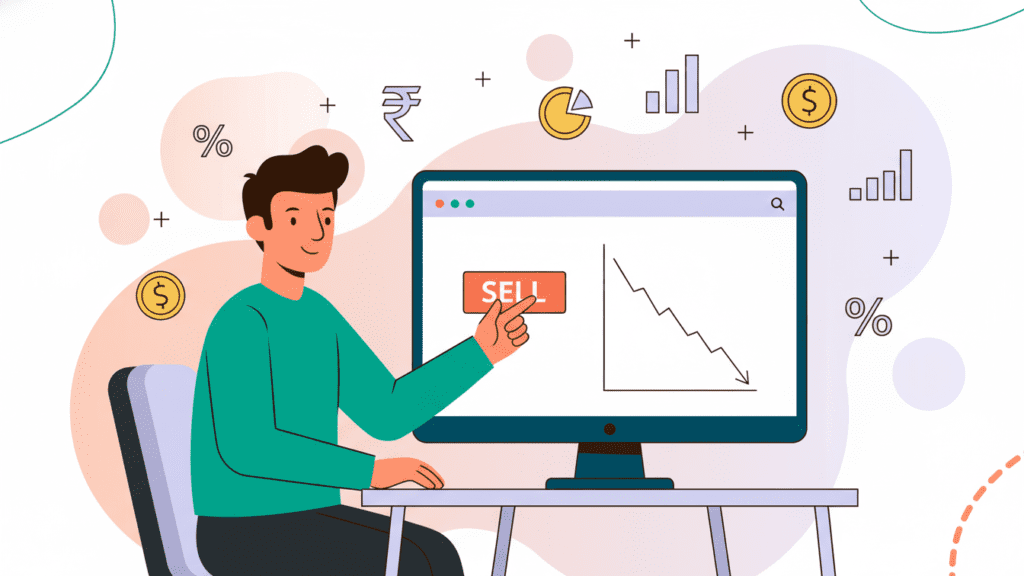
Suppose Rahul believes that shares of company ABC at ₹200 each are overpriced. He borrows 20 shares from his broker and sells them for ₹4,000 (₹200 × 20). A week later the price drops to ₹175. Rahul buys back 20 shares for ₹3,500 (₹175 × 20), returns them to the broker and makes a profit of ₹500 (₹25 per share) before paying interest and fees. groww.in
If the price had instead risen to ₹220, Rahul would have lost ₹400 (₹20 × 20) plus interest and fees. This shows how the gain or loss is determined by the difference between the selling price and the buying price, not by how many shares you own.
In another example from Fi Money, an investor sells 60 shares of a company at ₹1,000 each (₹60,000 total). The price drops to ₹900 and the shares are repurchased for ₹54,000, yielding a ₹6,000 profit.
However, the shares must be returned the same day because intraday short selling is required; keeping the borrowed shares overnight would be illegal. SEBI regulations allow short selling in India as long as it is done through intraday trades using a margin intraday square‑off account.
An example using dollars (United States)

Imagine a U.S. trader thinks the price of Company A at $60 will fall. She borrows 100 shares and sells them at $60 each for $6,000. The price drops to $40 and she repurchases 100 shares for $4,000. Her profit is $2,000 before fees. But if the price climbs to $80, she must pay $8,000 to buy back the shares and loses $2,000. The SEC warns that shorting leaves investors open to unlimited losses because stock prices can theoretically rise without limit.
Why do people short sell?

People short sell for two main reasons:
- Speculation: Traders try to profit from a price decline. They may analyze financial reports, industry trends or technical indicators to identify overvalued stocks and time their trades. Short selling can be very profitable in a bear market or during downturns when prices fall quickly.
- Hedging: Portfolio managers use short selling to reduce the impact of a potential fall in stocks they already own. For example, if you own shares of a company but worry about a short‑term decline, you might short sell a similar stock or an index to offset potential losses. Hedging can protect gains but also limits how much your portfolio can grow if the market goes up.
Short selling also helps with price discovery. When investors express negative opinions by short selling, it can reveal that a company might be overvalued. This mechanism prevents bubbles and contributes to more accurate share prices.
Costs involved in short selling

Unlike buying shares outright, short selling comes with extra costs:
- Margin interest: Because short positions require a margin account, the broker charges interest on the loan. This can add up if the position is open for a long time.
- Hard‑to‑borrow fees: Some shares are difficult to borrow because many people want to short them or there are few shares available. Brokers charge a borrowing fee that can range from a fraction of a percent to more than 100% per year.
- Dividends: If the company pays a dividend while you are short, you must pay the dividend to the person or institution that lent you the shares.
- Trading commissions: You still pay brokerage fees when you sell and buy back the shares.
For Indian investors using the SLBM, borrowers must provide collateral worth roughly 102–105% of the borrowed securities and pay a fee to the lender. The institutional investor who lends the shares earns additional income from this fee. hdfc.bank.in
What are the risks?
Short selling is risky because losses can be unlimited and the market can behave unpredictably. Important risks include:
- Unlimited loss potential: In regular investing your loss is limited to what you paid for the stock. When short selling, if the share price rises sharply your losses grow with no cap. That is why short selling is considered suitable only for experienced traders.
- Margin calls: If the price goes up and your account falls below the maintenance margin, your broker will issue a margin call requiring you to deposit more cash or close the position. Failing to meet the call means your broker will automatically buy back the shares, possibly at a loss.
- Short squeeze: A short squeeze happens when many short sellers try to buy back shares at the same time. Because demand to buy increases, the price shoots up, forcing more short sellers to close their positions and pushing the price even higher. The Groww blog notes that short squeezes are more likely when a stock has a high short interest; as prices rise and short sellers start closing their positions, the buying pressure drives the share price upward. The 2021 GameStop episode in the U.S. is a famous example. Social media users on the subreddit r/WallStreetBets encouraged each other to buy shares, and the price skyrocketed. About 140% of GameStop’s public float had been sold short, and the rush to buy shares to cover those positions caused the price to rise further. Several hedge funds suffered huge losses.
- Regulatory risks: Regulators sometimes restrict or ban short selling during market turmoil. For example, SEBI (India’s securities regulator) temporarily banned short selling between March and October 2020 during the COVID‑19 market crash. In the United States, the SEC’s Regulation SHO requires brokers to have reasonable grounds to believe they can borrow a security before allowing a short sale and imposes price‑test restrictions when a stock falls more than 10% in a day. In addition, short sales intended to manipulate the price are illegal. These rules are designed to promote market stability and fairness.
Rules and differences: India vs. United States
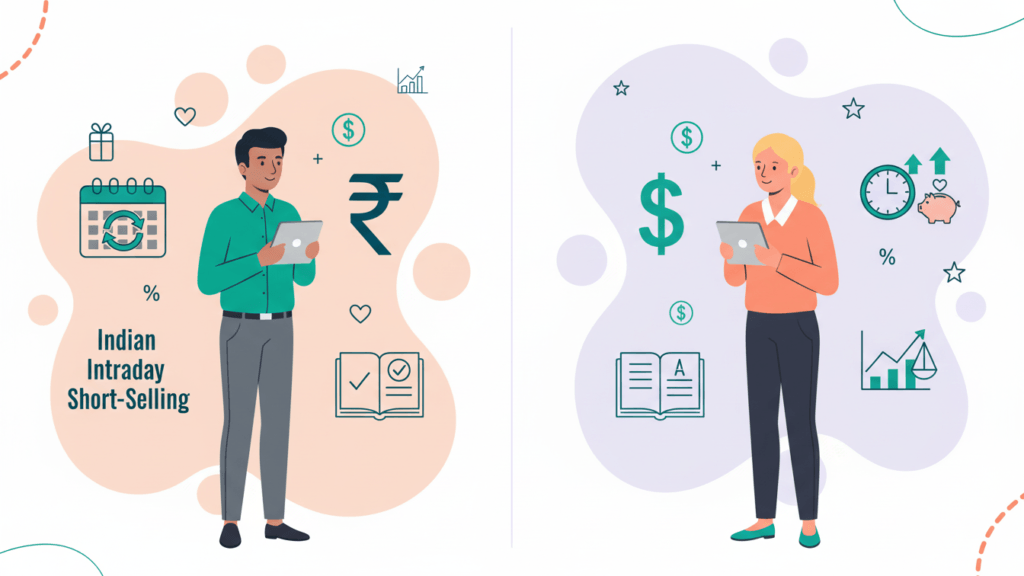
The rules for short selling are not the same everywhere. Understanding them helps investors avoid trouble.
India
- Intraday only for cash stocks: In India’s cash (spot) market you can short sell shares only for intraday trading. Positions must be squared off (bought back) before the market closes, usually by 3:15 PM. If you hold on to borrowed shares, your broker will automatically close the position and you may face penalties.
- Stock Lending and Borrowing Mechanism (SLBM): To carry a short position beyond one day, traders use the SLBM. You borrow the shares through a clearing corporation, provide collateral worth more than the value of the shares and pay a lending fee. The borrowed securities must be returned by the end of the contract, and the National Securities Clearing Corporation Limited guarantees the transaction.
- SEBI rules: SEBI requires brokers to collect margin upfront, report short positions and ensure fair practices. During extreme market volatility regulators may impose temporary bans, as they did in 2020.
United States

- Margin account requirement: Investors must have a margin account and meet maintenance margin requirements. The Financial Industry Regulatory Authority (FINRA) sets minimum maintenance levels (typically 25%), and failing to maintain the balance triggers a margin call.
- Regulation SHO: SEC rules require brokers to mark orders as “long,” “short” or “short exempt,” have reasonable grounds to borrow the stock and close out any “fail to deliver” positions quickly. Rule 201 introduces a short‑sale price‑test circuit breaker: if a stock drops more than 10% in a day, brokers must restrict short sale orders to prices above the current best bid. These measures aim to prevent abusive short selling and stabilize markets.
- Proceeds can be held longer: In the U.S. you can hold a short position for as long as you meet margin requirements and can continue to borrow the shares. There is no requirement to close the position intraday, but interest and borrowing fees accumulate over time.
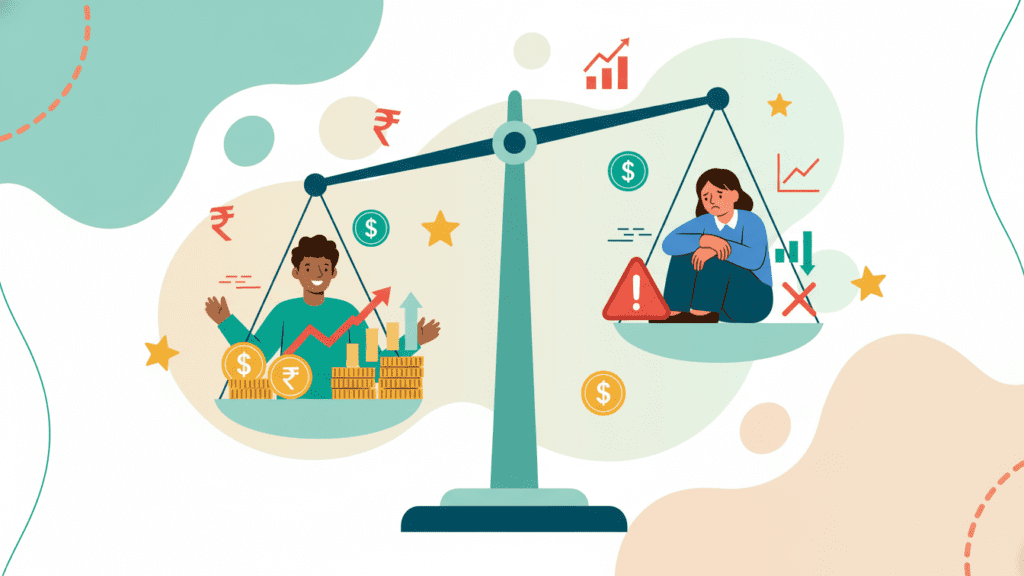
Advantages and disadvantages
Short selling has both benefits and drawbacks. Understanding them can help investors decide whether this strategy is suitable for them.
Advantages
- Profit from falling prices: The primary advantage is the ability to make money when a stock price falls. This can protect your portfolio during a market downturn.
- Hedging: Short selling lets investors hedge other positions and manage risk. For example, owning shares of a technology company but short selling a technology index can reduce losses if the sector declines.
- Price discovery: Short sellers contribute information to the market by expressing negative views on overvalued stocks. This helps prevent bubbles and promotes efficient pricing.
- Low initial capital: Because you borrow the shares, you don’t need to pay the full value upfront. You only need the margin and borrowing costs, which can be lower than buying the shares directly.
Disadvantages
- Unlimited losses: Unlike buying stocks, short selling exposes you to unlimited risk because a stock can rise without limit.
- Margin calls: If the position moves against you, the broker can demand more collateral or close your position at a loss.
- Borrowing costs: Interest, hard‑to‑borrow fees and dividend payments can erode profits.
- Timing pressure: Short selling is time sensitive. You need the stock to decline quickly; otherwise interest charges and fees pile up.
- Potential for short squeeze: A sudden increase in price can force many short sellers to cover their positions, driving the price even higher.
- Regulatory constraints: Temporary bans, price limits and reporting requirements can interfere with your trading plans.
Final thoughts

Short selling is a sophisticated strategy that can provide profits when share prices fall and help hedge existing investments. However, it is not a get‑rich‑quick scheme. As the SEC points out, short sellers borrow stock and must return it, and if the price rises they face potentially unlimited losses.
The Economic Times and other experts stress that careful risk management, understanding of market trends and adherence to regulations are essential. In India, SEBI restricts short selling to intraday trades unless you use the SLBM and follow strict margin and reporting rules. In the U.S., Regulation SHO and FINRA rules govern borrowing, marking, and price‑test restrictions.
Because of these risks and rules, short selling is best left to experienced investors who can monitor their positions closely and withstand volatility. For most young or new investors, focusing on long‑term investing and learning how businesses work may be safer and more rewarding.
📌 Disclaimer
I am not a SEBI-registered investment advisor or analyst. The information shared in this article is meant purely for educational and awareness purposes and should not be considered as financial, investment, or trading advice.
Any stocks, sectors, or companies mentioned here (such as Reliance Industries, Apple etc.) are only examples used to explain concepts and not buy, sell, or hold recommendations.
Stock markets are subject to market risks, and investment decisions should be made only after proper research, due diligence, or consultation with a SEBI-registered financial advisor.
Past performance does not guarantee future returns. Please invest carefully and responsibly.
If You Liked This Article, Then You Might Also Like This –
The Greeks in Options Trading Explained Like You’re 10 Years Old