Table of Contents
So, what is the fuss about Swing Trading vs Positional Trading ?
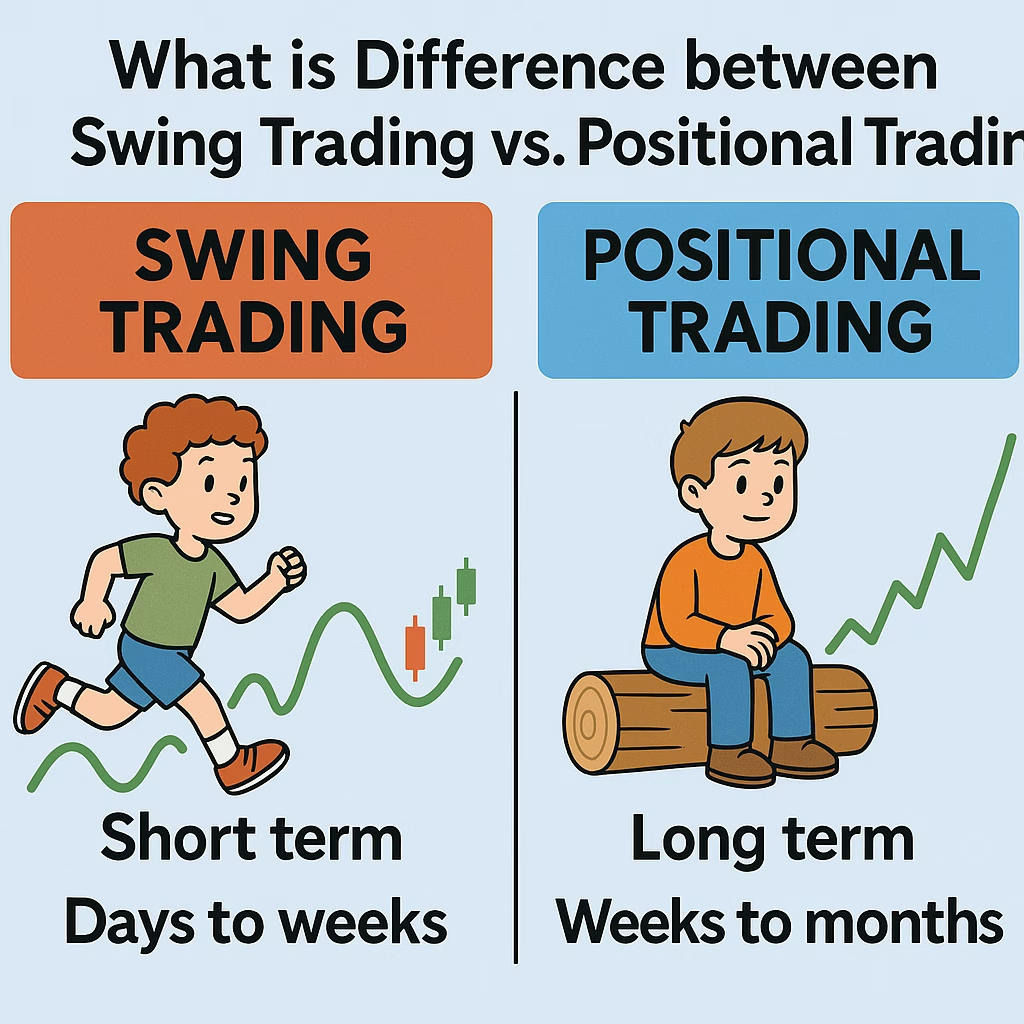
Imagine you’re in a stock market playground where two friends are choosing games. One says, “I want quick rounds and instant scores!” The other says, “I’d rather play a long marathon and score big later.” In trading, these are like swing trading and positional trading. Swing trading is the sprint, making money over days or a couple of weeks, while positional trading is the marathon, holding stocks for weeks or even months.
Think of a sign at a market crossroads – one way says “Fast!” and the other “Slow!”. That’s like the holding time. In swing trading, you might hold a stock just a few days to catch a short jump vectorvest.com.
For example, if a stock breaks out on good news, a swing trader could buy and hold it for a few days until it hits a target. Positional traders, by contrast, look for big trends: if a company has strong finances and growth ahead, they might buy and hold it for many weeks or months. It’s like buying a ticket for a long train ride versus hopping on a short bus trip.
Time Frame & Holding Period
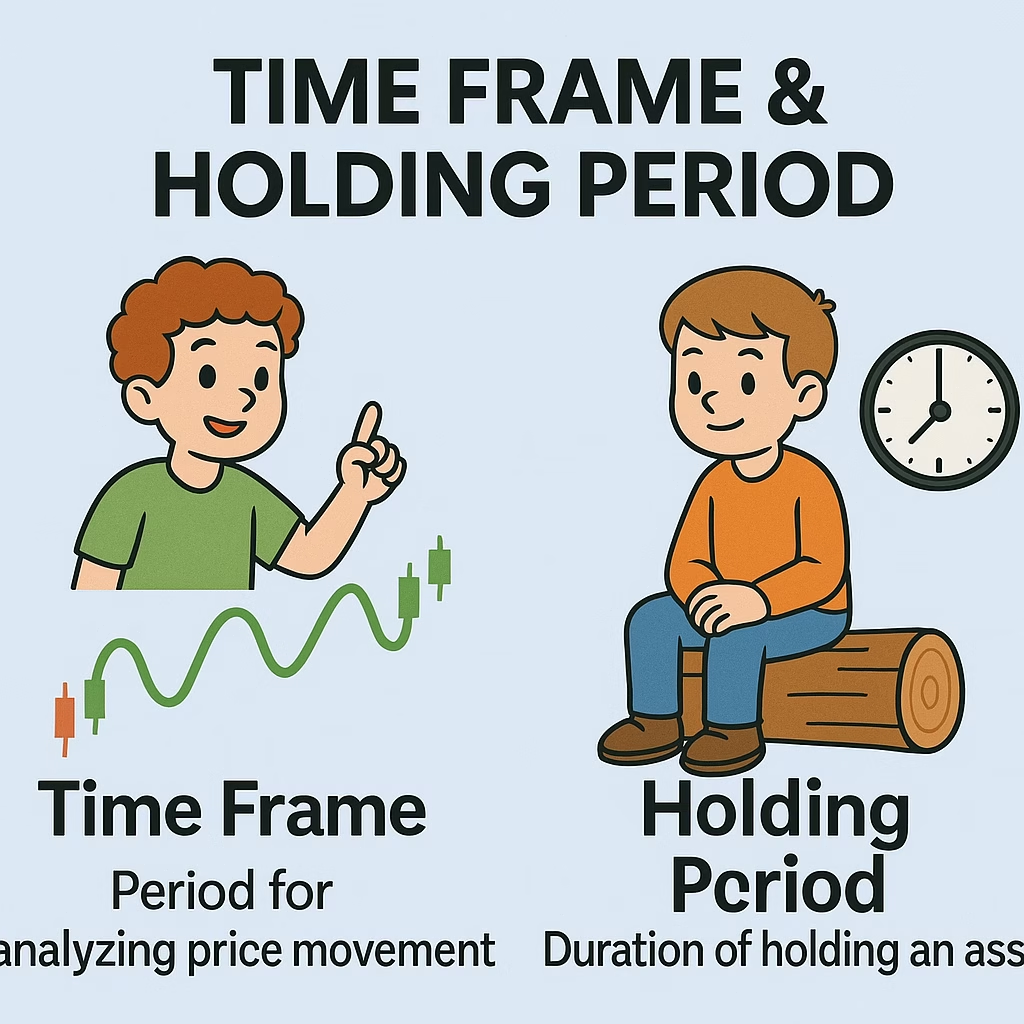
In simple terms, time frame is how long you keep a stock before selling. Swing traders are sprinters: they watch the stock move up and down for a short burst (days or a couple of weeks). Positional traders are marathon runners: they hold on for longer, sometimes many weeks or even months.
To a 10-year-old, think of it like games: swing trading is playing a quick round of tag, while positional trading is building the ultimate long game of Minecraft. Both are fun, just different lengths!
As one source explains, swing trades aim to “capitalise on short-term swings…over a few days…to as long as a few weeks,” while position traders hold “much longer – sometimes for months or years.” vectorvest.com. In practice, a swing trader might buy 10 shares of Apple today expecting to sell in a week, while a positional trader might buy Apple and plan to hold through many product launches.
Risk and Reward

Swing trading and positional trading also feel different on the rollercoaster of risk and reward. Swing trading is like a wild roller-coaster ride with lots of ups and downs: you can win small amounts quickly, but each ride feels riskier.
A finance site notes that swing traders face higher risk because they need to catch quick price moves stockstotrade.com. However, they get to take many rides (trades) – so they can make profits often in the short term.
Positional trading is more like a gentler roller coaster that goes up slowly and down slowly. It usually involves moderate riskjmfinancialservices.in. You might only go on a few big rides, but the potential prize on each one can be larger. As one comparison chart puts it, swing trading offers “smaller but more frequent” profits, whereas positional trading offers “larger but less frequent” gains.
In other words, swing trading can give you many little wins (like ten $5 prizes), but positional trading aims for a few big wins (like one $50 prize)jmfinancialservices.in.
Also, swing traders must beware of quick surprises. For example, a sudden news story or earnings report might make a stock jump or crash the next morning – if you’re holding it only overnight, that can be scary (this is called overnight risk)blog.elitetraderfunding.com.
Positional traders sleep more soundly each night, because they’re not affected as much by daily blips – but they must still watch out for major events like a sudden market crash or big policy change, since they’re holding stocks for so longblog.elitetraderfunding.com.
Capital, Margin, and Costs
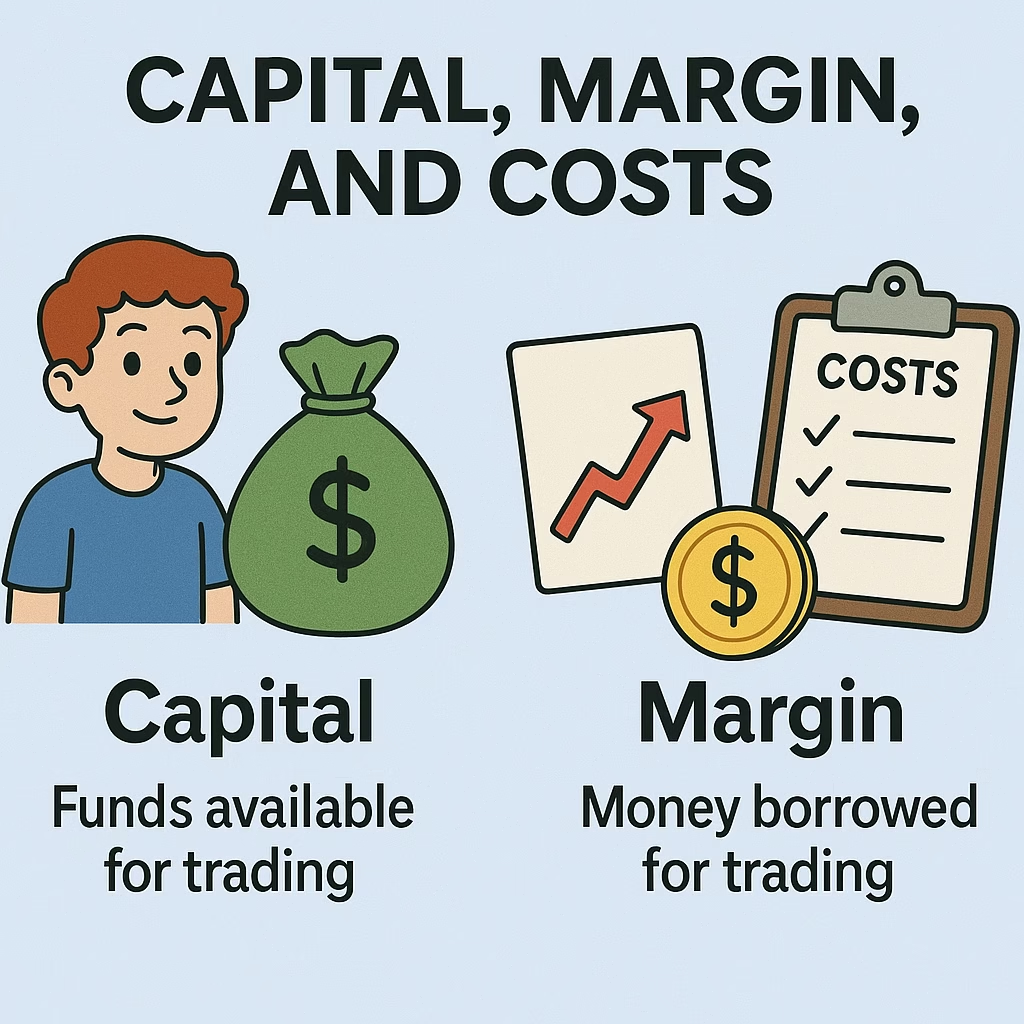
Swing traders often need less money upfront but use more leverage or margin (like a little kayak with a powerful engine). For example, in futures trading a swing trader might control a large position with a small deposit, but that also means they must keep extra cash on hand to meet margin calls if the market swings suddenly.
In stock trading, this is like buying on margin: you borrow money to buy more shares. The good news is you can start with less capital, but the bad news is if the trade goes wrong, you could get a margin call and owe money.
Positional traders usually put up more capital per trade. It’s like buying a bigger boat – you need more money to start, but you can sail it longer. Since positional trades last weeks or months, much of your cash is tied up waiting for the trade to pay off blog.elitetraderfunding.com.
This means you should be comfortable committing a chunk of your savings to each position. The upside is fewer trades can mean lower transaction costs over time (you’re not paying fees every day).
In short: swing trading can be capital-efficient for quick moves (you deploy less cash but watch margin), while positional trading often requires a larger capital base held long-term. Think of it like buying snacks at a fair: swing trading is grabbing a quick snack with a small bill (maybe a $5 hotdog), positional trading is saving up for a bigger treat later (maybe a $20 meal).
Who Is It For? Personality & Lifestyle

Which style fits you? Swing trading is like being a sprinter or a gamer who loves fast action. You need to enjoy looking at charts regularly, jumping in and out of trades, and taking quick profits. If you love short-term thrills and checking the score often, swing trading might be fun for you.
One expert summary says, “If you love short-term action, tracking charts, and booking profits regularly — Swing Trading could be ideal”.
Positional trading is for the steady, patient types – like marathon runners or chess players. You do a lot of homework up front and then wait. You might check your positions once in a while (weekly or monthly) instead of every day.
It suits people who have a full-time job, or just prefer not to stare at the screen constantly. As one guide puts it, if you prefer “patience, long-term thinking, and less screen time — Positional Trading may suit you better.”
Personality-wise, some traders even do both! They use swing trading for extra short-term gains and holding a few positions longer on the side. But as a beginner, it helps to pick one style that matches your schedule and nerves. Are you more like a sprinter or a marathon runner?
In India and the U.S., these roles play out similarly. For example, Indian swing traders might pick popular, volatile stocks like SBI Life Insurance or Avenue Supermarts (DMart) to ride short-term waves tickertape.in.
A U.S. swing trader might do the same with big tech like Apple or Tesla over a week or two. Meanwhile, a positional trader in India might hold a bank or infrastructure stock for months through an economic cycle; in the U.S. a positional trader might hold an index fund or a growth stock through several quarters.
Tools: Technical vs Fundamental Analysis
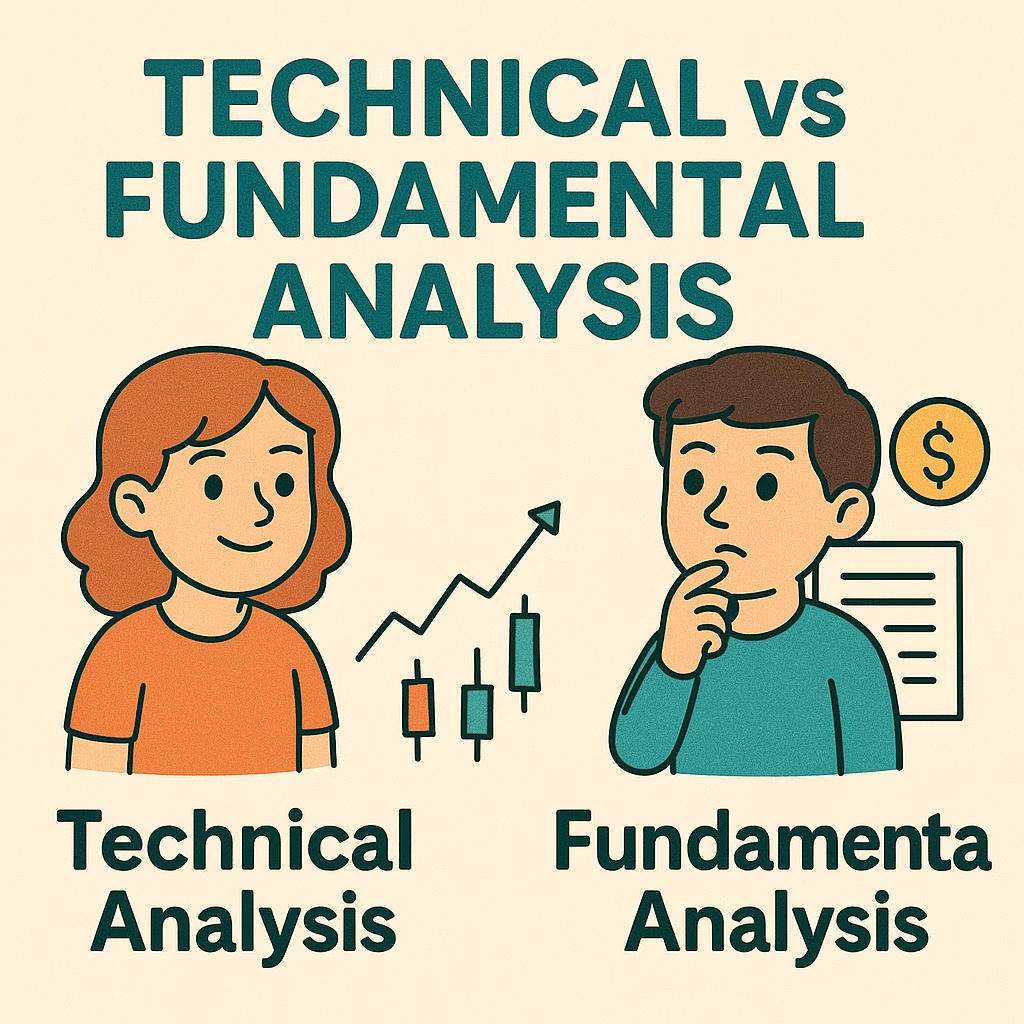
For tools and analysis, swing traders and positional traders use a slightly different toolbox. Swing traders lean heavily on technical analysis: they study price charts, patterns, and indicators (like moving averages or momentum oscillators) to find entry and exit points.
It’s like playing a quick video game where you keep an eye on the score and timers. You might use charting software or a trading app to spot the next bounce or breakout.
Positional traders can also use charts, but they spend more time on fundamental analysis – looking at company news, financial results, and economic trends. It’s like building a long-term strategy in a game.
For instance, a positional trader might study a company’s quarterly reports or a country’s economic forecasts, then buy and hold based on that big picture. As one site explains, “for position traders, fundamental analysis is the cornerstone of their strategy.”
In practice, many traders use a mix: checking fundamentals to pick a strong stock and then using technicals to time the trade. But for kids, think: swing trading is like watching the weather forecast every day to catch a quick window of sunny weather, while positional trading is like moving to a state because of its overall sunny climate.
Impact of Market Volatility and News

Market volatility and news affect swing and positional traders differently. A swing trader cares a lot about the day-to-day noise. Big news (earnings reports, RBI or Fed announcements, natural disasters) can make prices jump up or down suddenly. If a swing trader is holding a stock overnight, a surprise news event can cause a big gap in price by morning. This is why swing traders need to be vigilant or use stop-losses.
Positional traders are less bothered by daily ups and downs, since they expect those in their plan. However, if something huge happens (like a war breaks out, or the market crashes suddenly), it can affect even long-term positions.
On the plus side, positional traders often choose fundamentally strong stocks that tend to be less wild each day. One source notes swing traders focus on “volatile stocks with daily movement,” while positional traders pick “stable stocks with strong fundamentals.”. In short, swing trading thrives on volatility (more volatility = more quick gains or losses), whereas positional trading is more about weathering volatility to catch the big trends.
Taxes (India and U.S.)
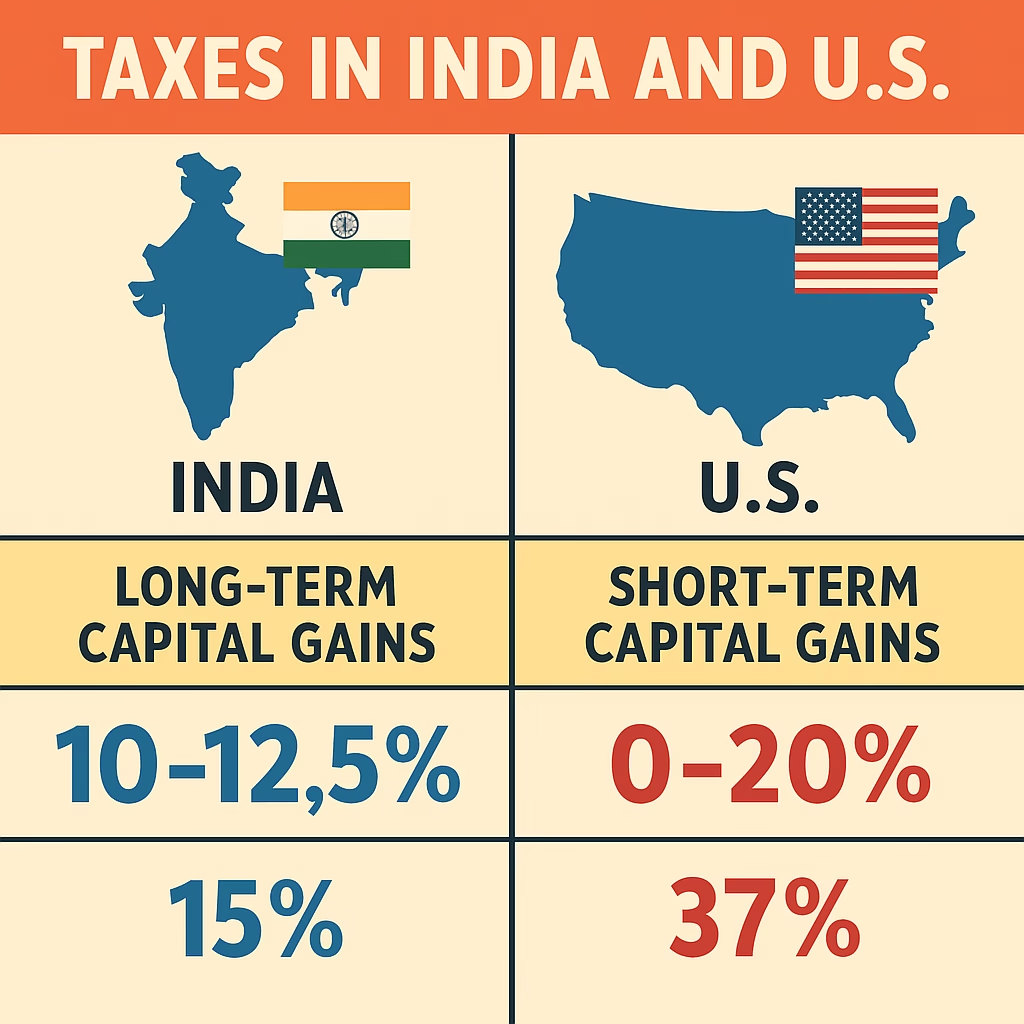
One practical difference is taxes on your profits. In India, the tax rules distinguish between short-term and long-term holdings. If you sell a share within one year of buying it, the profit is called a short-term capital gain, taxed around 20% (as of recent rules).
If you hold it more than a year, it becomes a long-term gain, taxed only 10-12.5% on gains above a certain small exemption. So swing traders (who sell frequently, often within a year) usually pay higher tax rates, while positional traders who hold longer can pay less tax on big gains.
In the U.S., it’s similar but with different rates. Swing trade profits (held under 1 year) are taxed as ordinary income (like your salary) – rates can be as high as 37% depending on your income bracket. Long-term gains (for stocks held over 1 year) get a big discount: they are taxed at 0%, 15%, or 20% depending on income. In simple terms, the U.S. tax code rewards patient holding.
So, an American swing trader pays “short-term capital gains” tax at ordinary rates, whereas a positional trader’s gains could be taxed much lower if they held for over a year investopedia.com.
Summary

Swing trading and positional trading are both ways to play the market game. Swing trading is like a fast-paced short game (or a sprint), with quick actions and quick results (and quick taxes and margin calls!). Positional trading is a long-term strategy (a marathon or a long board game), with slower movement but potentially larger wins. One isn’t “better” than the other – it depends on you.
If you’re an energetic, fast learner who likes watching charts every day, swing trading might fit your style. If you prefer to do research and then wait for months, positional trading might be your kind of game.
No matter what you choose, remember to use the right tools: charts and technical signals for swing trades, and solid company/news research for positional trades. And always keep an eye on taxes and risk. Both paths need learning and practice. So grab your running shoes or your hiking boots – and have fun trading in the market!
If You Liked This Article, Then You Might Also Like This One
How Inflation and Interest Rates Affect Stock Prices